
Asian soy milk is different than the stuff you get at Costco or Starbucks! It can be enjoyed warm or cold, has a delightful sweetness, and feels more fulfilling. We grew up drinking the fresh stuff from the tofu and sandwich stores, and now Co Mai is making her own.
“Con lam a nha, beau hun,” says Co Mai. Making it at home, it’s tastier, because we can use more soybeans, she says. What will you guys do when I die and you still want to have this, she jokes.
Prep time: 6-8 hours (soaking); 1 hour prepCook time: 30 minutes (+ 1 pot of rice)
YOU WILL NEED:
- 2 mixing bowls
- 2-3 pots
- blender
- cloth straining bag
- very fine mesh strainer basket
- big cooking spoon
- fine strainer tool
INGREDIENTS:
This recipe makes 3 big pitchers.
- 1 pound of soybeans
- 20 g of green beans
- pinch of salt
- 15 tbsp of white sugar
- 1 small package of frozen pandan leaves (10-15 leaves) or a capful of vanilla extract
STEPS:
1. Wash the soybeans and then soak them in a mixing bowl for a minimum of 6 hours up to 8 hours. Leaving them longer will make your soy milk a little sour. Do the same with the green beans. According to Co Mai, the green beans help to lessen fishy smell of the soybeans.
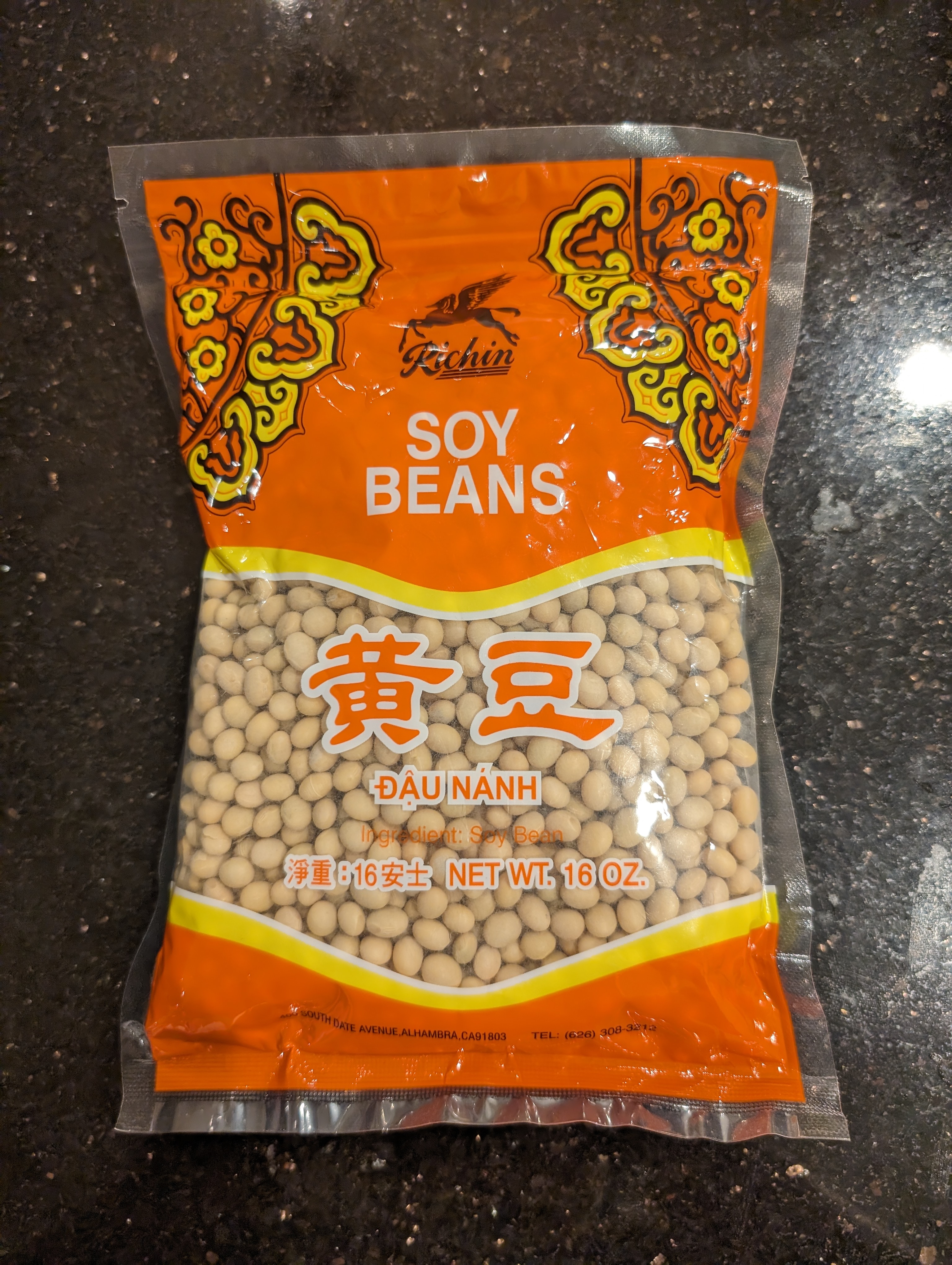
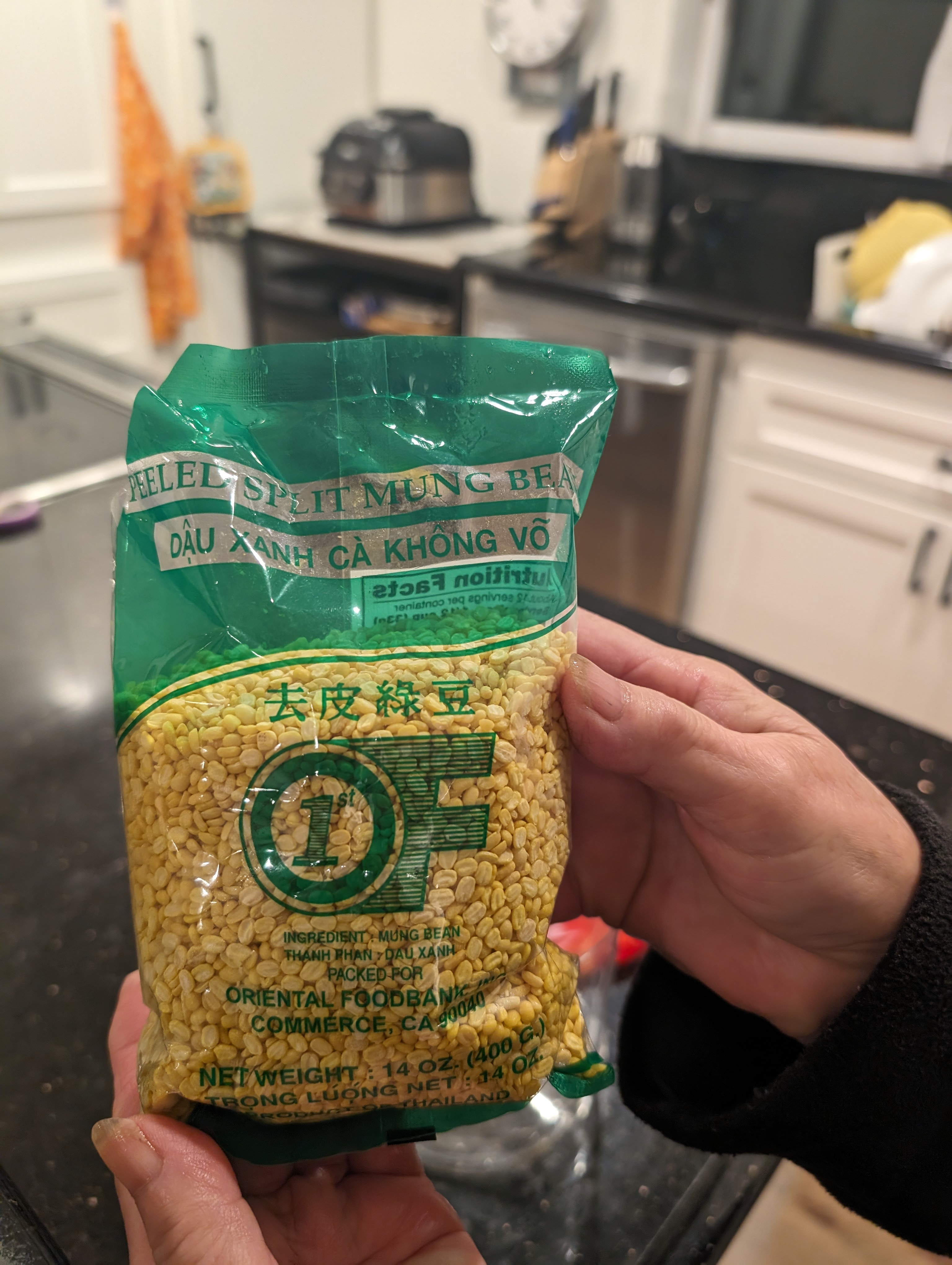
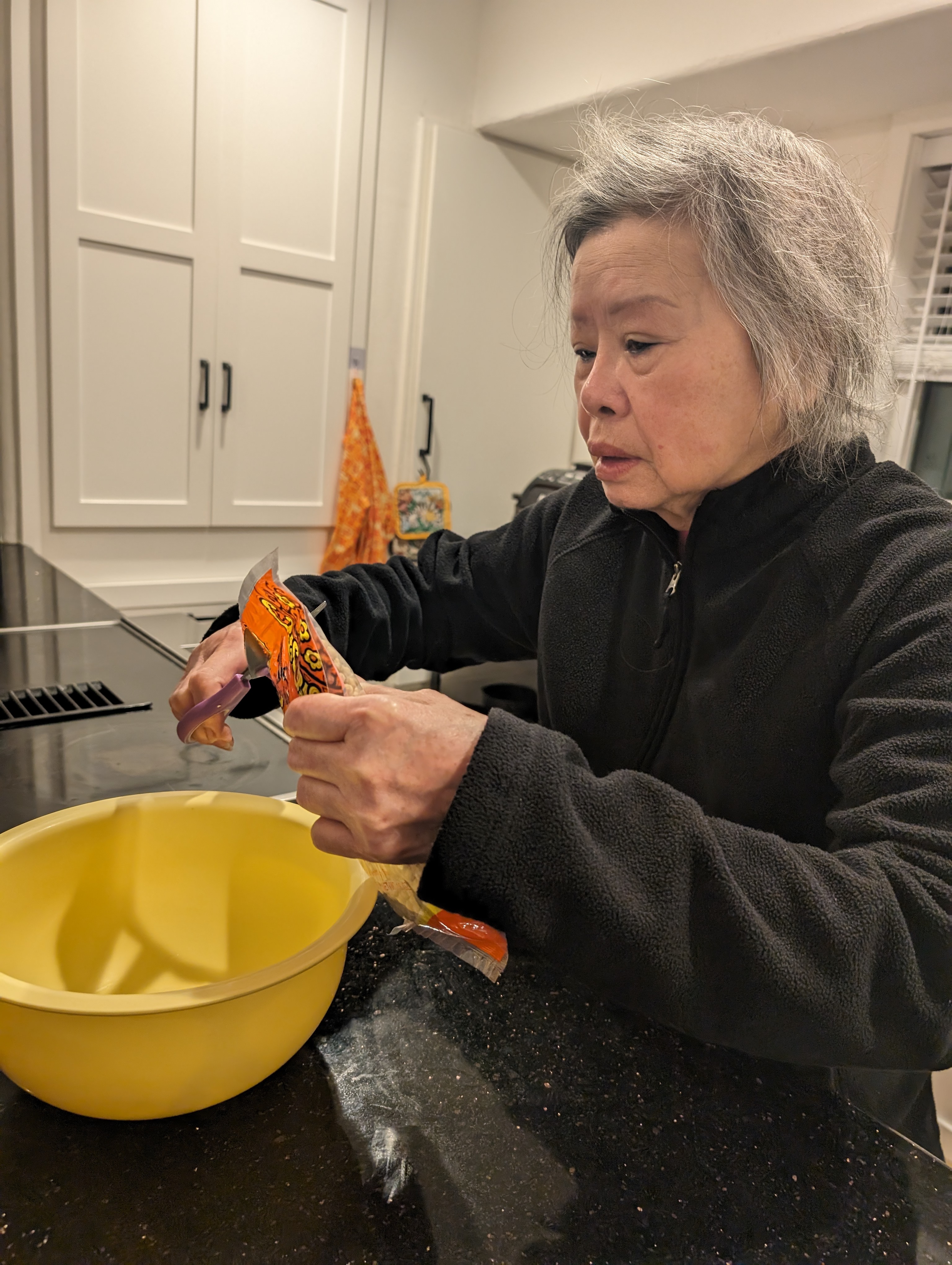
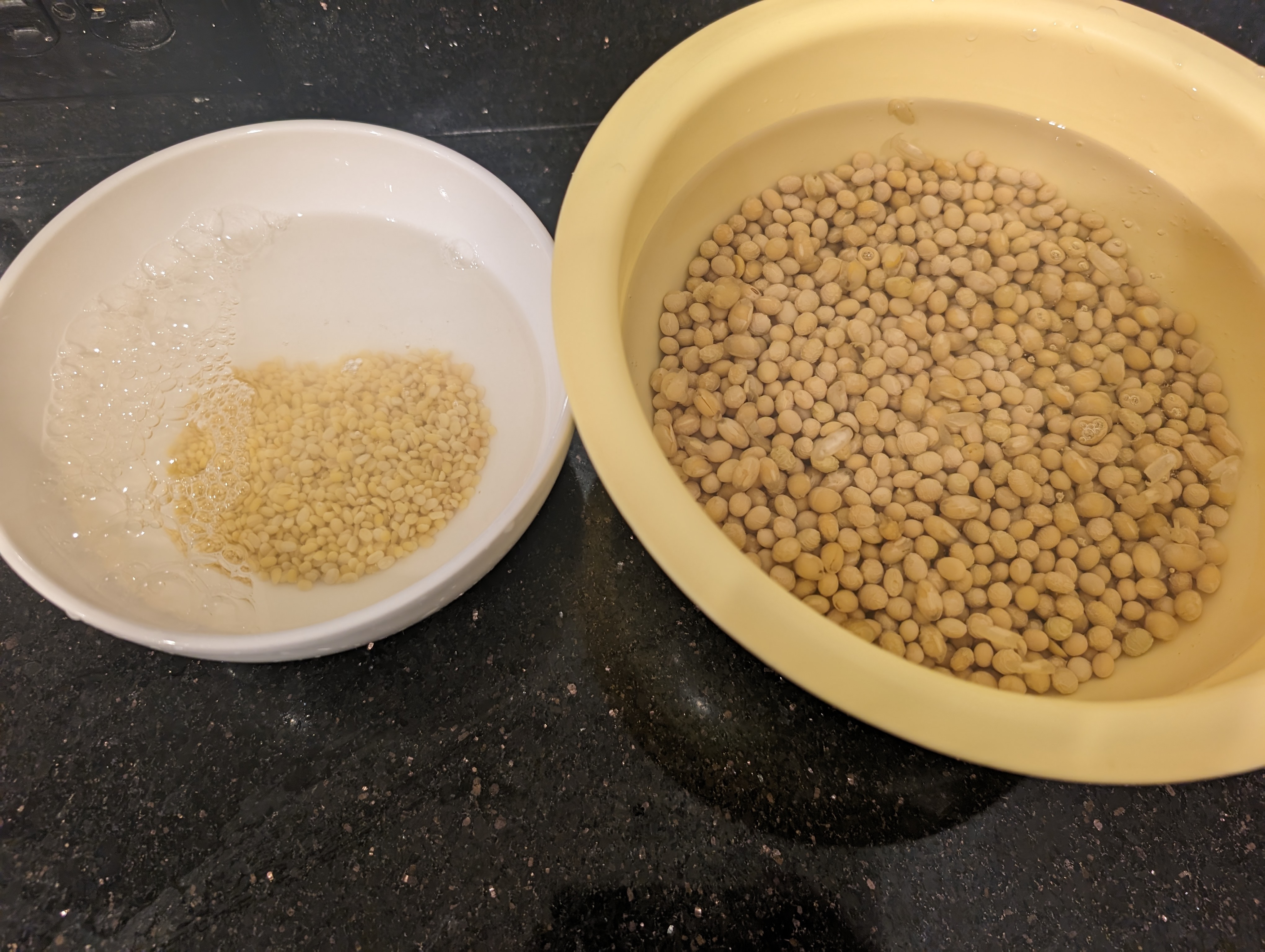
2. After hours of soaking, strain the two types of beans into one basket. Then combine them in one pot with new water. Bring to a boil and then turn off.
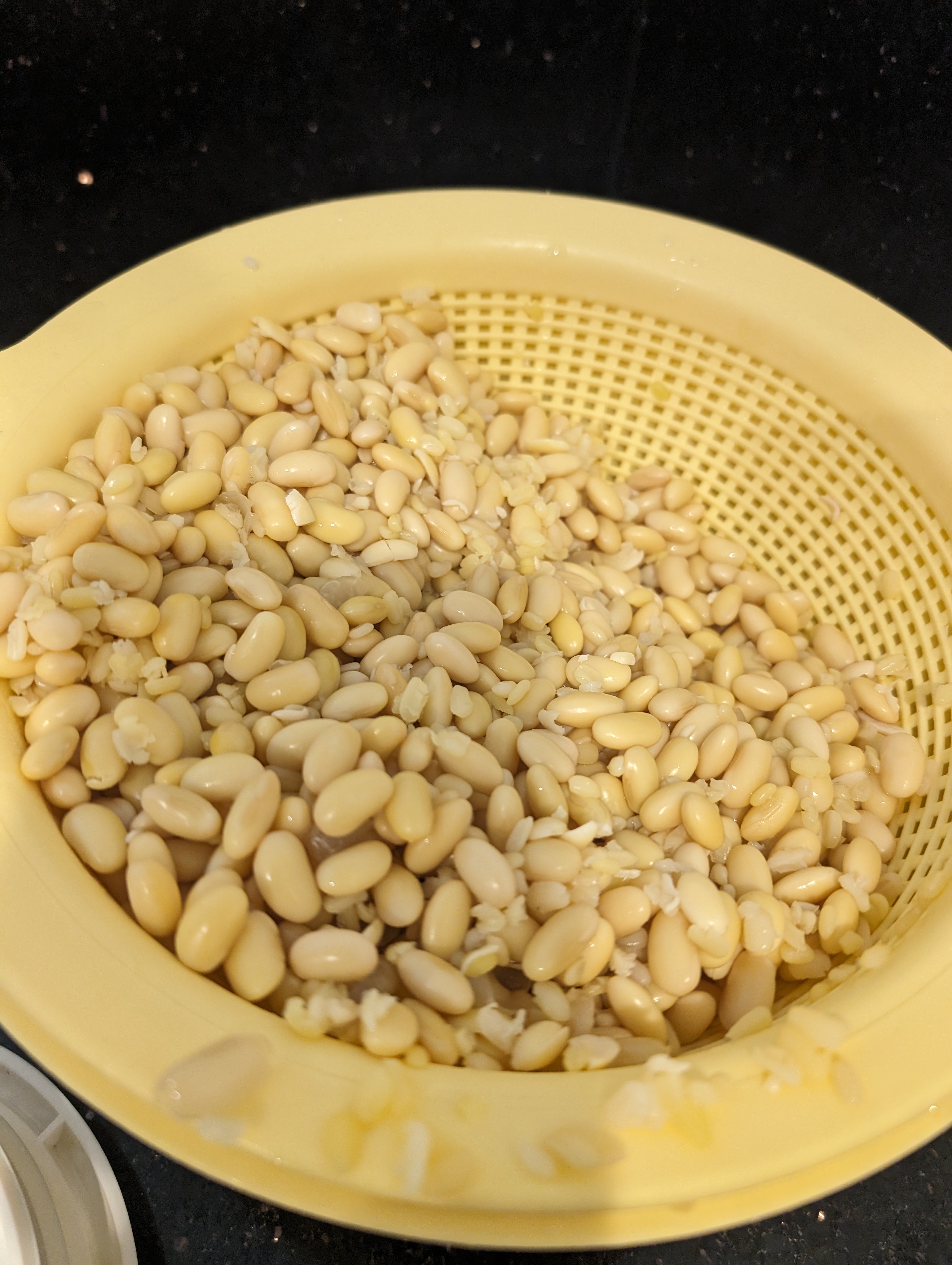
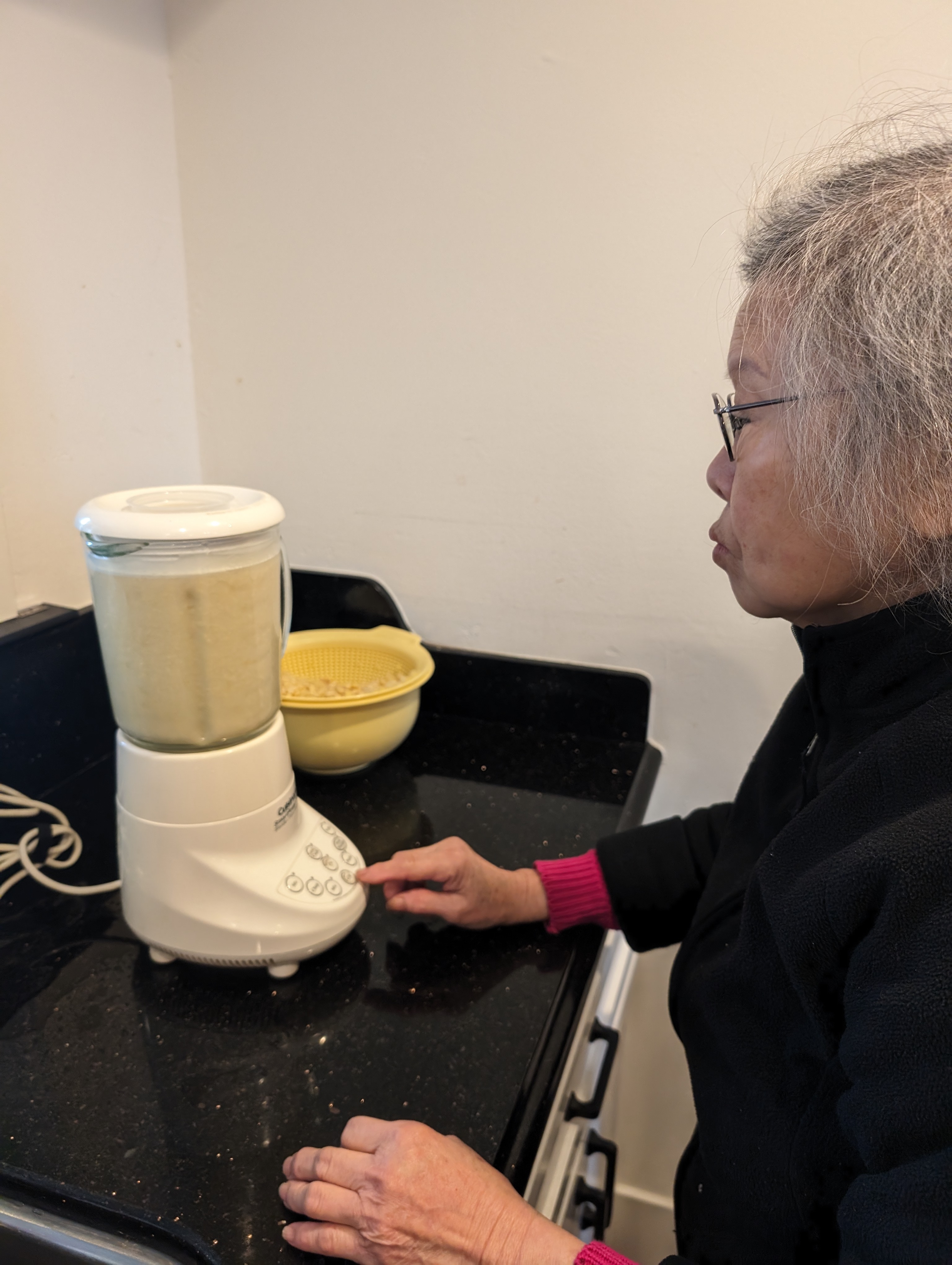
3. Strain the beans out again and blend with new water in the blender to very fine. For 200 g of beans, use roughly 1 liter of water.
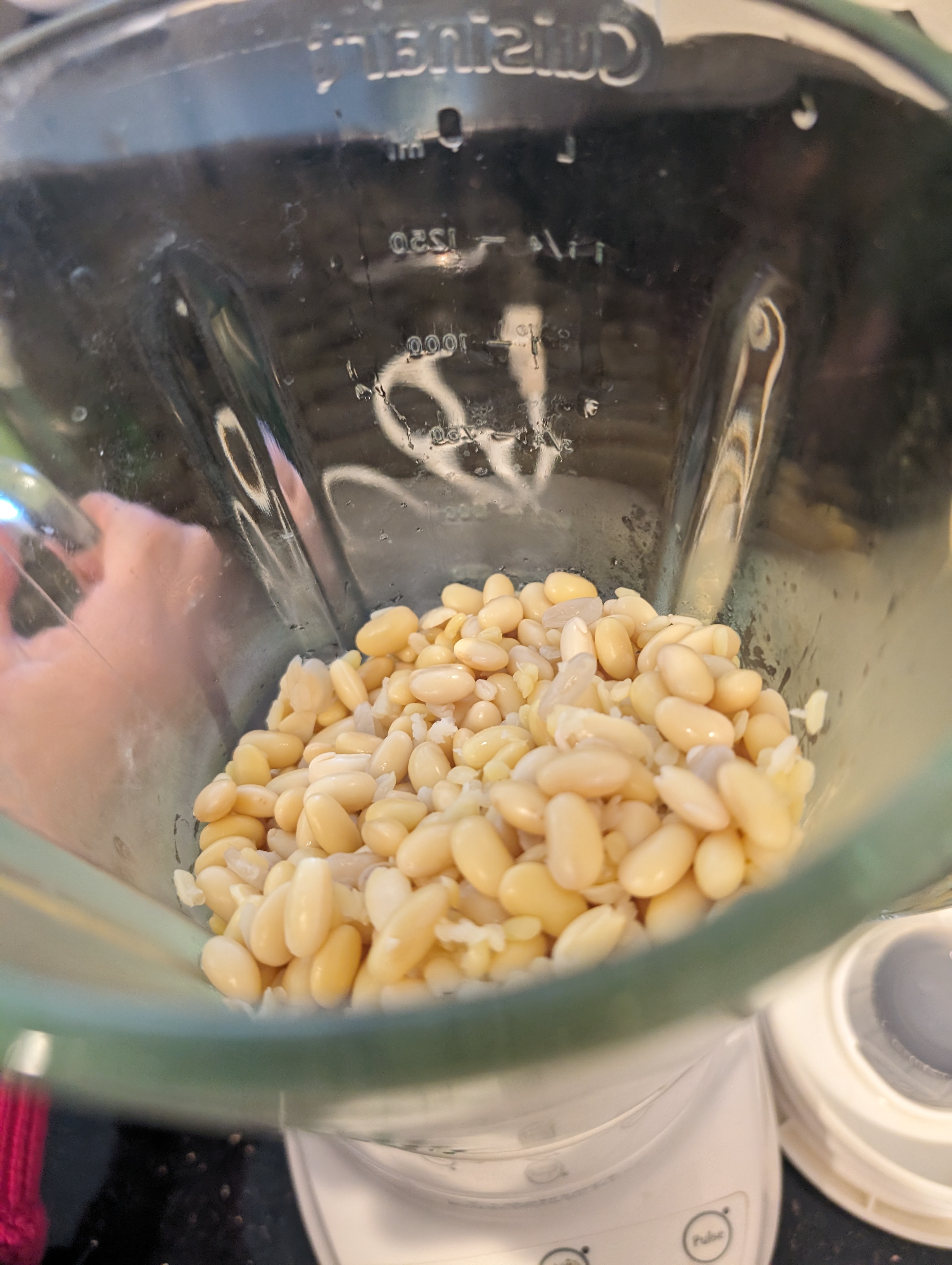
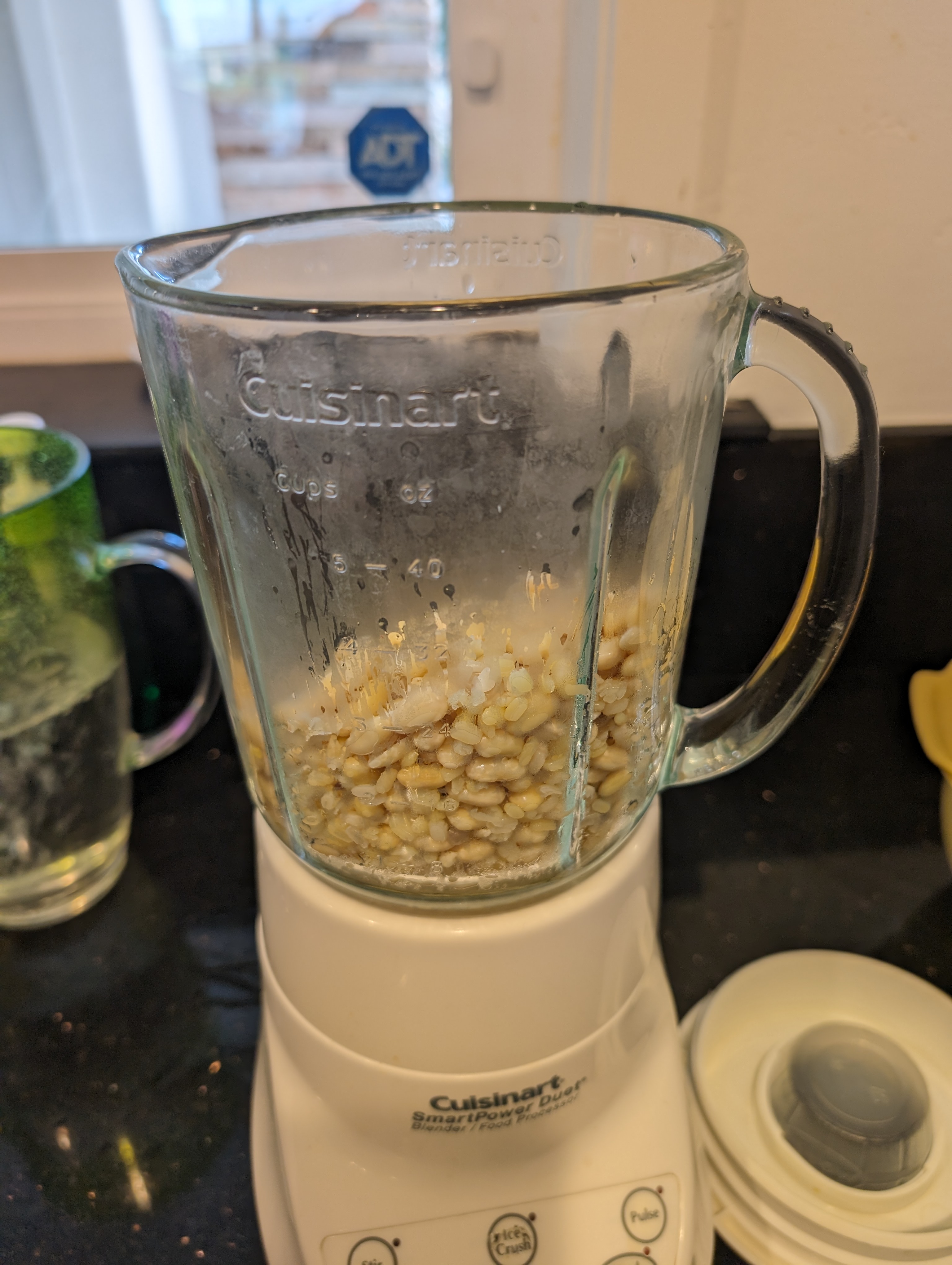
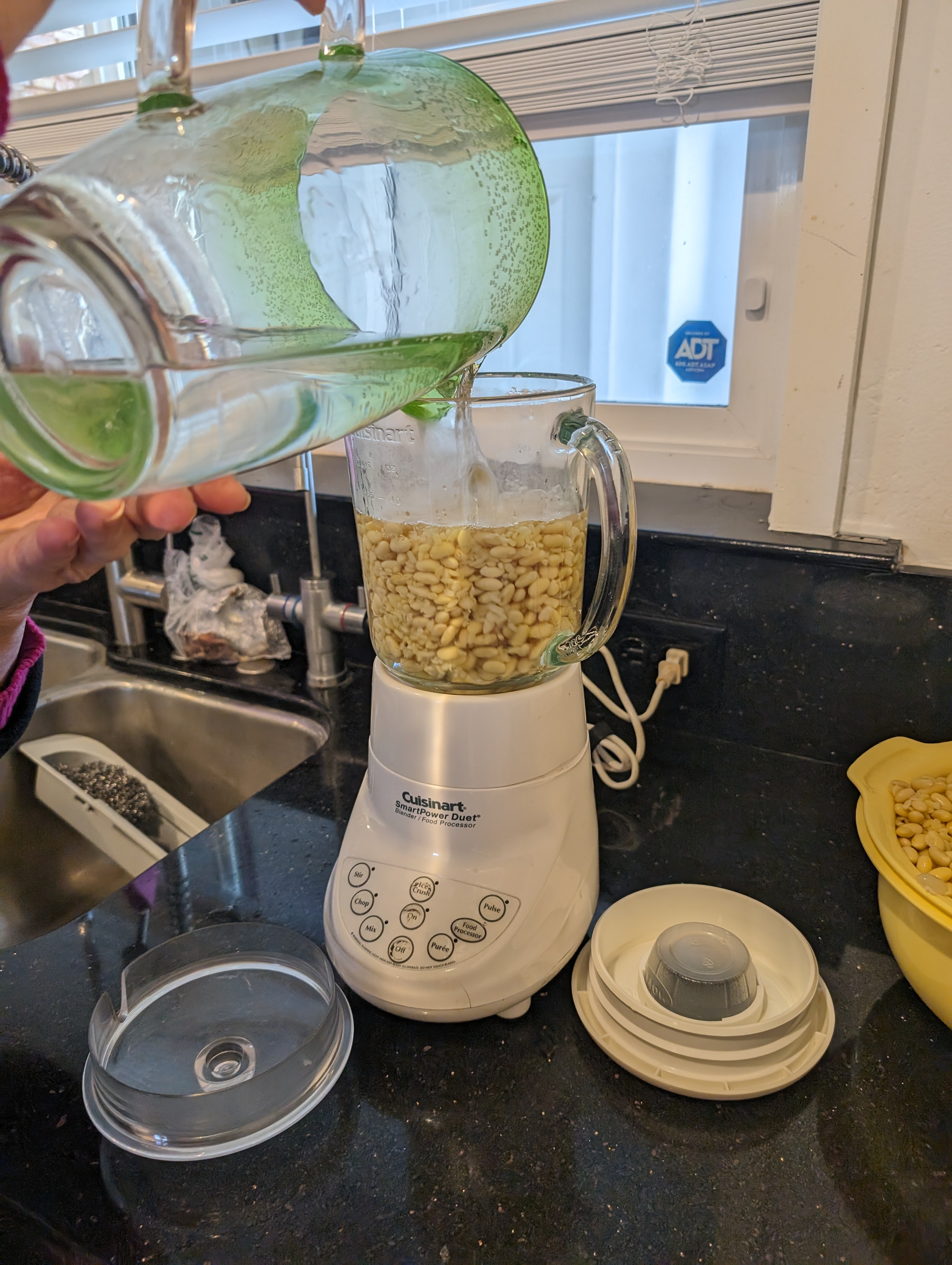
4. Pour the mixture into a very fine mesh basket over a big pot to extract the milk from the pulp. Use a big cooking spoon to push the pulp against the sides to force the liquid out. This is your “milk.”
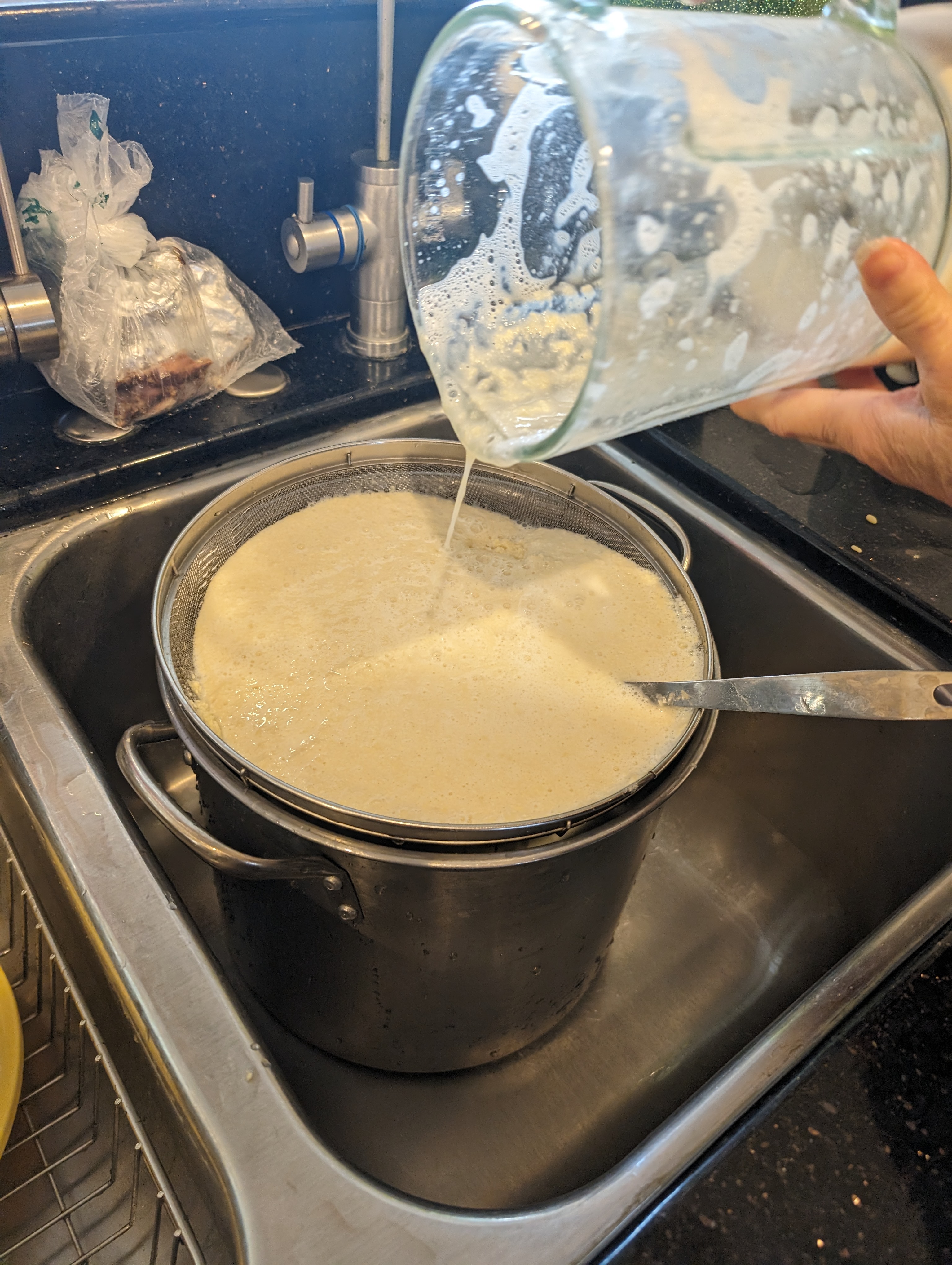
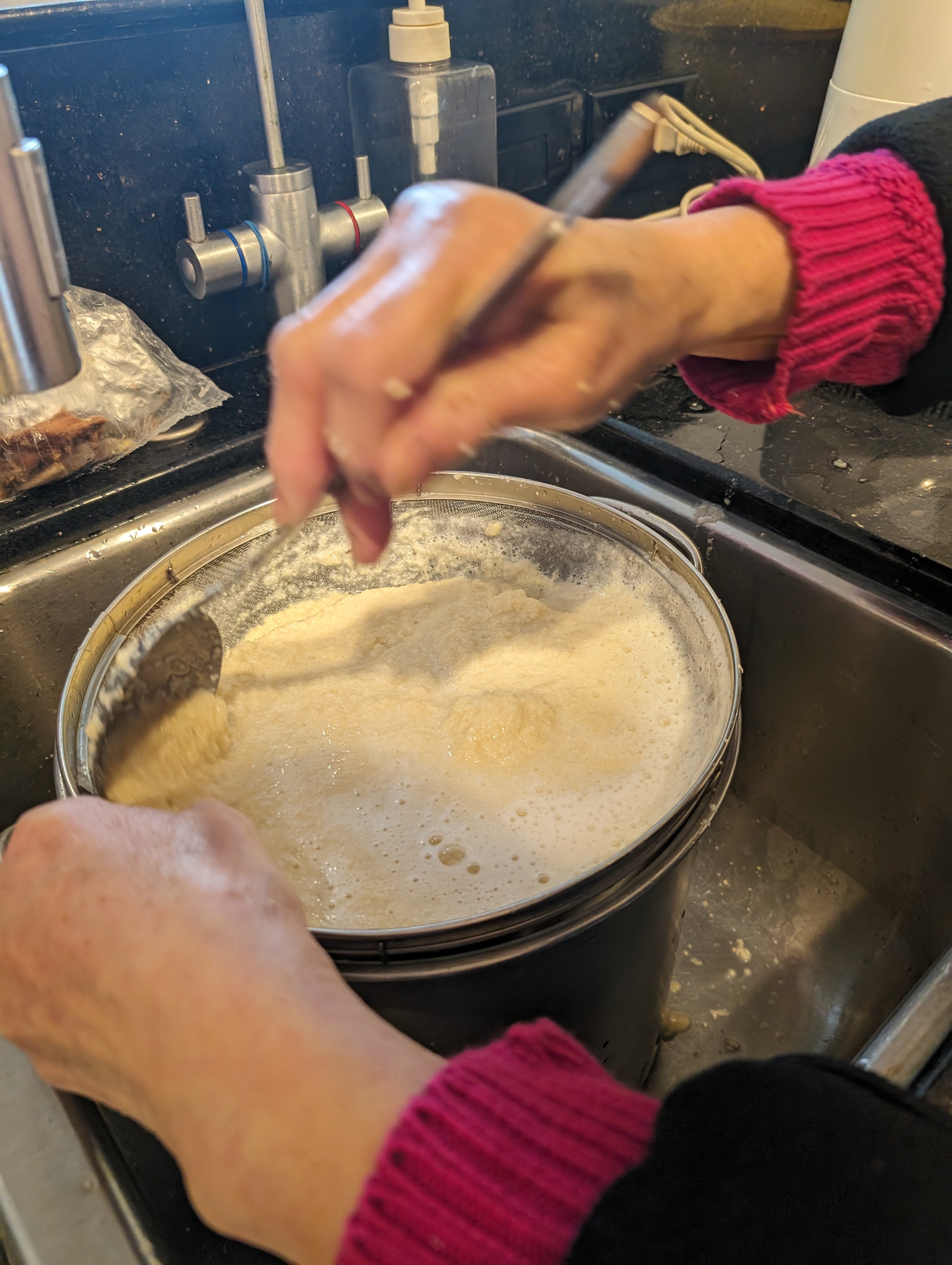
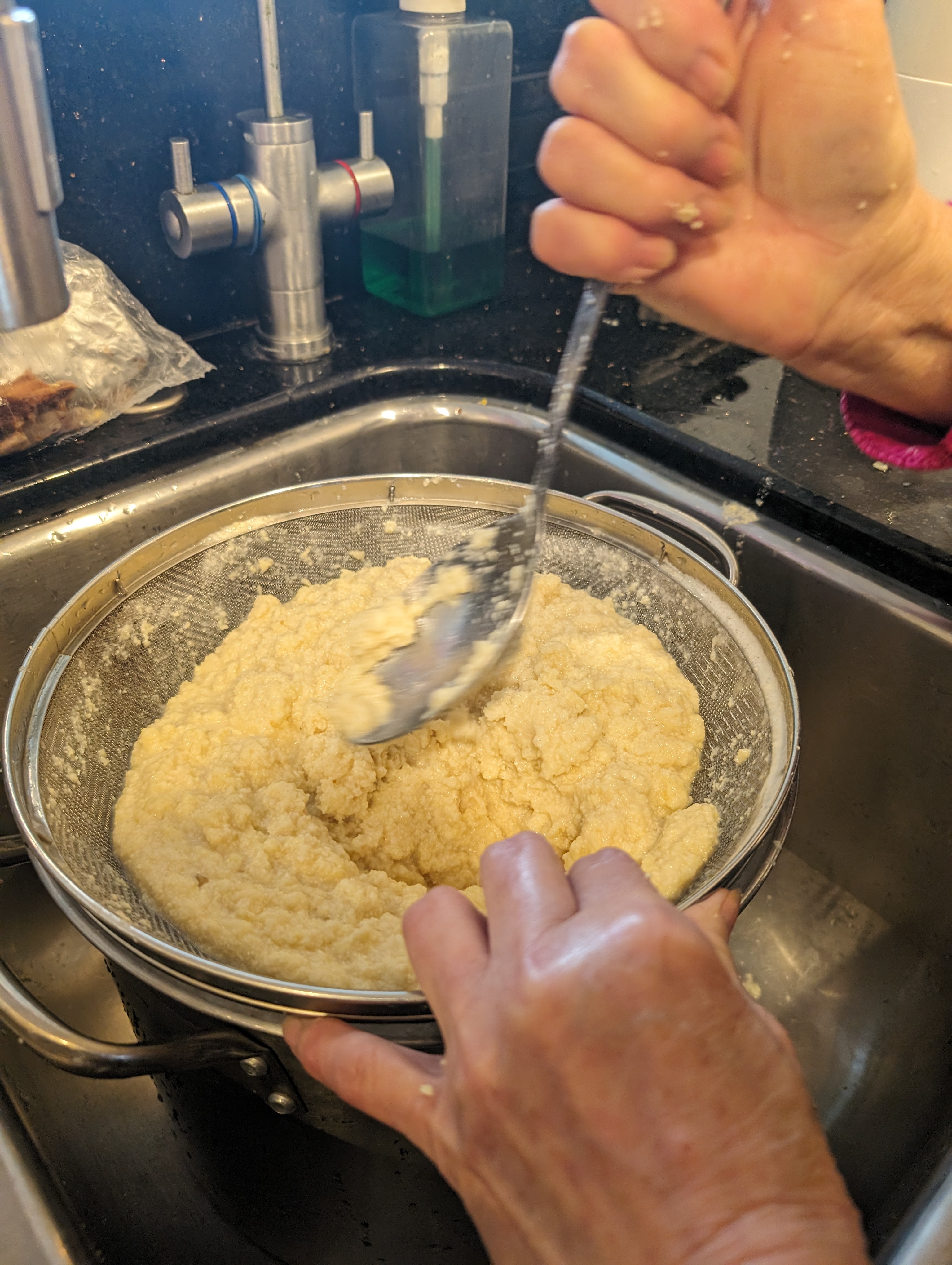
5. Repeat steps 3 and 4 a second and/or third time as necessary. Use your spoon to put the pulp back into the blender and add fresh water. Blend. Extract the liquid. Stop blending when the pulp texture looks like scrambled eggs or polenta meal.
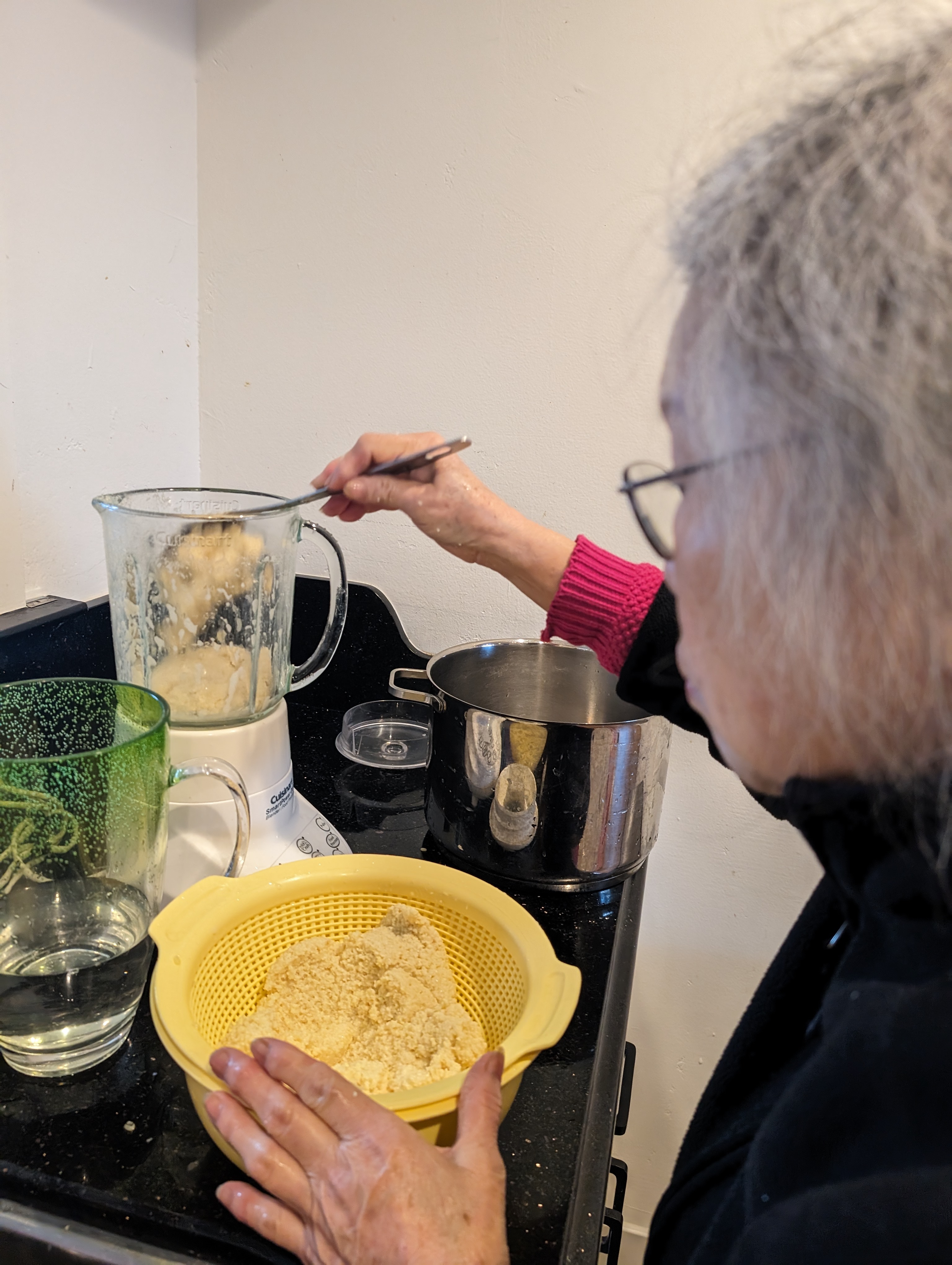
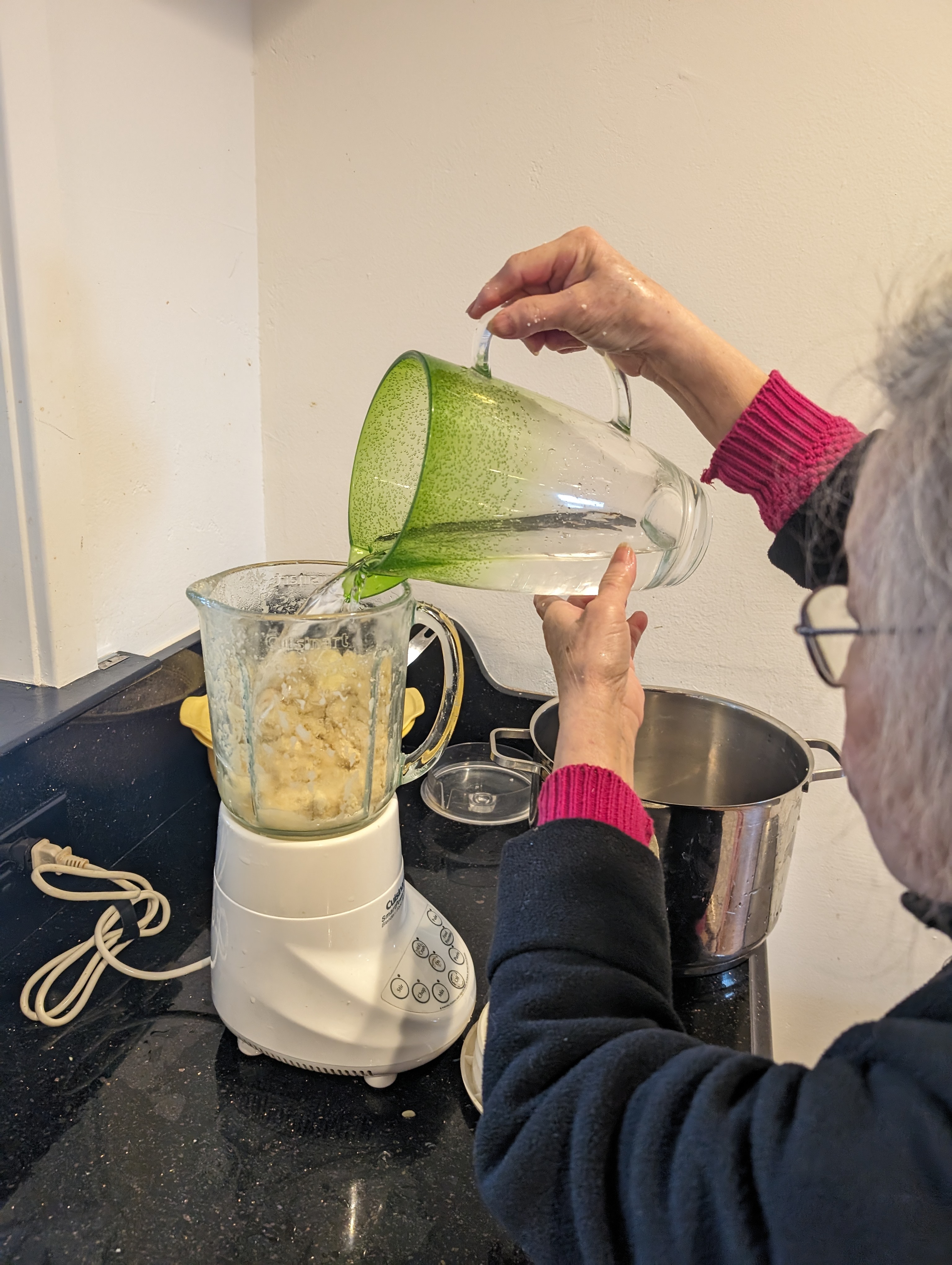
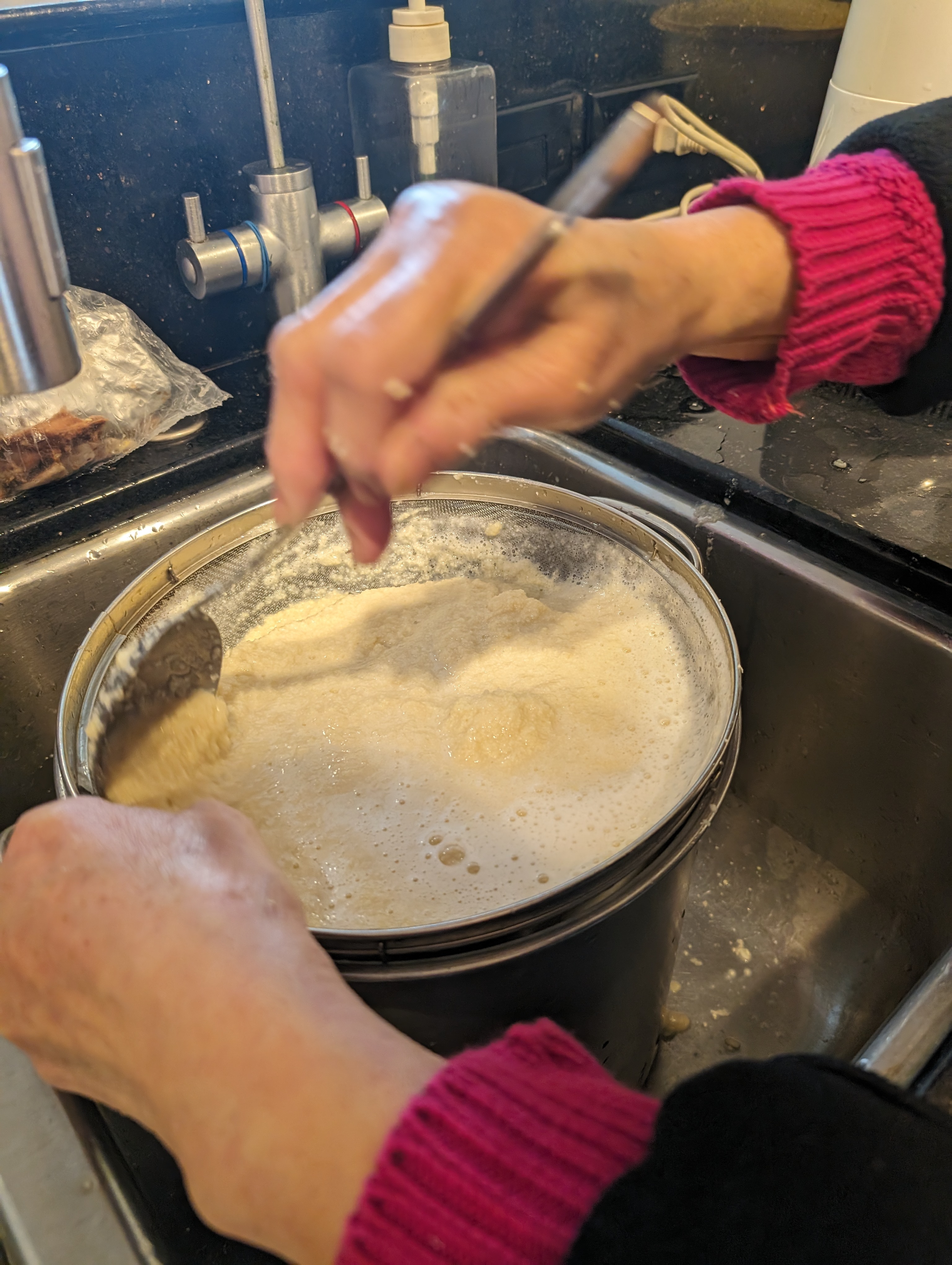
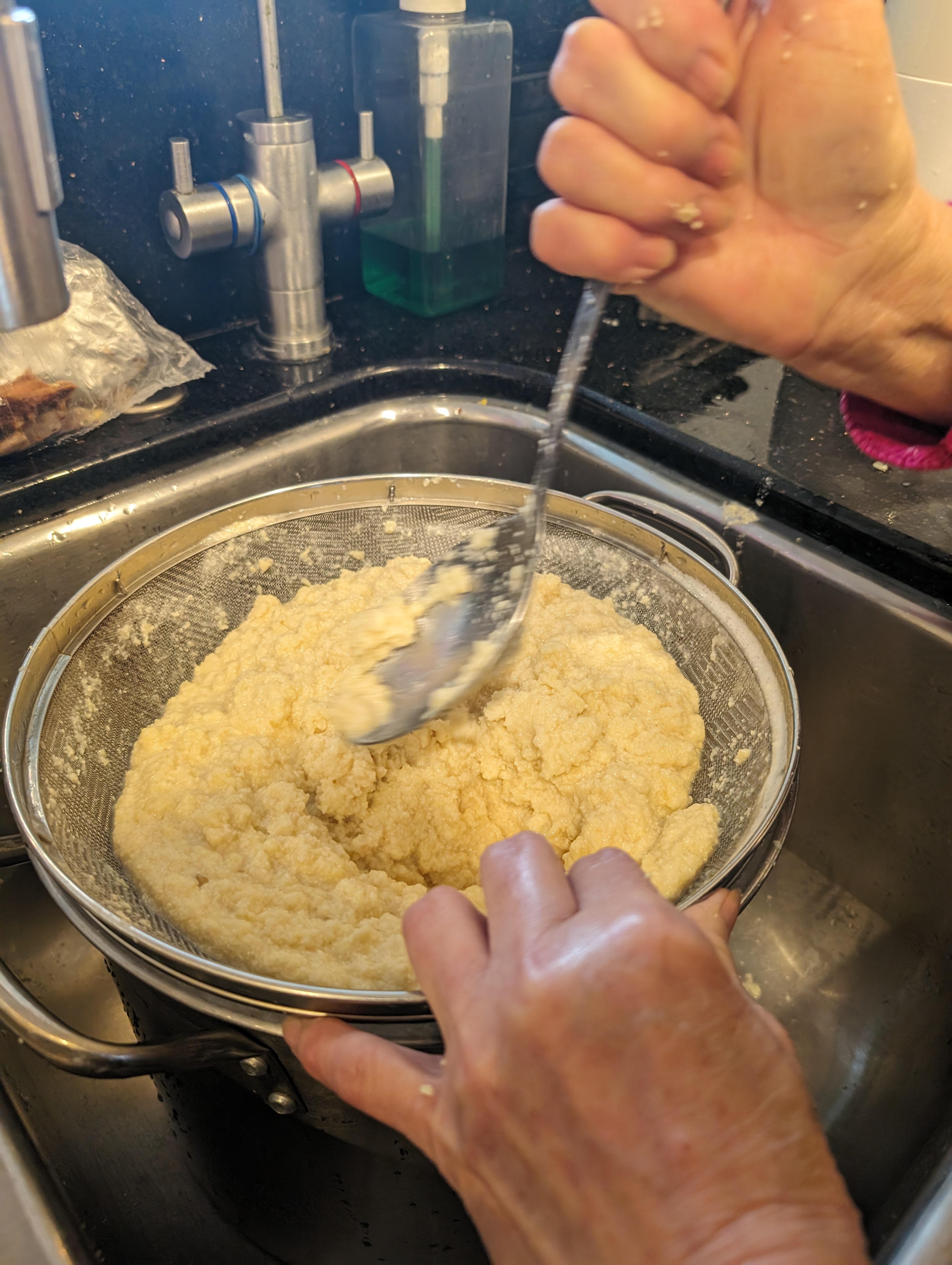
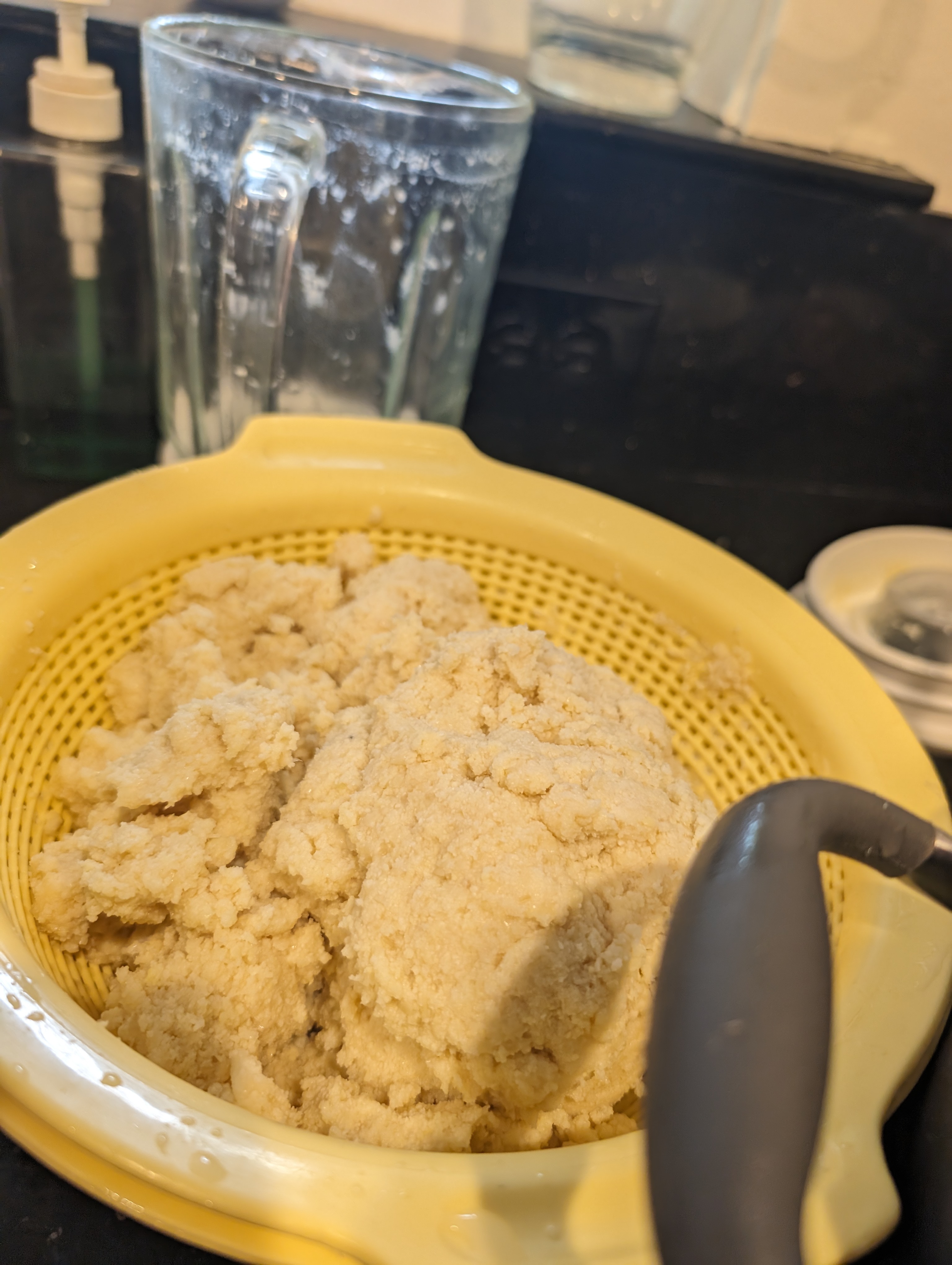
6. Keep the liquid separate. Put the pulp into a cloth-straining bag over the pot of liquid (or another pot, if that’s easier). Add fresh water and swirl it around into the pulp. Squeeze out and catch the water beneath the basket in a big pot. The goal is to extract as much milk from the pulp as possible, by adding liquid and pushing it through finer mesh/bags again and again.
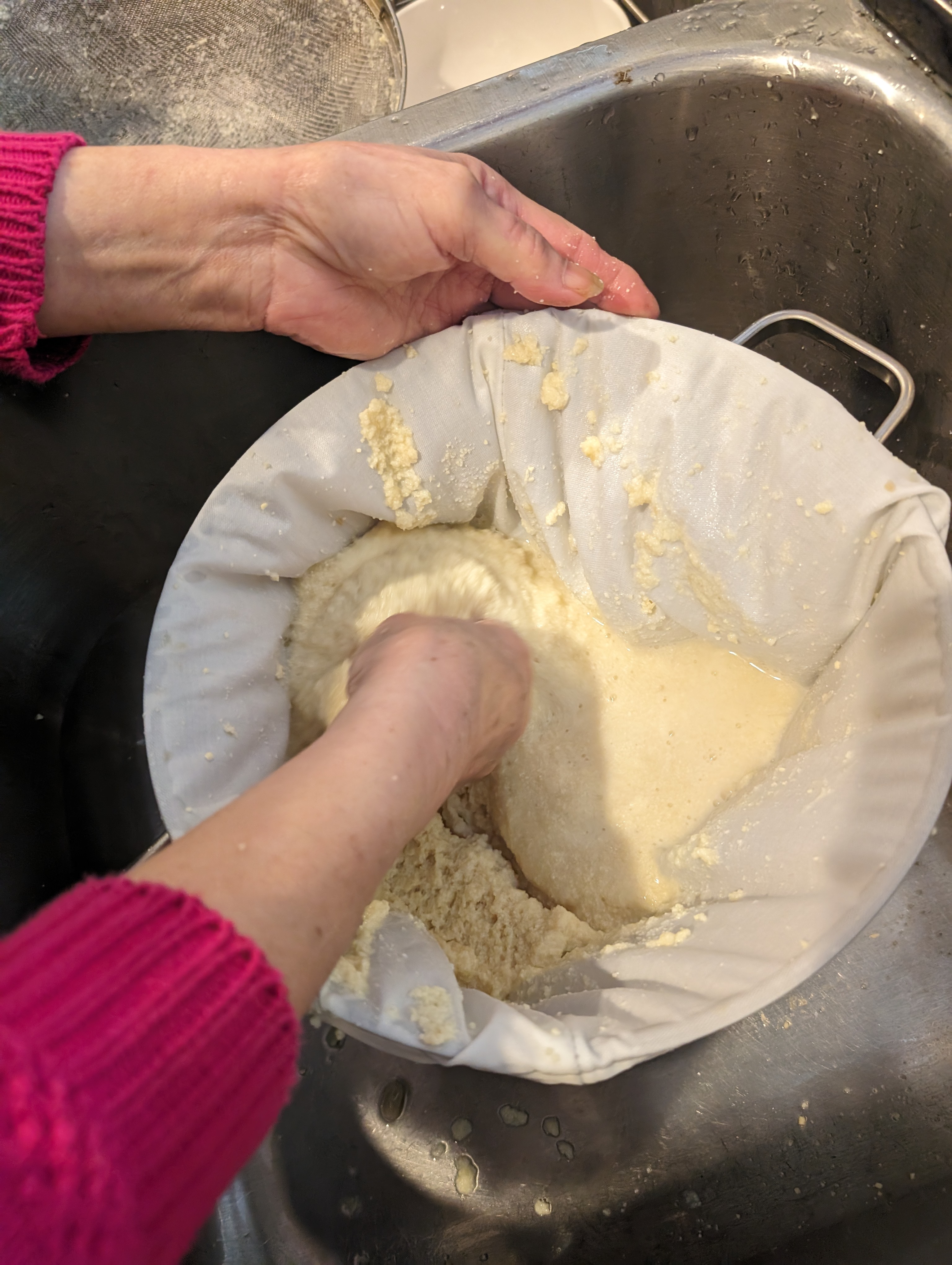
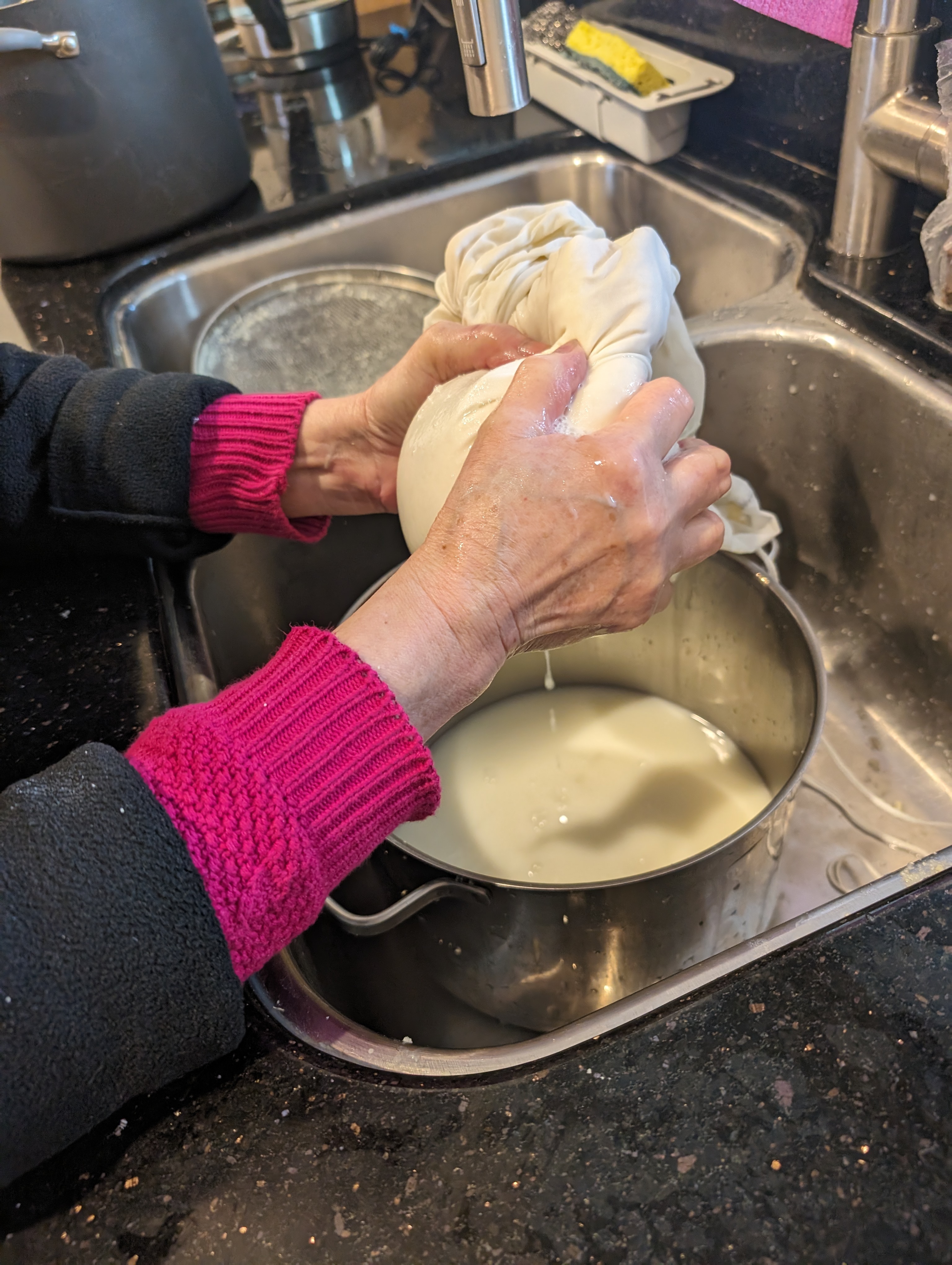
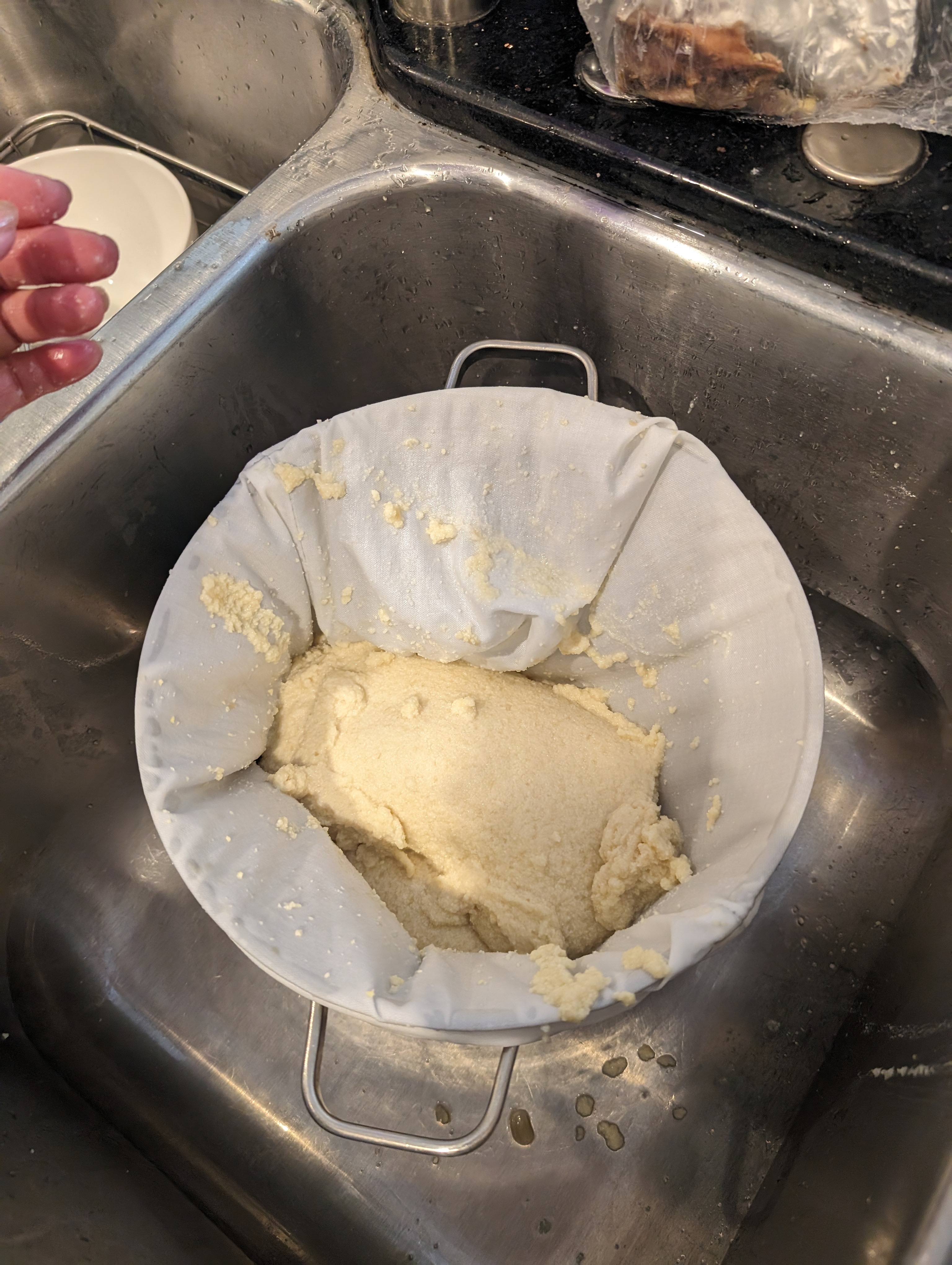
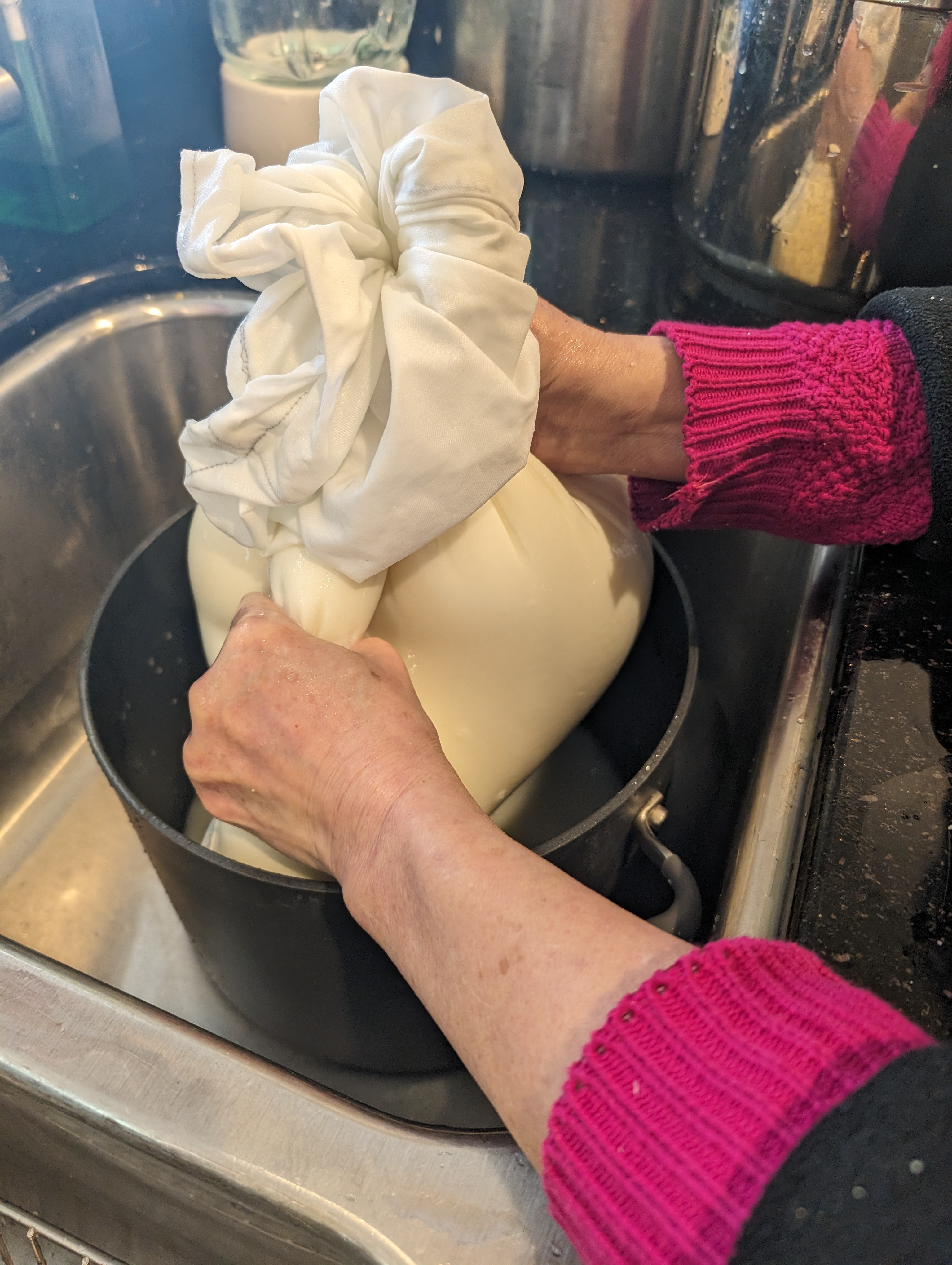
7. Combine all pots of liquids. Wash out the ones no longer used and the strainer cloth bag or clean fine mesh basket. Put the clean strainer bag or basket on top of a clean pot. Now, it’s time for the final strain, this time to get any residual pulp/crud out of the liquid. Pour the liquid into the cloth bag, hold the top closed tightly, and squeeze it to let the liquid slowly sift through.
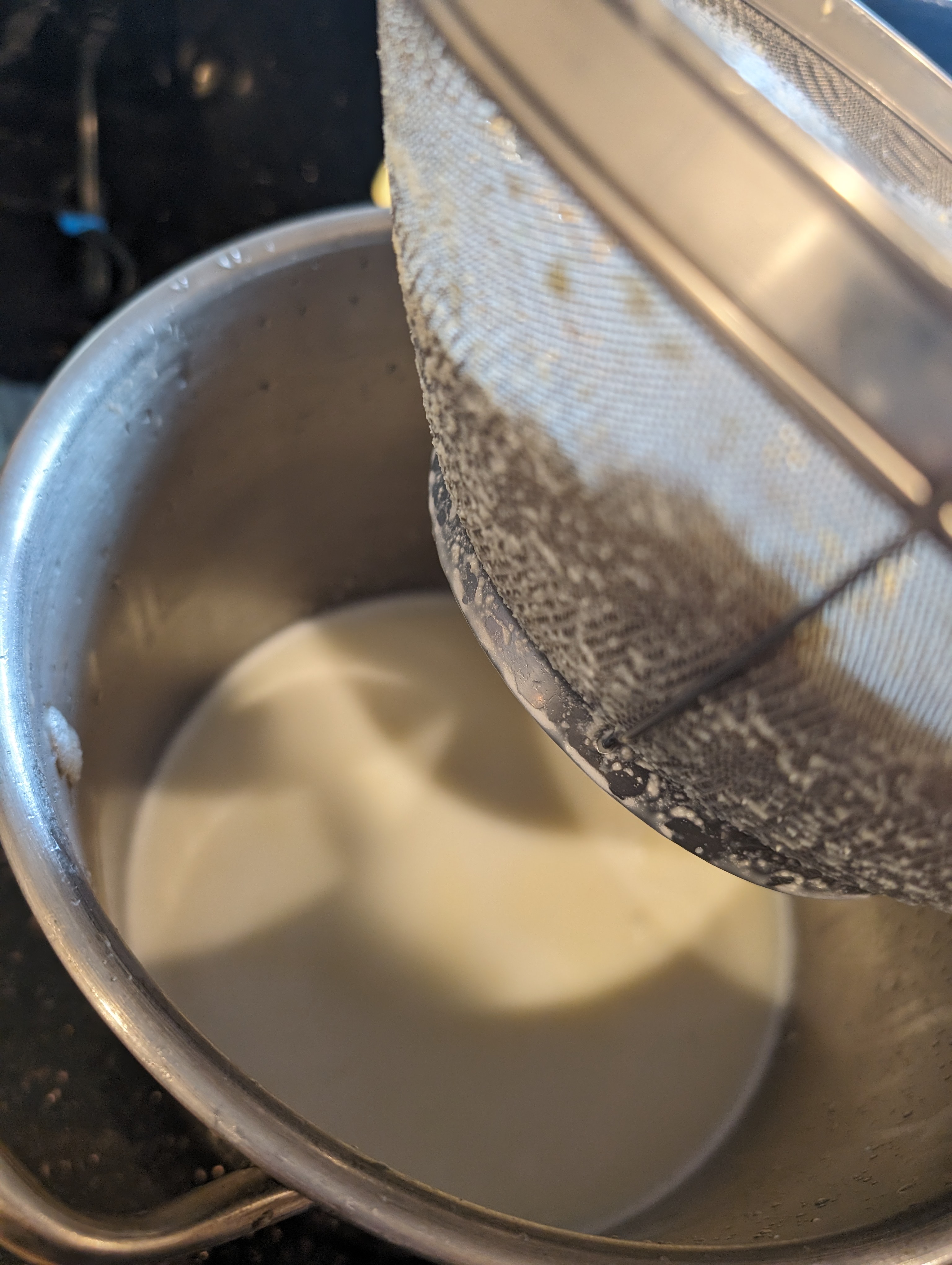
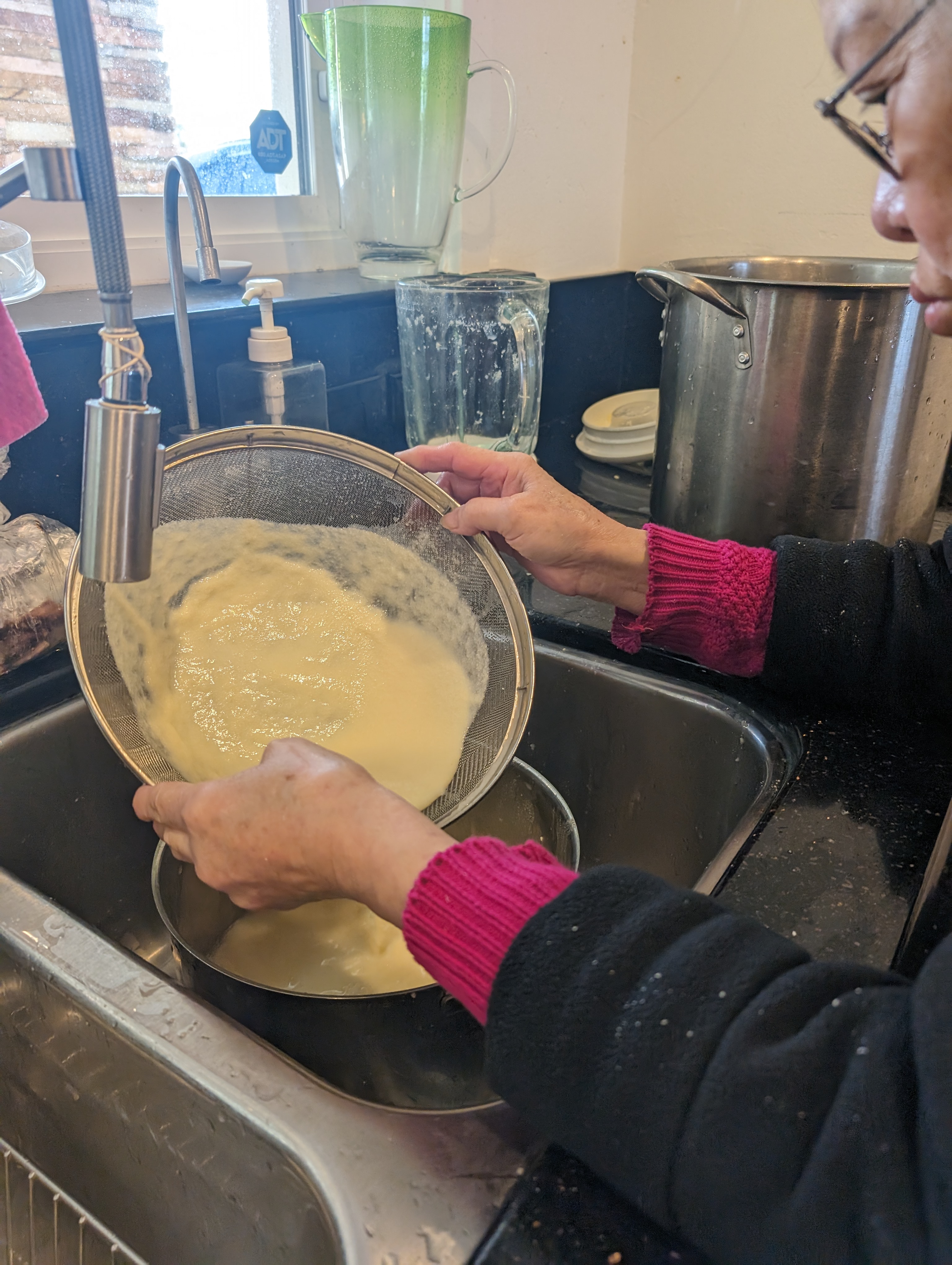
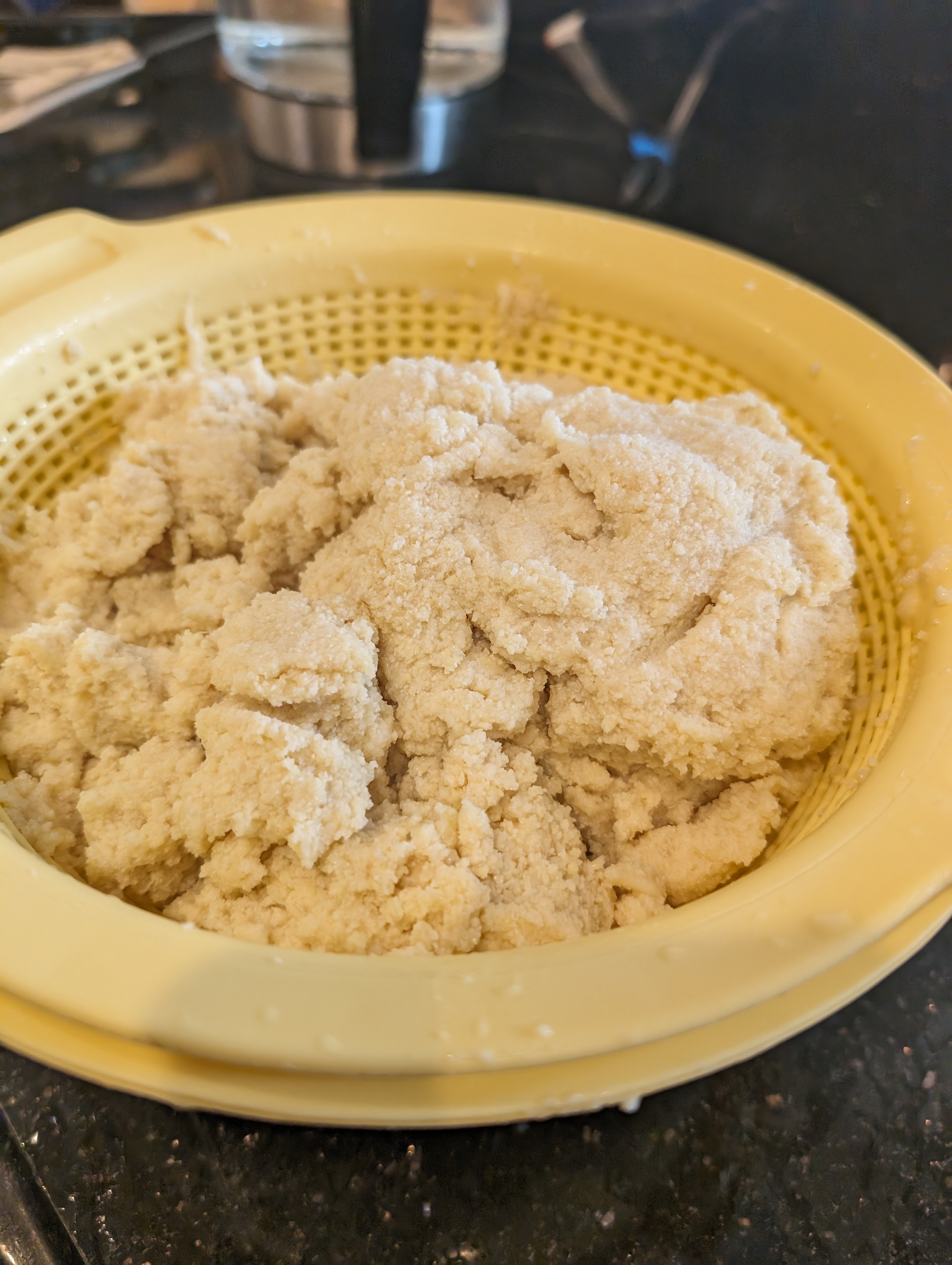
Or, pour the liquid over the clean strainer basket into a clean pot to sift out the remaining “crud.” In the picture below, you can see it on the sides of the basket. We did both methods.
The end result should be “spongey” leftovers. Pro sustainability tip: this makes great fertilizer for your garden.
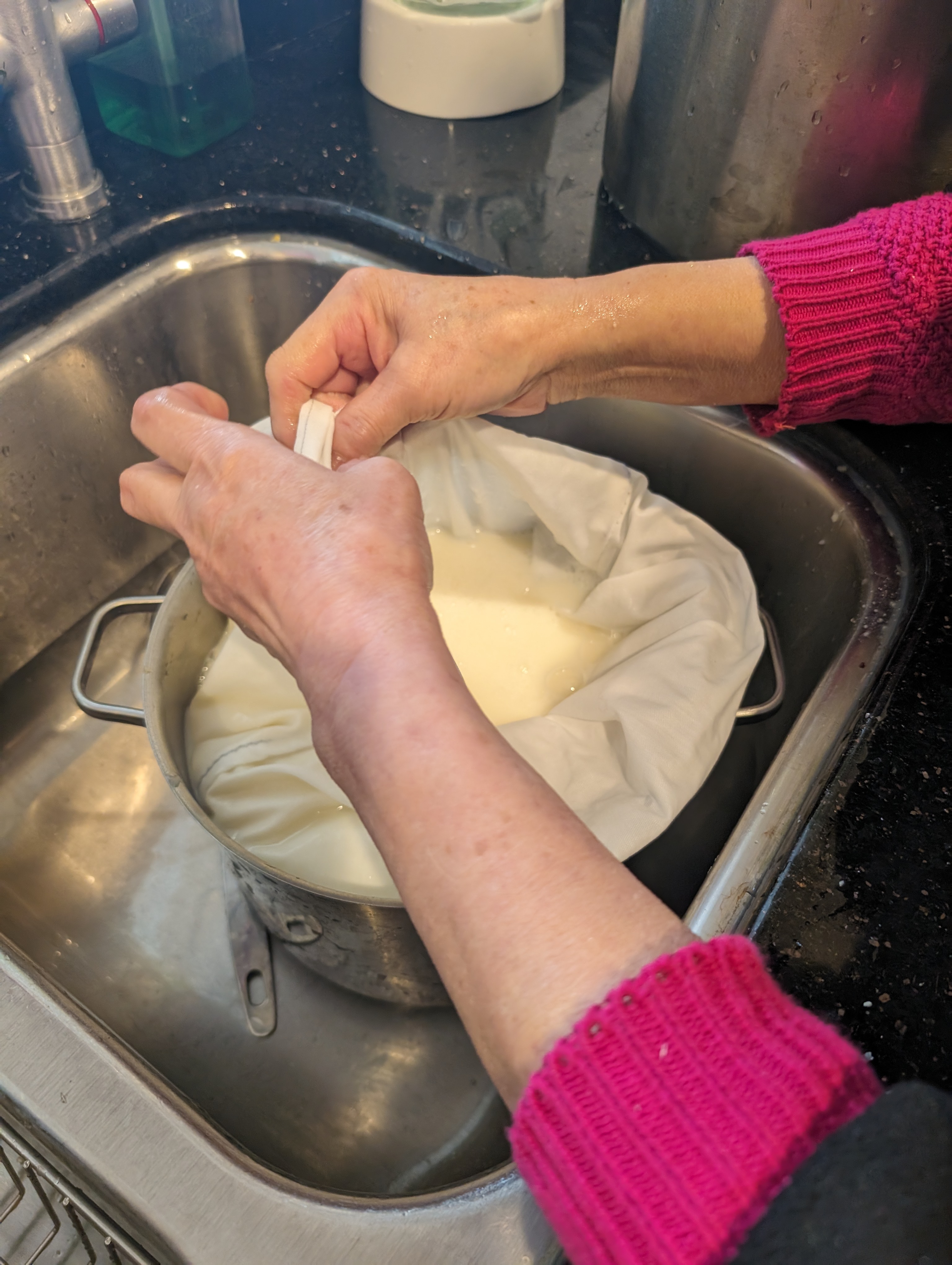
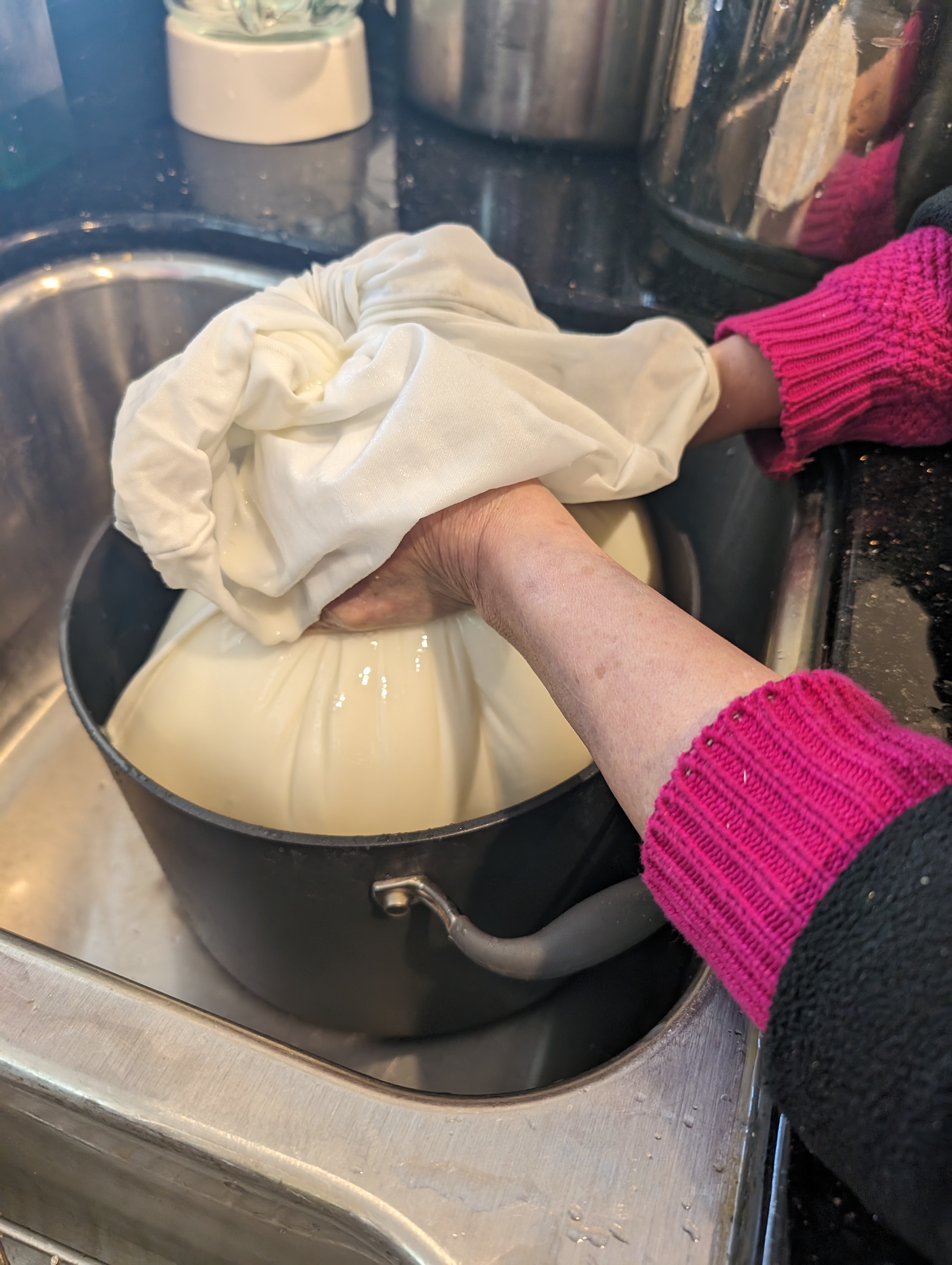
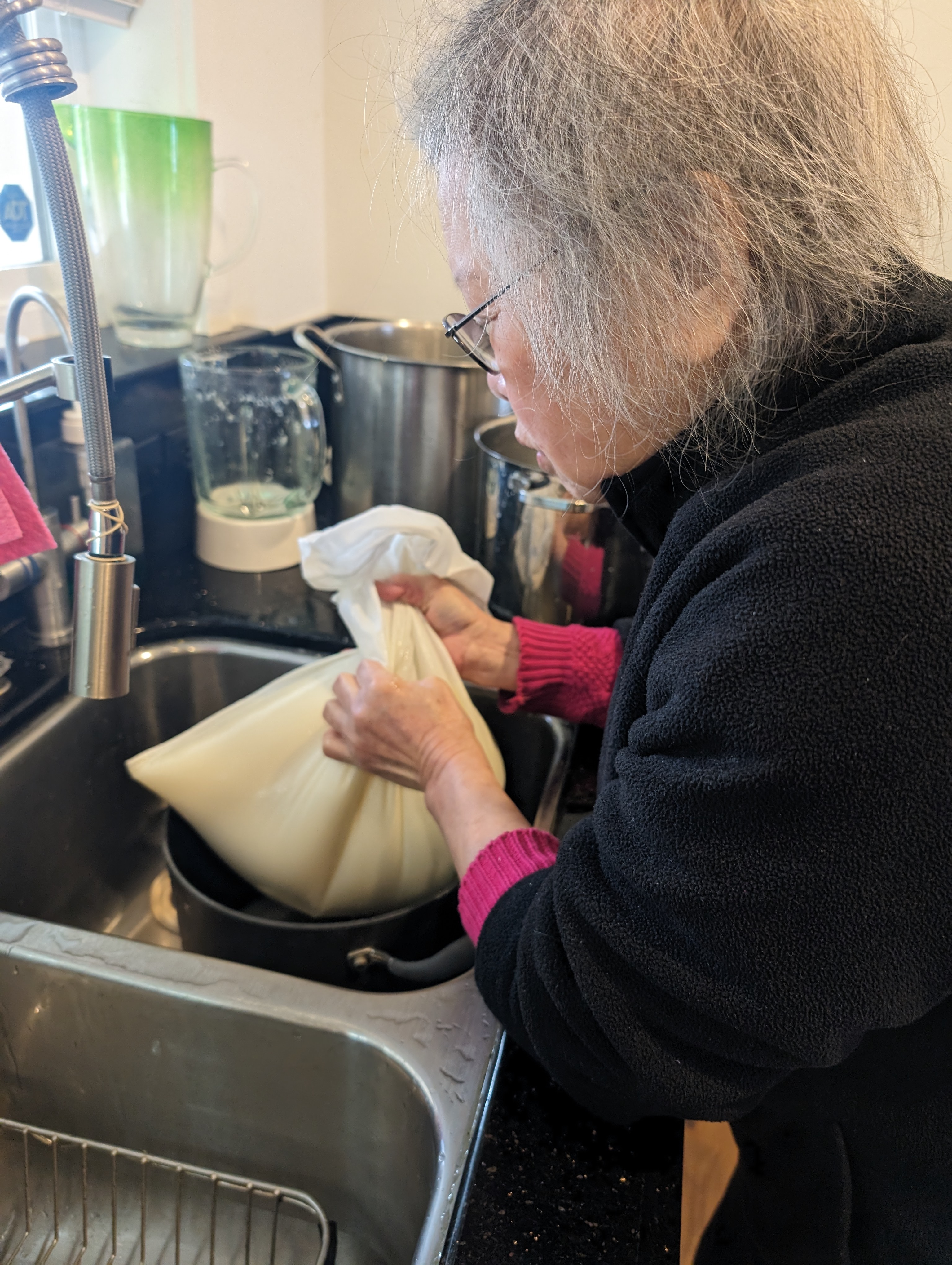
8. Take the liquid in a pot and put it on high heat. Add sugar to the pot. Boil the soy water until it starts bubbling. Then, leave it on the heat for five to ten minutes. Stir constantly while it boils or else it will burn and smell bad.
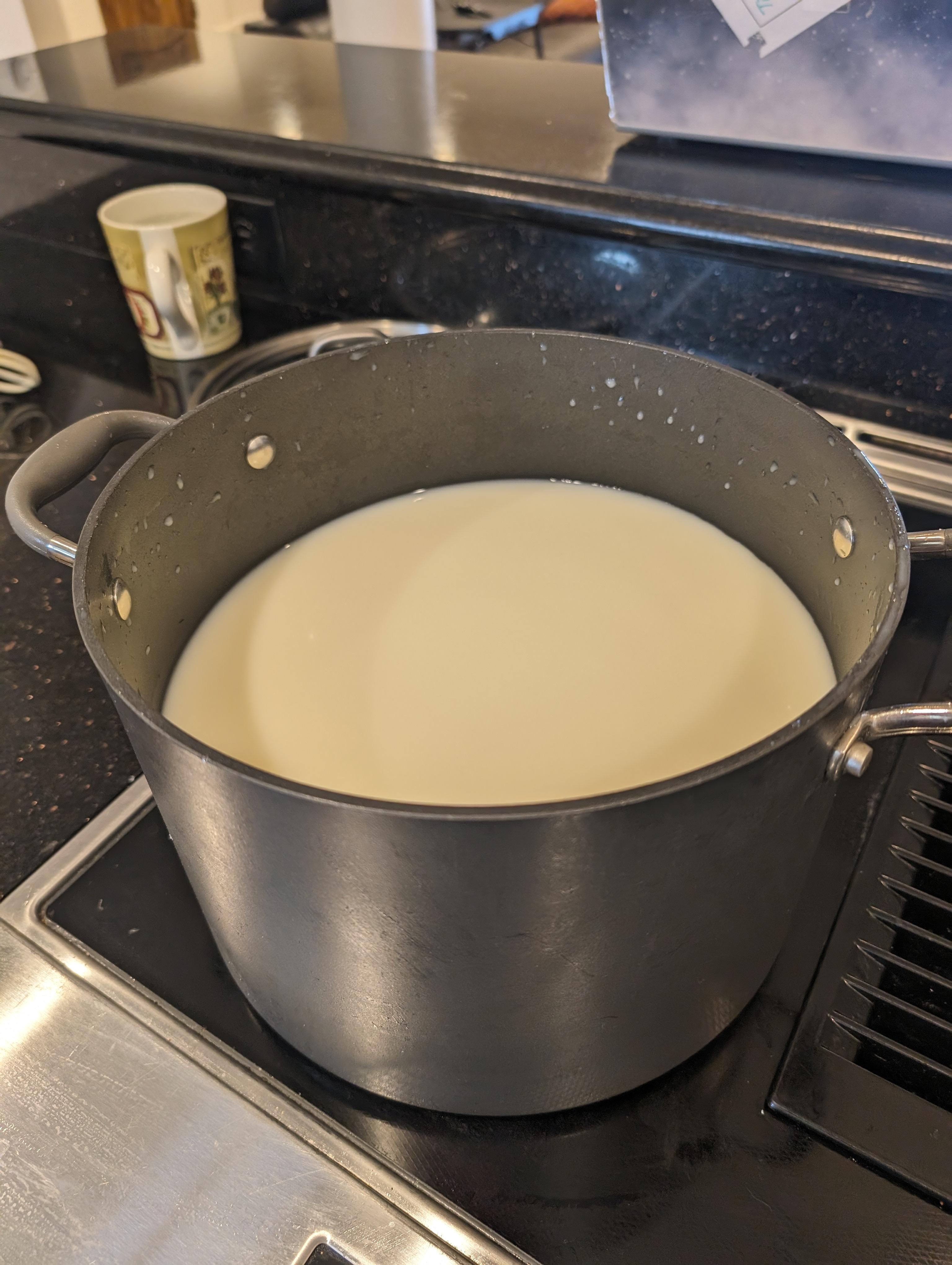
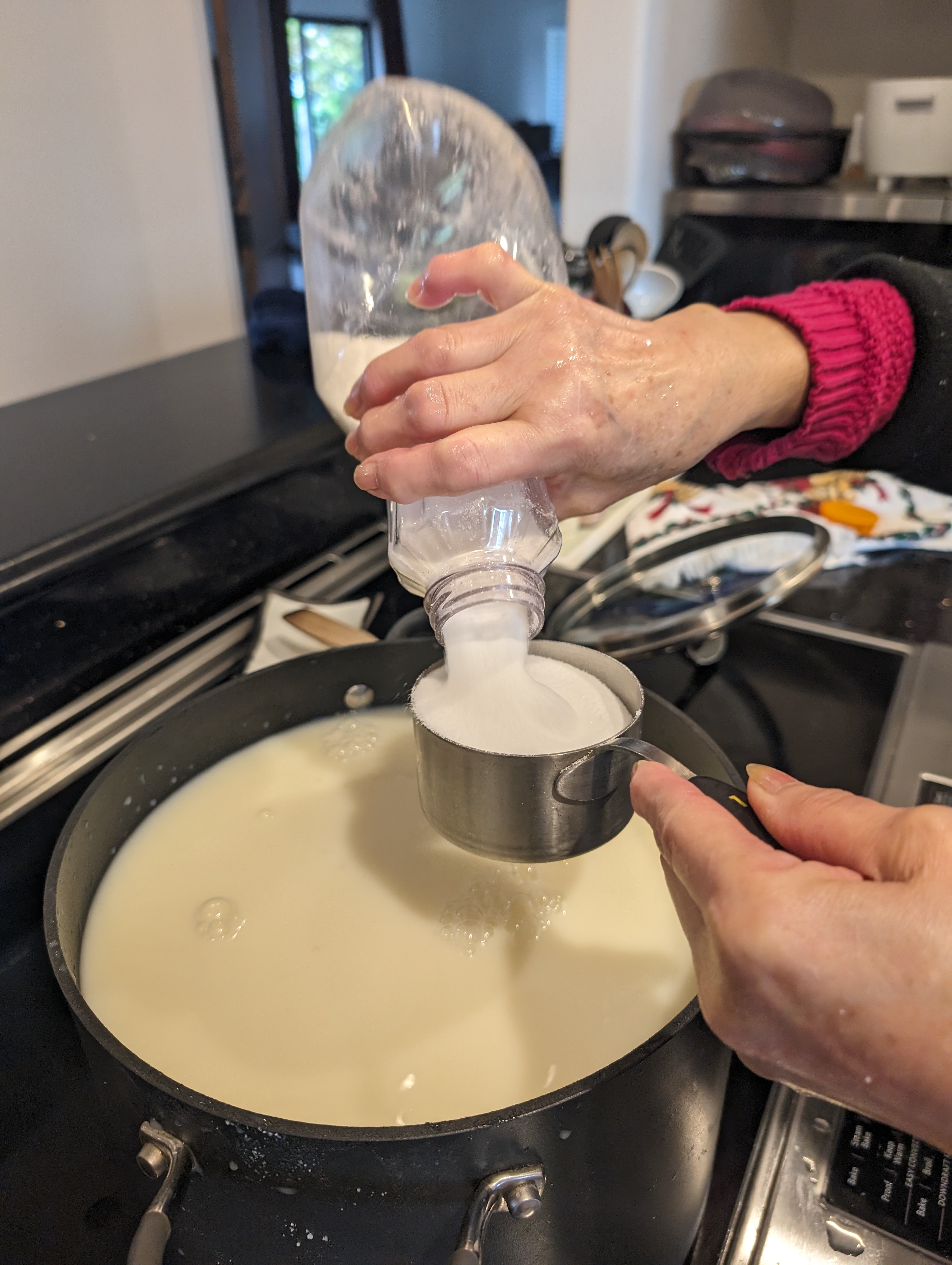
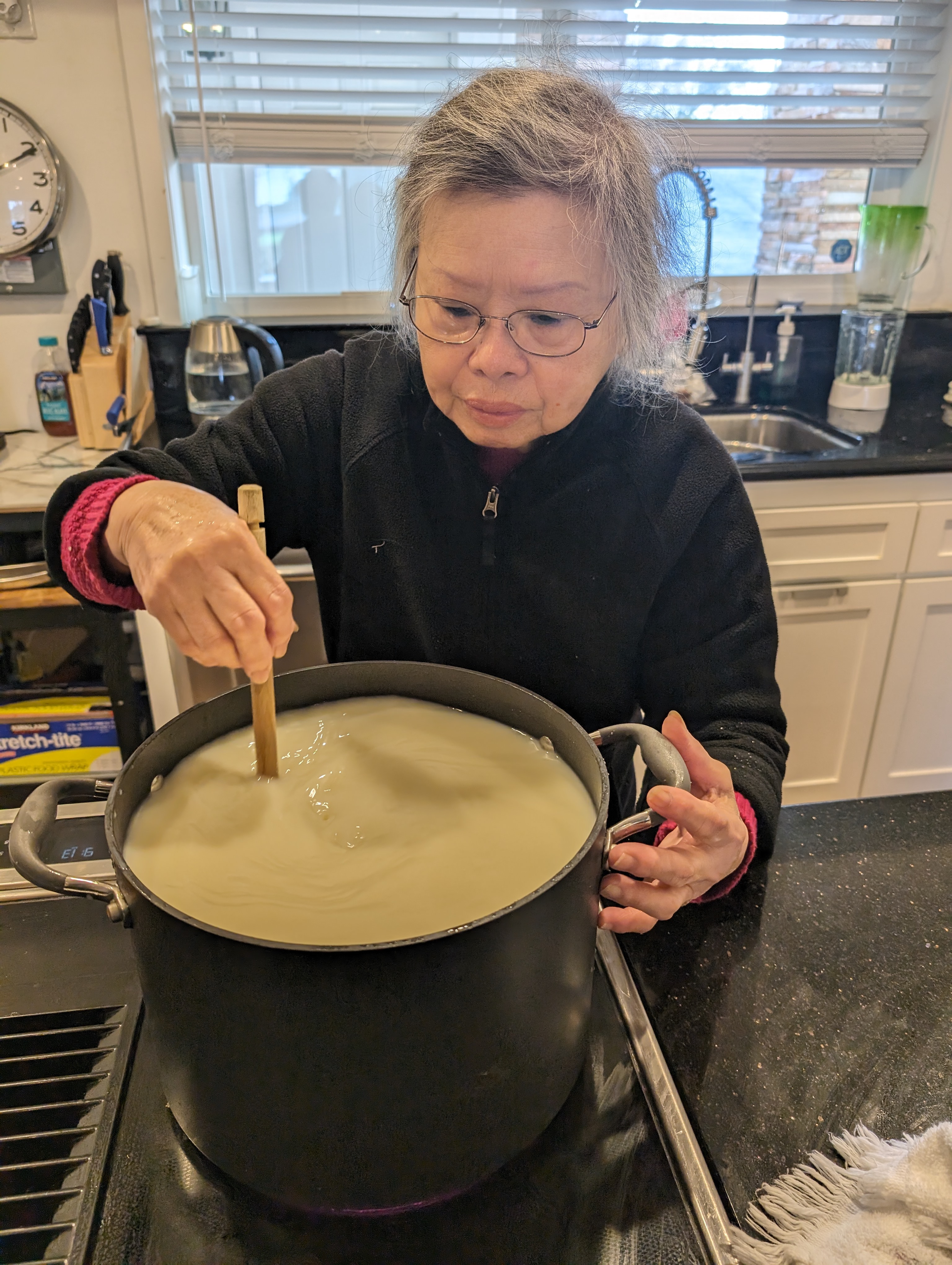
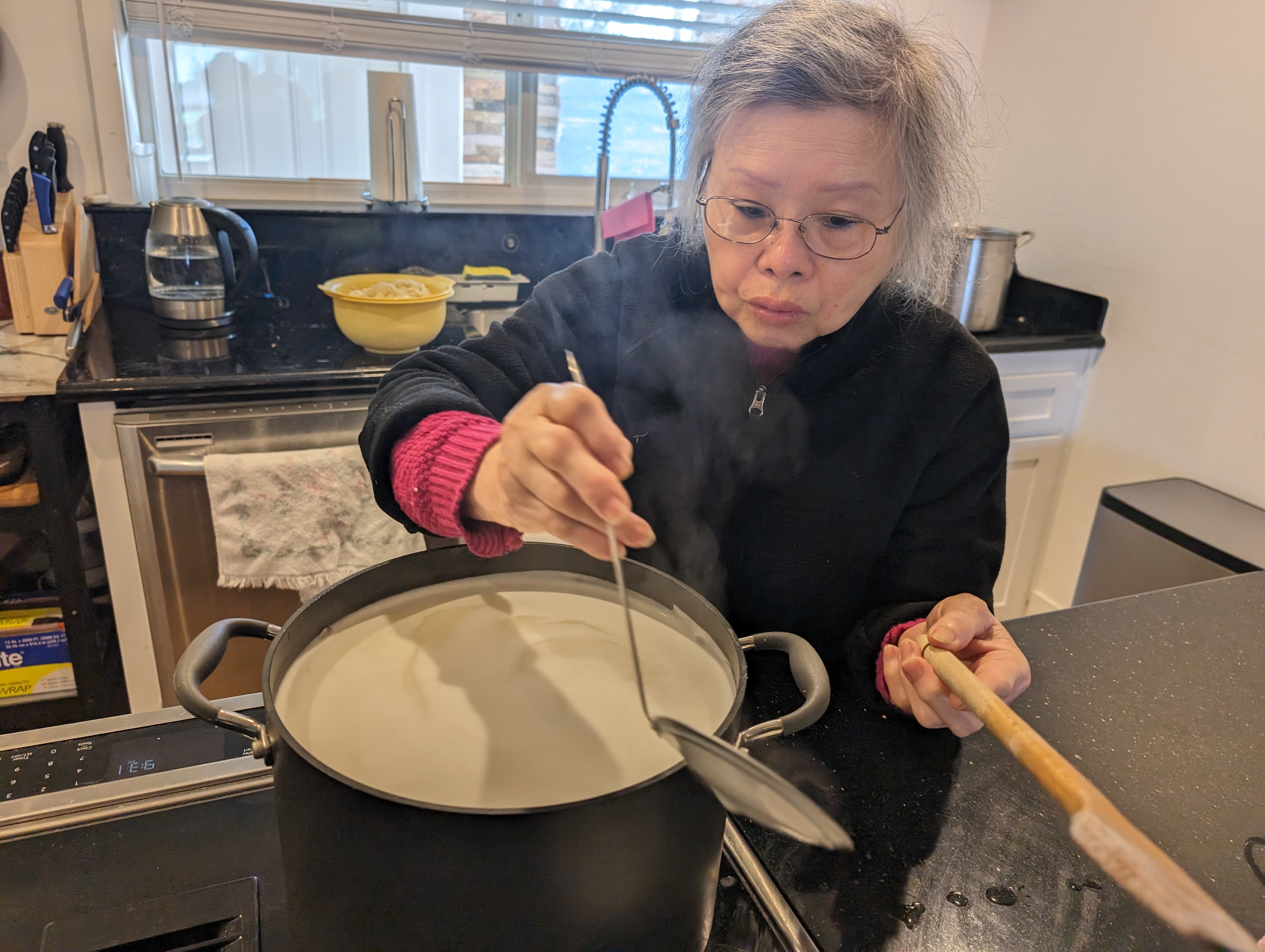
9. Strain out the top layer with the fine strainer as you stir.
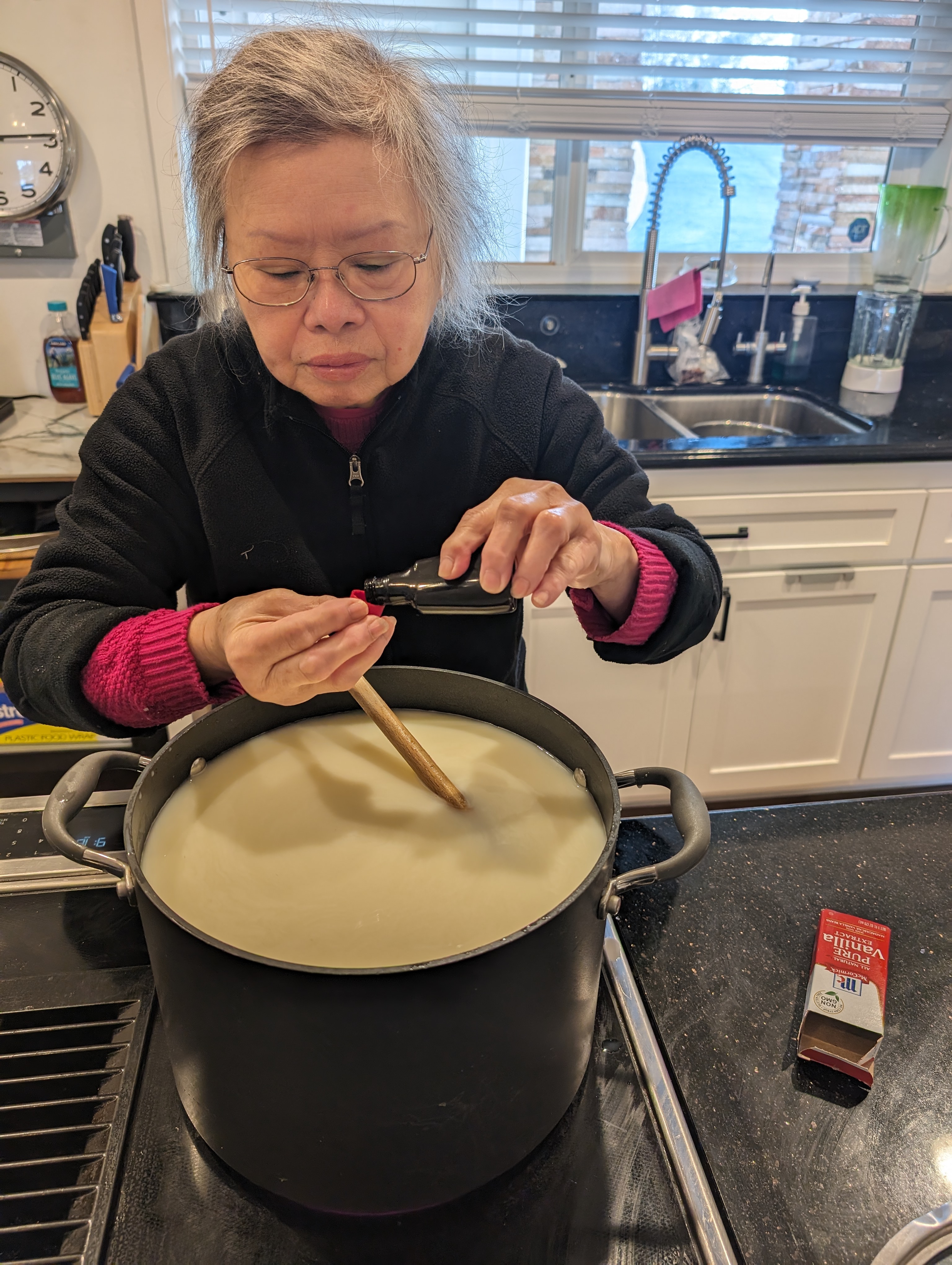
10. (Optional) Add the whole pandan leaves or vanilla extract directly to the liquid while doing step 8 boiling for a slight perfume. Take leaves out before serving.
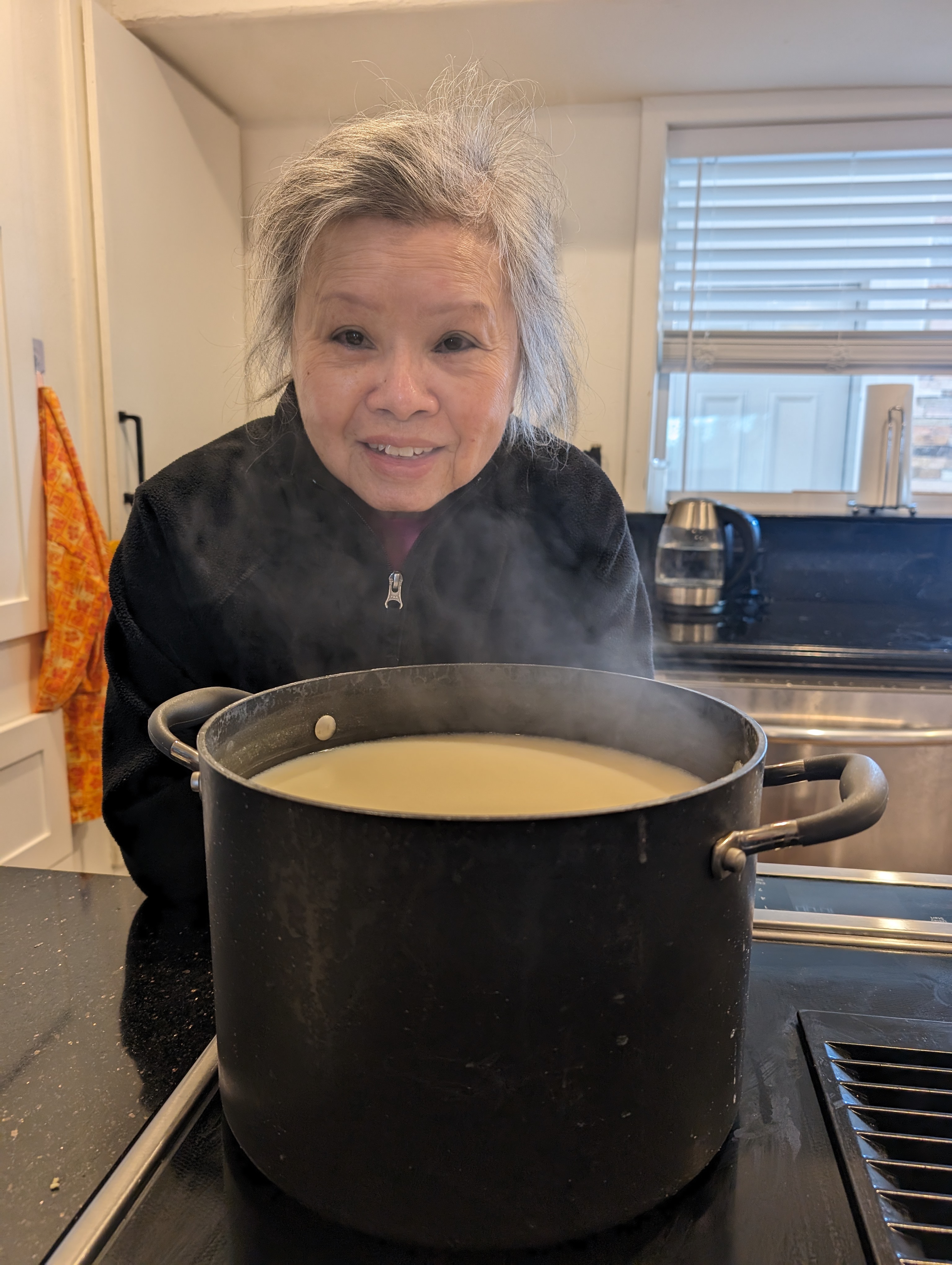
11. Let cool before you pour into containers for storage. Enjoy warm or chilled!