Quick Impressions of “Spider-Man: Into the Spider-Verse”
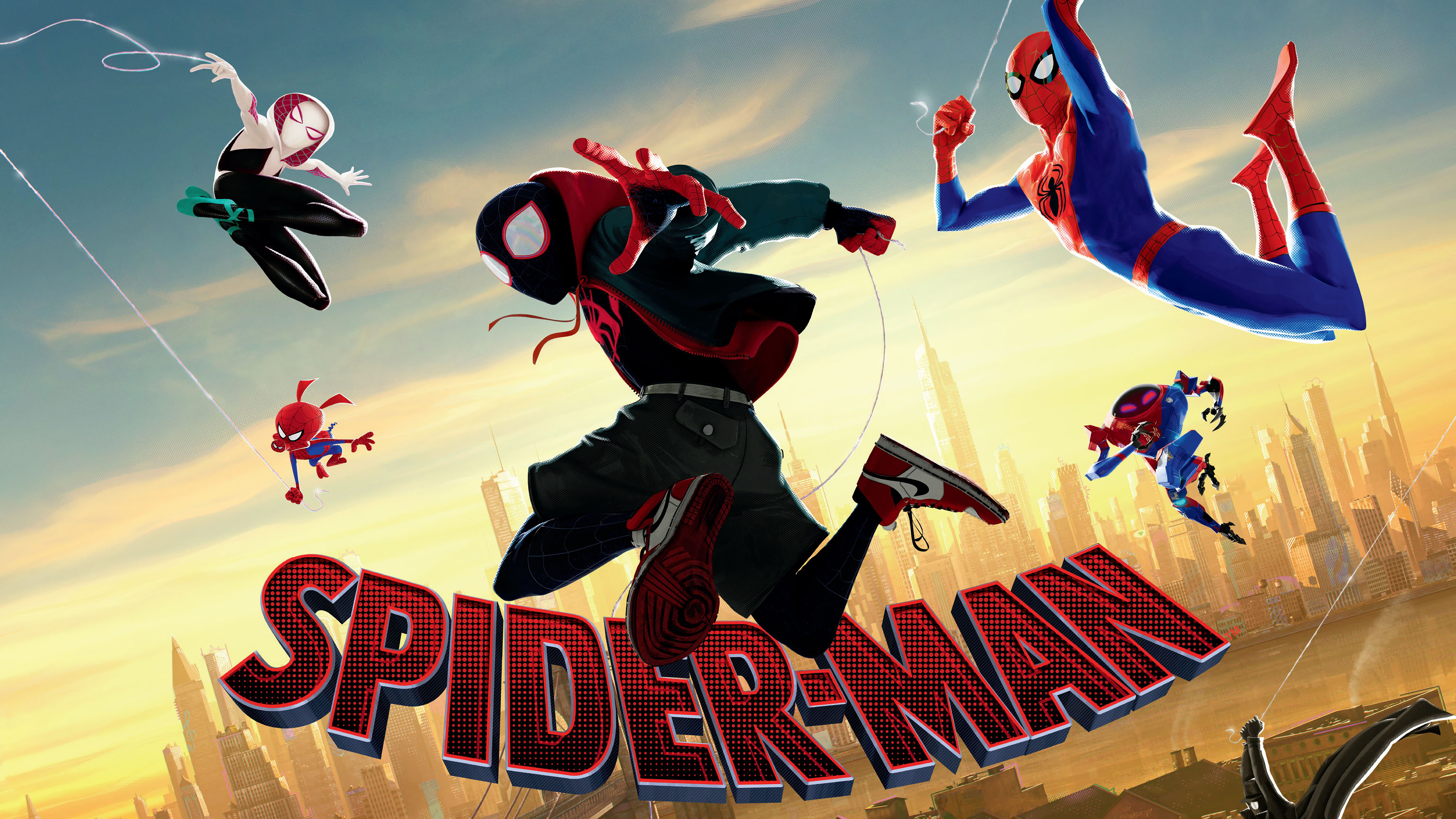
Spider-Man: Into the Spider-Verse is the best animated film of the year (possibly of the decade), the best superhero film of a year saturated with superheroes, and the best Spider-Man film we’ve gotten in fourteen years. It’s funny, it’s courageous, it’s heartbreaking, it’s exhilarating, it’s inspiring. Basically, it’s Spider-Man, as if the filmmakers were able to infuse every single frame with the essence of Spider-Man and an intuitive understanding of why he continues to be an endearing icon to true believers everywhere. It’s nothing short of a miracle.
Perhaps this should come as no surprise considering the talent involved. I don’t know about anyone else, but as soon as I heard that Phil Lord and Chris Miller would be heavily involved in the film’s development and production, I knew it would be a winner. After all, this is the genius duo that gave the world, among other things, The LEGO Movie. What superhero would be best suited to their uniquely off-the-wall sensibilities than Spider-Man? (Certainly not Han Solo, at least as far as Kathleen Kennedy was concerned.)
No, this is not, strictly speaking, a Lord & Miller joint—that should’ve been Solo—but their influence is everywhere in Spider-Verse; under their tutelage, their amazing team of artists do some spellbinding work, creating a cinematic experience of a comic book brought to life (much the same way Edgar Wright did with Scott Pilgrim vs. the World, but to an extreme that could only have been accomplished with animation). Of the three directors, only Peter Ramsey seems to have had even one previous directing credit with Rise of the Guardians (granting him a brief reunion with that film’s star Chris Pine). Together with Bob Persichetti (a veteran story artist for various projects) and Rodney Rothman (a veteran comedy writer who also co-wrote the script with Lord), they keep the film zipping along without ever losing sight of the emotional through-line of the story. It’s an incredible balancing act, and the results speak for themselves.
So much so that there’s little I can add to the appraisal of the film’s animation style that hasn’t been repeated ad nauseam, especially this late into the game. The one thing I wish to reiterate here is the film’s intuitive use of timing—one of the more often overlooked principles of animation—and when to animate the action on ones (one pose every frame per second) and when to animate on twos (one pose every two frames per second) and when to mix the two in the same shot. (This probably won’t matter to anyone but the most fanatical animation enthusiasts, but damn it, it matters.) Just compare the precise timing of Spider-Verse to something like Ralph Breaks the Internet (animated all on ones, like most CG animated films) and you’ll begin to understand how alternating between both frame rates allows for a greater variety of expression for the characters. (The best traditionally animated films knew how to take great advantage of this, so it gives this animator great joy to see that the art hasn’t been completely lost.)
Finally, there’s the amazing cast. Again, what else can I say? Everyone fits their role perfectly, everyone gets their moment to shine, and no one outstays their welcome. (Which is incredible to contemplate for a movie that features Nicolas Cage as a noir detective version of Spider-Man who talks like Humphrey Bogart. Then again, this is the same movie where one of the most gut-wrenching lines is delivered by a cartoon pig.)
What else? The score by Daniel Pemberton is thoroughly brilliant. The soundtrack is amazing, too. So is the Christmas album.
I’m realizing now this may be the single most positive post on this entire blog. I think I’d like to keep it that way and save the more exploratory stuff for the next post. As far as I’m concerned, Spider-Man: Into the Spider-Verse is a masterpiece, and this won’t be the only piece I write on it. There’s a lot to unpack here and I have no idea where to start.
How about a comparison piece, in which Spider-Verse gets examined alongside a certain other major franchise film that came out at about the same time last Christmas?
Next Week: More Spider-Verse, & The Avatar [Retrospective] Returns