
There are so many delicious Vietnam fruits that are exported abroad. But there is nothing like eating them where they grew.
Just returning from visiting Vietnam there are so many delicious memories from the country. And it may seem strange but Vietnamese fruit is one of the biggest.
Not simply because it’s home to the best pineapple and fantastic jackfruit, but because I discovered so many of these delicious fruits in Vietnam out of the kindness of strangers.
I try to always eat at small, locally owned places and it Vietnam people usually have their home attached to their business.
So it’s a restaurant out front with grandma sitting out front and the kids running about.
There’s no English menu. Often there’s no menu at all but with Google Translate I ordered meals. And many times if someone was prepping fruit they’d offer a plate of it to me.
Vietnamese people are so hospitable and because of this I tried so many new fruits.
Vietnam Fruits
1. Buddha’s Hand | Quả Phật Thủ
The technical name for this Vietnam fruit is fingered citron. While you will find it all over the country and in many people’s homes no one will eat it!
It’s true that 2/3 of Vietnamese do not consider themselves religious but many practical a spiritual life, respecting their ancestors. And the idea of eating Buddha’s Hand is too disrespectful.
It’s most often found in Hanoi as most of it is grown on the outskirts of the city in the Dan Phuong district.
So you’ll find it in markets where locals buy to present at temples and altars but most have no idea what it tastes like.
Scientific Name: Citrus medica var.sarcodactylisCommon Names: Fingered citron, longevity orange, swingle
.
2. Dragon Fruit | Thanh Long
Dragon fruit is Vietnam’s national fruit and you’ll find fields of them in the country, particularly around Mui Ne.
The grow in an unusual way upon pedestals and look like long cacti without the thorns.
Although 95% of dragon fruit grown is red skin with white flesh and often exported, you’ll also find the vibrant red dragon fruit on roadsides, city stands and in markets.
They are also common Ecuador fruits where you’ll find the yellow variety with white skin.
Scientific Name: Hylocereus undatusCommon Names: Pitaya, pitahaya, night blooming cactus, strawberry pearDragon fruit Season in Vietam: May to August although it can stretch from April to October
3. Jackfruit | Mít
Absolutely one of the best fruits in Vietnam.
I’ve had jackfruit as a meat substitute many times. It’s often used in vegan pulled pork and other shredded meat dishes as it has a similar texture when cooked.
But I had never had it raw until looking for the best beaches on Phu Quoc. It’s such a large fruit that my homestay owner generously offered a large section to try.
And I never turn down free food.
While it looks similar to durian or breadfruit on the outside, inside it’s like a fruit cocktail. Think strawberry, banana, pear.
And now it’s one of my favourite fruits.
Thankfully you can find it throughout Latin America and Asia. It’s one of the popular fruits in Malaysia.
Scientific Name: Artocarpus heterophyllusOther Names: jak, jaca, khanun, khnor, maki mi, may mi, mit, nangka, cowa fruit in TrinidadJackfruit Season in Vietnam: July – August in the North but you’ll find it earlier in the South
.
4. Durian | Sầu Riêng
Many people call durian the king of fruits and everyone else thinks it’s disgusting.
Honestly I think if you grew up with it you love it. And it’s at best an acquired taste for the rest of us.
I have tried it in many countries and I’ve tried many varieties. If you hate it the first time keep trying because I do believe there’s a durian for everyone.
Personally I like the bright yellow firm flesh durian. Whereas many of my Indonesian friends like the soft white flesh which has a stronger flavour and a floppy texture.
And if it scares you entirely start with durian ice cream. It’s worth visiting Vietnam’s oldest ice cream shop, Kem Trang Tien in Hanoi to try the creamy popsicle.
It has a light fruity but funky durian taste that everyone loves.
Scientific Name: Durio zibethinus L.Durian Season in Vietnam: June to August
.
5. Rambutan | Chôm Chôm
Hands down one of my favourite fruits of Vietnam. I cannot count how many times I bought a pound of them and then proceeded to eat the whole bag.
As they don’t continue to ripen once picked it’s important to choose the brightest, most vibrant fruits.
When vendors stuff them into your bag don’t be shy about choosing the juicy ripe fruit or pulling out those you don’t want.
In some cases you’ll buy rambutan straight off the branches so you can’t be choosy about individual fruits but you can sort through to find the best branches.
They are also one of the most popular fruits in Cambodia, so beloved there are hotels named after this fruit.
Scientific Name: Nephelium lappaceumOther Names: hairy lycheeRambutan Season in Vietnam: June to August
.
6. Red-Fleshed Durian | Sầu Riêng Ruột Đỏ
These are tough to find, you’ll have to ask around. But red durians are worth the effort and additional price if you’re a durian lover.
They are also much less expensive than buying them in other South East Asian countries, such as Malaysia or deep in the jungle in Borneo.
Scientific Name: Durio dulcisOther Names: durian marangang, tutong, lahungDurian Season in Vietnam: June to August
7. Lychee | Quả Vải
Often compared to my other favourite Vietnam fruit, rambutan, lychee has a slightly different flavour but is very important to locals.
Lychee is also known as the “fruit of love” or the “fruit of romance” in Vietnam, as it is believed to bring luck, prosperity, and fertility.
Scientific Name: Litchi chinensisOther Names: litchi or licheeLychee Season in Vietnam: May to August
.
8. Custard Apple | Chùm Ruột
Although this seems like one of the world’s most exotic fruits to those living in North America or Europe, it’s not at all.
This Vietnamese fruit is also common in tropical countries, particularly in Latin America and Asia.
In fact, Mark Twain said it was one of the most “delicious fruits known to mankind.”
Cousin to soursop, sweet sop is smaller and bumpy rather than spiky like soursop.
It also known as the Guatemalan fruit cherimoya.
Scientific Name: Annona squamosaOther Names: sugar apple, sweetsopCustard Apple Season in Vietnam: July and August
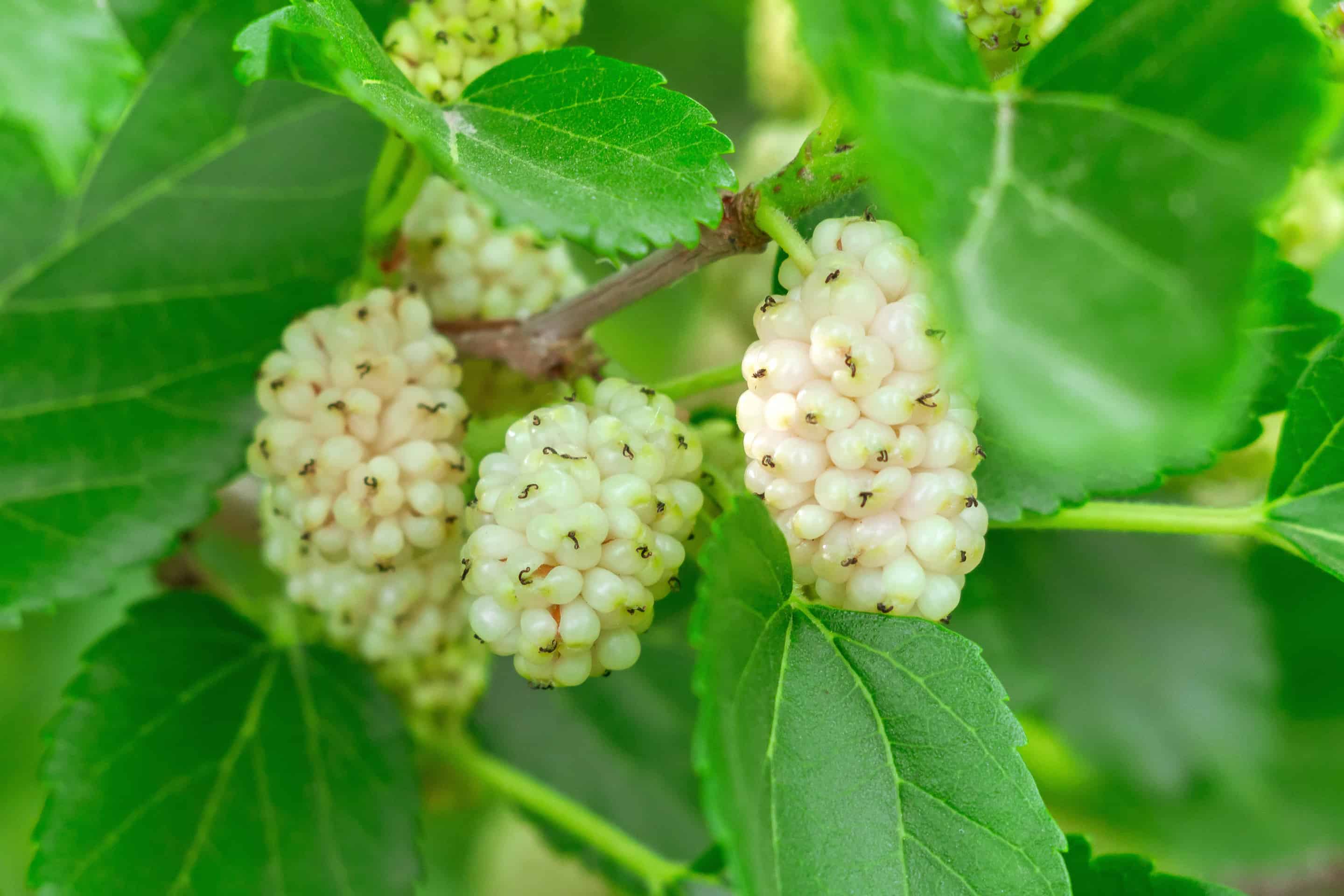
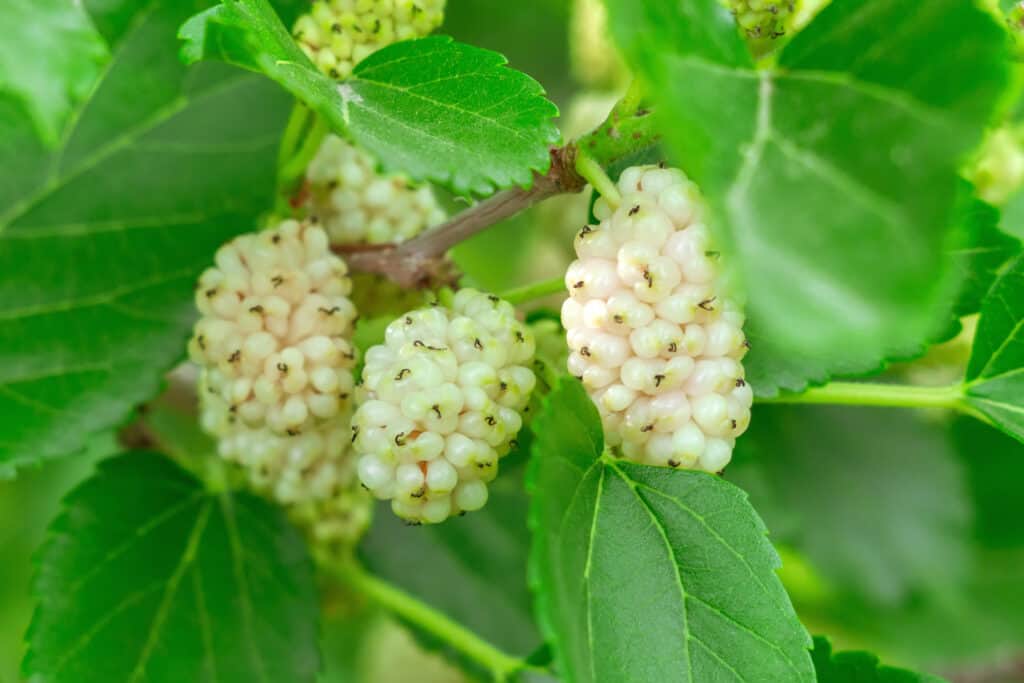
9. Mulberry | Dâu Tằm
Another one of the Vietnam fruits that you may have to know someone to find it.
It’s often grown in people’s backyards and luckily I have found Vietnamese love to share so it could happen if you’re friendly.
It’s native to China and more likely found in northern Vietnam. The purple variety is a common Laos fruit grown in the hillsides.
Scientific Name: Morus albaOther Names: common mulberry, silkworm mulberry, white mulberryMulberry Season in Vietnam: Late March to end of April
.
10. Calamansi | Quýt
This fruit in Vietnam is one of the most common Filipino fruits, it can be difficult to find here.
It is commonly used commercially in drinks and sweets to add a citrus component.
Yet on the street it is often confused with the sweeter kumquat as the Vietnamese word quýt describes both fruits.
It tastes like an orange and lime mixed together and often used in cooking that requires a sweet sour note, like this Filipino kinilaw recipe.
Scientific Name: Citrus microcarpaCommon Names: calamondin, kalamansiCalamansi Season in Vietnam: All Year Round
.
11. Kumquat | Quýt
Spending nearly three months traveling the country, the Vietnamese fruit that was part of my daily life no matter where I went was kumquat.
I became addicted to the thirst quenching drink known as tra tac.
It’s a kumquat iced tea sold on the streets. It’s originally from Saigon but I found it easily in Central Vietnam.
In Hanoi I replaced it often with local favourite tra chanh or lime tea. Which is a close second.
Scientific Name: Citrus japonicaOther Names: marumi kumquat, or morgani kumquat, round kumquatKumquat Season in Vietnam: November to June
12. Pineapple | Dứa
While pineapple isn’t a rare, exotic fruit it is one that is particularly delicious in Vietnam.
They are cheap and plentiful in Hoi An, according to the owners of a mi quang restaurant as she dropped slices on the table.
They are so good she sweetens her sauce with it instead of sugar.
If someone asked me to confidently declare what country has the best pineapple in the world? Without doubt it is Vietnam.
Runner up may be in the Caribbean as I love this Cuban fruit.
Scientific Name: Ananas comosusPineapple Seasons in Vietnam: February and June
13. Sapodilla | Mãng Cầu
I was shocked to see sapodilla in Vietnam as I often think of this as a Latin American fruit.
I first had this Vietnam fruit in Mexico and it blew me away.
We often think of fruits as sweet, sour or fresh. But sapodilla tastes like pumpkin spice latte. Add some cinnamon, star anise or cardamom and you have a pie.
It has spice and ginger flavor notes. And while it almost looks like a potato it is technically a berry.
You may also recognize it as chico in the Philippines. And its tree bark was used as the world’s first chewing gum, known as chicle.
If you like sapodilla you may like the South American fruits known as mamey.
Scientific Name: Manilkara zapotaOther Names: Chicle, Chicle Gum, Chiku, Ciku, Naseberry, Nispero, Sapodilla, Sauh MenilaSapodilla Season in Vietnam: All Year
.
14. Longan | Nhãn Lồng
Known as ‘dragon’s eye’ this fruit is often compared to lychee, however it has a slightly sweeter flavor and more flesh.
But this fruit in Vietnam soapberry family, which includes lychee and rambutan so it is a fair comparison.
You’ll find lots of street vendors in Vietnam selling longan on the street in bunches. They are worth trying but keep in mind there’s a small pit in the middle.
It’s also a very popular fruit in Hawaii.
Scientific Name: Dimocarpus longanOther Names: dragon’s eye, lungen, mata kuching, lengklengLongan Season in Vietnam: July and August
15. Indochina Dragon Plum | Sấu
This northern Vietnamese fruit is most popular in Hanoi. You can also find it in neighboring Cambodia and China.
Indochina dragon plum is loved for its sour qualities both raw and cooked.
For me it added a layer that I couldn’t quite place where the sour flavor came from. It is often candied or preserved in sugar is a treat similar to umeboshi in Japan.
It’s common to see this preserved fruit in iced drinks sold on the streets.
Sấu is also used often in cooking for its sour properties. Unripe fruit may be used in duck dishes or boiled in water to make a sour soup broth.
Ripe fruit is often served with salt and/or sugar and a bit of chili.
Scientific Name: Dracontomelon duperreanumOther Names: long cóc, sấu trắng, quả sấuIndochina Dragon Plum Season: June to October
.
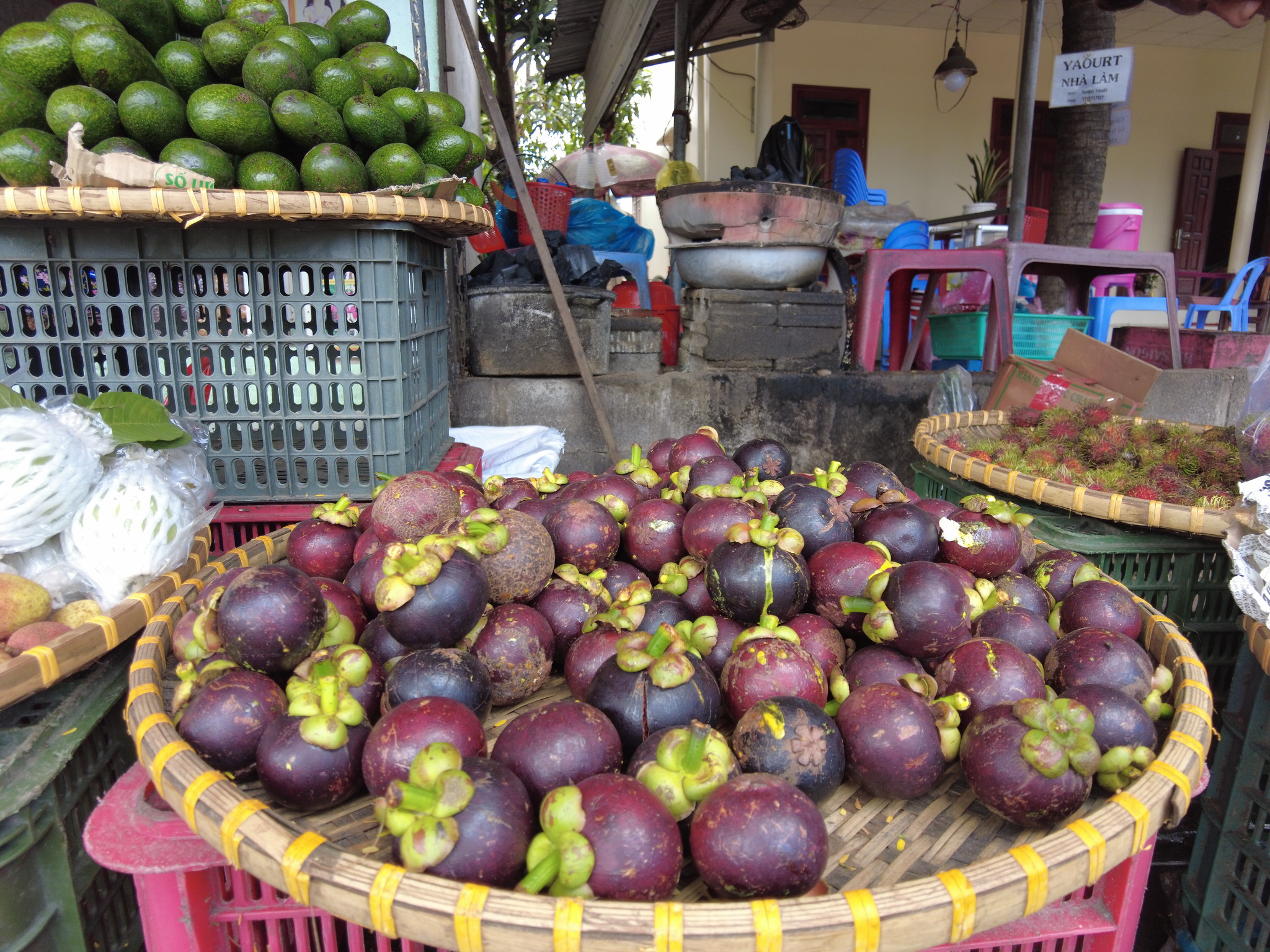
16. Mangosteen | Măng Cụt
These popular Vietnamese fruits are originally from Indonesia and despite its name not related to mango whatsoever.
I think they are one of the most intimidating fruits in Vietnam to eat at first because the exterior is a hard shell.
So how to eat a mangosteen?
Mangosteens change from a dark reddish brown to purple when ripe and will have a bright green stem
It’s actually not as difficult as it looked, put it in your hands and squeeze until it cracks to reveal the segmented fruit.
Pop one in your mouth and suck the white translucent flesh off the smooth pit.
Mangosteen is known as the queen of fruits and known for its many antioxidants.
It’s also one of the most popular Colombian fruits.
Scientific Name: Garcinia mangostanaOther Names: amibiasine, fruit des rois, garcinia mangostana, mang cut, manggis, queen of fruits, sementah, semetah, xangoMangosteen Season in Vietnam: May to August
17. Starfruit | Khế
Like many other fruits in Vietnam, star fruit grows best in tropical countries such as those in South East Asia, Latin America and Caribbean countries.
However, I think starfruit is best in Vietnam.
In many other countries the sour flavour of star fruit is covered with sugar.
But Vietnamese food and drinks embraces sour.
While it is used cooked in desserts and jams, similar to other countries. Khế is also used for its sweet and sour balance in soups, broth and drinks.
Outside the cities you’ll see it as a popular snack.
Scientific Name: Averrhoa carambolaCommon Names: belimbing besi, belimbing manis, belimbing sagi, carambola, caramba, country gooseberry, kamrak, kembolaStarfruit Season in Vietnam: February to May in the South. May to September in the North.
18. Rose Apple | Quả Mận
One of my favorite Jamaican fruits, it is known as Quả Roi in the north and Quả Mận in the South.
It looks like a cross between a red delicious apple and a pear and is also known as water apple because of its light and watery texture that is somewhat similar to an Asian or Chinese pear.
High in a number of nutrients such as niacin, riboflavin, thiamin, vitamin A and C, it is known as a fruit that can combat everything from bladder infections to cancer.
You can find this delicious Vietnamese apple in various shapes that are less bell shaped and also green depending on the region and time of year.
Scientific Name: Syzygium jambosOther Names: champakka, chompu,guljamun, malabar plum, mountain apple, malabar plum, panineer Rose Apple Season in Vietnam: All Year
.
19. Soursop | Mãng Cầu
Around the world, this fruit is known as a miracle cure for everything from an upset stomach to anti-cancer properties.
It also happens to be delicious and no trip to Vietnam is complete without trying soursop.
The white fleshed, creamy fruit is common in shakes, ice cream and many deserts. It has a custard like quality and tastes like a fruit cocktail.
It’s also one of many unique Brazilian fruits.
Scientific Name: Annona muricataOther Names: graviola, guyabano, guanábanaSoursop Season in Vietnam: August and September
20. Star Apple | Vú Sữa
Star apple is a tropical fruit that is native to the Caribbean and Central America and one of the most popular fruits in Nicaragua.
But it is also grown in southern Vietnam and thrives in the Mekong Delta.
The fruit is round or oval in shape, with a smooth, shiny, and slightly waxy skin that is usually purple or green in color. The fesh inside is white, creamy, and sweet with a texture similar to custard.
In Vietnam, star apple is often eaten as a snack or dessert, and it is also used in various sweet dishes and drinks.
Scientific Name: Chrysophyllum cainitoOther Names: Caimito, milk fruitSeason: October to December
21. Black Plum | Trâm
Driving from Da Lat to Nha Trang took a few days and we stopped overnight in small towns that rarely see international tourists.
One night we popped into a small family owned restaurant that had run out of everything except for bánh xèo (Vietnamese pancake) as there was a group of women that had ordered almost everything.
I suspect Vietnamese women have voracious appetites because they work so hard.
We laughed as we learned there were no noodles because they were eating kilos of it. And to make it up to us they gave us these small black fruits.
As soon as I bit into it I very loudly declared “plum!”
I was so proud to recognize it. They laughed at me and handed us a few more as it was obvious I liked it.
Scientific Name: Syzygium cuminiOther Names: Java plum, jamun, jambolan, Malabar plum
.
22. Passionfruit | Chanh Leo
Although there are several types of passionfruit in Vietnam, purple passionfruit is becoming an emerging fruit business in Vietnam as China has started to import this delicious fruit.
In fact, many farmers have chosen to shift from coffee to passionfruit as it requires less intensive work and faster profit as a tree can be harvested up to 4 times a year.
It is typically grown in the Central Highlands, and easily found in the markets.
It’s also common in Central America and one of the most popular fruits in Panama.
Scientific Name: Passiflora edulisOther Names: Purple passionfruit, grenadelle, grenadine, passionflower, purple granadillaSeason: May to December
23. Persimmon | Hồng Xiêm
Persimmons are a traditional fruit in Vietnam, although the country does not produce much for export.
Like many fruits in Vietnam, there are two varieties available categorized by sweet and soft (hồng chín) with a thin tomato-like skin or or sour and crunchy (hồng giòn), which is more like an apple skin.
Although persimmons are originally from China, their popular reaches as far as South America where they are one of the most popular Chilean fruits.
Scientific Name: Diospyros kakiOther Names: date plum, kaki, sharon fruit, cacquiSeason: September – November
.
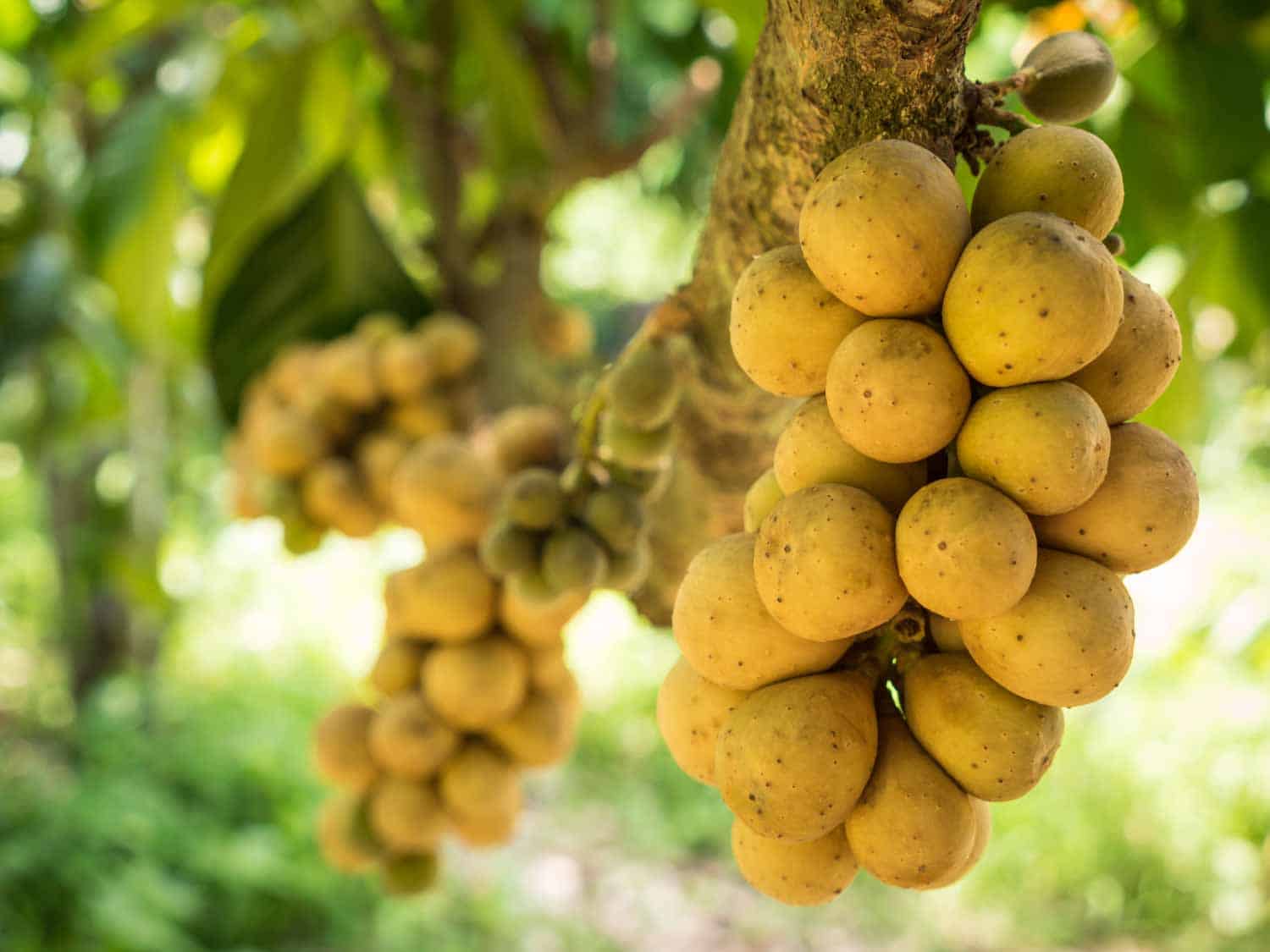
24. Langsat | Bòn Bon
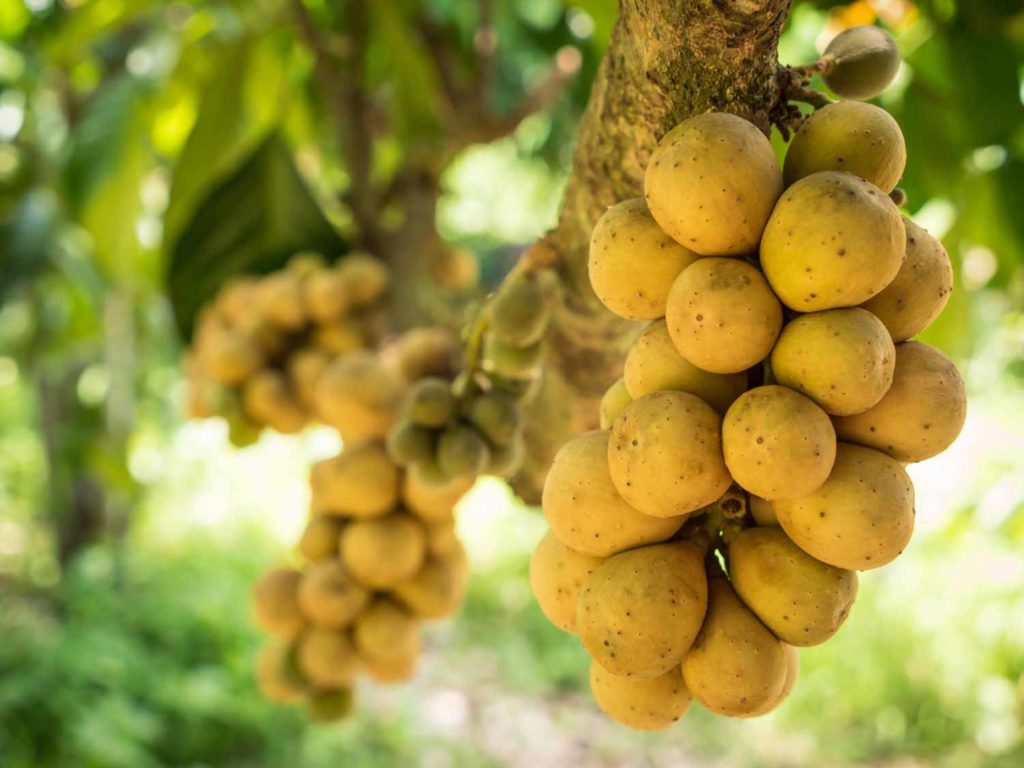
Although this isn’t a well known Vietnam fruit outside the country it is found easily in markets, often still on its branches.
Langsat grows wild in Central Vietnam in old trees and when opened looks like lychee. Locals climb the trees to harvest them by hand.
It’s also one of the most popular Indonesian fruits where it’s known as lengkeng.
Scientific Name: Lansium domesticumOther Names: dokong, duku, lanzones, longkonSeason: July to October
25. Strawberry | Dâu Tây
If you’re in Da Lat in the Central Highlands one of the best towns to visit is Da Lat. Not only is it cooler and with gorgeous landscapes, but it’s also the strawberry capital of Vietnam.
You’ll find local vendors on the streets and I think one of the best ways to eat them is in the form of a strawberry shake.
This isn’t a Vietnamese drink.
Instead they take slightly unripe strawberries and mix them with sugar, salt and chili powder.
It really brings out the flavor of the strawberry and is a unique way to eat strawberries.
Scientific Name: Fragaria x ananassaSeason: All year
26. Asian Pear | Lê
This Vietnamese fruit is typically grown in the northern regions of the country, including the highlands and mountainous areas.
Asian pear is often eaten fresh and known for its sweet and juicy taste as well as its crunchy texture.
It is also commonly used in Vietnamese salads, such as the popular Asian pear salad, which typically includes shredded Asian pear, shrimp, and a dressing made from fish sauce, lime juice and sugar.
Scientific Name: Pyrus pyrifoliaOther Names: apple pear, Chinese pear, Japanese pear, Korean pear, nashi, sand pearSeason: June
.
27. Tamarind | Quả Me
Grown in the southern regions of Vietnam, including the Mekong Delta, tamarind is often used in Vietnamese cooking as a souring agent.
It has a tangy and slightly sweet taste that builds layers of flavor.
In Vietnamese cuisine, tamarind is often paired with other ingredients, such as fish sauce, sugar, garlic and chili peppers.
It is common in soups, stews and dipping sauces, such as the popular Vietnamese dipping sauce known as “nuoc cham”.
Tamarind is also a popular Thai fruit used in stews and other savory dishes.
Scientific Name: Tamarindus indicaOther Names: imlee, imli, tamarin, tamarindo, tamarinier, tamarinier d’Inde, tintiriSeason: May to July
28. Tangerine
There are so many fantastic citrus fruits in Vietnam, including tangerines. They are popular with farmers in southern Vietnam because they will bear plenty of fruit in only two years.
The most famous as the Lai Vung pink tangerines grown in Dong Thap, which has a thin peel and juicy pulp, has created a famous brand.
Scientific Name: Citrus reticulataOther Names: Mandarin orangeSeason: September to March
29. Avocado | Bở
Avocado is a native fruit in Mexico but is now grown in many parts of the world, including southern Vietnam.
In Vietnam, avocado is often eaten fresh, either on its own or as part of a fruit salad.
It is also used in many traditional Vietnamese dishes, such as smoothies which typically includes condensed milk, ice, and sugar.
If you’re visiting Da Lat do not miss its famous ice cream known as kem bo!
Scientific Name: Persea americanaSeason: April to September
30. Yellow Melon | Vàng
Yellow melon is typically grown in the central and southern regions of Vietnam, including the Mekong Delta.
This fruit in Vietnam is often eaten fresh, either on its own or as part of a fruit salad. It is also used in many traditional Vietnamese dishes, such as soups and desserts.
The fruit is known for its sweet taste and fragrant aroma.
Scientific Name: Cucumis meloOther Names: Musk melon, sweet melon, golden melonSeason: May-August
.
31. Papaya
These tropical fruits in Vietnam are typically grown in the southern regions of Vietnam, including the Mekong Delta.
Papaya is often eaten fresh, either on its own or as part of a fruit salad. It is also used in many traditional Vietnamese dishes, such as salads, soups, and pickles.
Papaya is known for its sweet taste and soft, juicy texture.
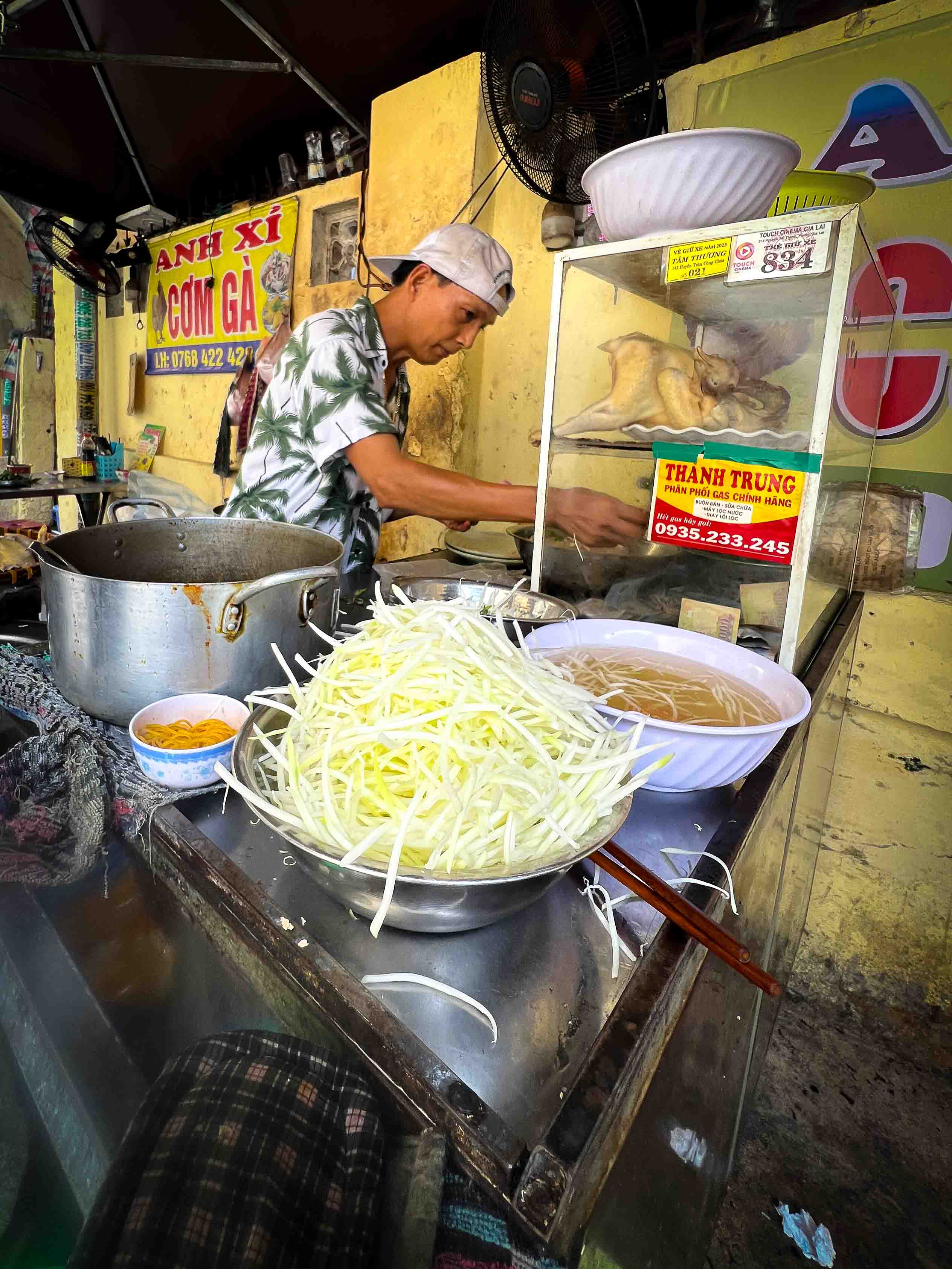
It is also commonly used in Vietnamese salads, such as the popular green papaya salad. This typically includes shredded papaya, shrimp, and a dressing made from fish sauce, lime juice and sugar.
But my favorite way to eat it is in cơm gà or chicken rice, a dish found in Central Vietnam, particularly in Hoi An. Chicken and rice is stopped with julienned quick pickled papaya.
Here’s my favourite com ga spot in Hoi An.
Scientific Name: Carica papayaPapaya Season in Vietnam: All year
32. Nipa Palm | Dừa Nước
Nipa palm is one of the most exotic Vietnam fruits. This palm tree is found in mangroves, wetlands and coastal areas such as the Mekong Delta
It is often referred to as water coconut and loved for its juicy yellow or white flesh and sweet taste.
It can be eaten raw but found in many traditional desserts as well such as che dua nuoc.
On the savory side look for the traditional sour soup canh chua with fish, vegetables and nipa palm
Scientific Name: Nypa fruticansOther Names: nipa, mangrove palm, water coconutNipa Palm Season in Vietnam: April to November
.
33. Ambarella | Trái Cóc
Ambarella fruit are typically grown in the southern regions of Vietnam, including the Mekong Delta. The fruit is known for its tangy and slightly sweet taste, as well as its crunchy texture.
This Vietnamese fruit is often eaten fresh, either on its own or as part of a fruit salad.
It is also commonly used in chutneys and Vietnamese pickles, such as the popular pickled ambarella, which typically includes garlic, chili, and sugar.
Like many fruits in Vietnam it’s commonly combined with shrimp, pork, or herbs like mint or basil.
It’s also one of the most popular Sri Lankan fruits, eaten raw and cooked in curries.
Scientific Name: Spondias dulcisOther Names: June plum, Indian hog plum, golden apple, dwarf golden plum, Makok faring.Ambarella Season in Vietnam: May to October
34. Pomelo | Bưởi
Pomelo is a large citrus fruit in Vietnam, it’s well known in the Mekong Delta but also grows in Central Vietnam and readily found in Da La markets.
It is often confused with the grapefruit because of its colour and bitterness.
But the Vietnamese variety is much larger than any grapefruit I’ve ever seen. It’s also a bit sweeter.
As a citrus fruit it’s usually eaten raw on its own or in desserts.
It is also commonly used in Vietnamese salads, such as the popular pomelo salad, which typically includes shredded chicken, shrimp, peanuts, and a dressing made from fish sauce, lime juice, and sugar.
Scientific Name: Citrus maximaOther Names: Chinese grapefruit, jabong, pomello, pummelo, shaddockSeason: All year
35. Orange | Cam Sanh
Vietnamese oranges comes in a number of shapes and colours depending on the variety. Although some oranges can be sour or bitter, this is a sweet orange.
The cam sành varietal is also known as the King orange and it’s actually a hybrid originally from Vietnam.
It grows on a small tree and its name means terracotta orange but actually the color isn’t quite that dark.
Scientific Name: Citrus sinensisSeason: September to March
36. Winter Melon | Dưa Gang
In Vietnam, winter melon is often cooked with pork or shrimp and seasoned with fish sauce, garlic, and other herbs and spices.
It is also sometimes used in sweet dishes, such as winter melon tea or winter melon candy.
Scientific Name: Benincasa hispidaOther Names: ash gourd, wax gourd, white pumpkin, and Chinese watermelonSeason: February to April
.
37. Guava | Ổi
Originally from Central America, guava today is still one of the most popular Costa Rican fruit and Argentina fruit but also throughout South east Asia.
There are over eight varieties of guava in Vietnam. They change depending on where you are in the country.
Some are bright green and others more purplish. They may have a pink interior or also white. And some are large like a softball and others more like an apple.
You can eat them when ripe and soft or also served unripe and crunchy with a salt chili mix.
Scientific Name: Psidium guajavaSeason: All year round
38. Coconut | Dừa
This seems like a no brainer as coconuts are a refreshing way to beat the heat in Vietnam.
But Vietnam is also known as one of the largest exporters of coconut and is well known for high quality.
The Mekong Delta produces prized coconuts. In the Ben Tre province over 160,000 families work in coconut farming.
It’s considered to be a sustainable business as land is preserved and it provides a livelihood for 70% of locals.
Scientific Name: Cocos nuciferaSeason: All Year
39. Watermelon | Dưa Hấu
Watermelon is a common fruit in Vietnam, with lots of vendors also selling it in the street in snack size pieces.
Although you can easily find yellow watermelon in Vietnam, the red variety is valued more for its red color.
In particular at Tet, Vietnamese New Year, it is considered lucky for its round shape and color. The black watermelon seeds are also eaten as a snack.
Scientific Name: Citrullus lanatusWatermelon Season in Vietnam: All Year
.
40. Acerola / Barbados Cherry | So Ri
A powerhouse of vitamin C and antioxidants, so ri is used in everything from beauty products to fruit purees.
It is grown in the bountiful Tien Giang province but much of it is exported.
That said if you’re in Southern Vietnam, particularly in the Mekong Delta you should be able to find this sweet but tart fruit in markets.
Scientific Name: Malpighia emarginataOther Names: West Indian cherry, Puerto Rican cherry, Jamaican cherrySeason: All Year
41. Pomegranate | Lựu
Found in Central highlands and tropical areas, pomegranates are popular in Vietnam for two reasons 1) for the fruit and 2) the tree brings good luck in Vietnamese tradition.
In Vietnam these fruit are a bit smaller compared to the Middle East and Mediterranean but they are still full of delicious seeds.
For the sweetest taste choose the largest fruits in the bunch.
Scientific Name: Punica granatumPomegranate Season in Vietnam: September to December
42. Honeydew Melon | Dưa Lưới Dưa Lê
There are so many types of melons in Vietnam, influenced by Chinese immigration and new farming techniques.
Melons are beloved for their fresh flavour but their 90% water content can be a bit difficult to grow during water shortages.
But today farmers with small fields have discovered drip irrigation in membrane houses can create higher quality, bigger honeydew melons.
Scientific Name: Cucumis meloOther Names: Chindire, Hmazli, Balian melon, Temptation melon, Wallace melon, White antibes
.
43. Chuối | Banana
On the surface it may seem like bananas are the least interesting fruit from Vietnam. This is because they look the same as what we eat at home.
And they are.
The most common banana in Vietnam is the Cavendish variety. It is also the most common in the world because it is easy to export.
But don’t let that stop you from eating it because eating a banana that was allowed to fully ripen is so much different.
And if you look around you’ll find other Vietnamese bananas such as the Chuối Cau, and Ngu, which are short, squat and sweet. They are similar to Bali fruits called susu pisang or milk bananas.
There are also green bananas used in savory dishes such as fish stew.
Scientific Name: Musa acuminataSeason: All Year
.
44. Phu Quoc Peppercorn | Quang Tri
Technically, peppercorns are not berries. Instead they are stone fruits, like lychees or nectarines.
The Vietnamese fruit changes color and flavor as it matures. In Phu Quoc, an island in the Gulf of Thailand, peppercorn is famous for its taste and quality.
It is processed naturally, first harvested by hand then sun dried. It begins green but turns to red when ripe on the vine and finally black when dried in the sun.
Each of these peppers are used differently.
Green Peppercorn
The unripe green pepper is sold in markets and used in teas and cooking for a fresh flavor.
Green peppercorn doesn’t last long and is often sold in brine and served pickled.
Red or Pink Peppercorn
Red or pink pepper are first ripened on the vine and more aromatic. They are larger, rounder and considered the best quality.
White Peppercorn
These spicy peppercorns begin as ripen red peppercorns. They are soaked in water for several days then the skin is removed, revealing white fruit flesh.
Finally they are sun dried. White peppercorns are spicier than black peppercorns. But the flavour is less complex.
Black Peppercorn
Black pepper is green pepper fruit fully sun dried for at least 10 days.
Scientific Name: Piper nigrumSeason: November to February
45. Mango | Xoài
Perhaps not one of the most exotic fruits in Vietnam, nonetheless it makes the list because there are so many delicious ways to eat it in Vietnam.
There are 11 varieties of Vietnamese mango.
You can get both yellow and green mangoes in Vietnam. Yellow are more sweet and have soft flesh. The most common are xoai cat, xoai ngua and xoai tuong.
Green mangos are known as xoai xanh and are more sour.
They are often used in a salad in the south or sprinkled with a chili salt mix and eaten as a crunch snack.
And the most famous mangoes are the Hoa Loc variety in Southern Vietnam in the Tien Giang province.
And if you’re in South America you’ll find them everywhere including a common Peru fruit.
Scientific Name: Mangifera indicaOther Names: ManggaSeason: March to May