This Comforting Cantonese Classic Is Endlessly Flexible
Every city and country in the world has its quintessential dish—the foods that not only convey a sense of place but also become so popular that they spawn essays and listicles and plastic tchotchkes. Think pizza in Brooklyn or ramen in Tokyo. Hong Kong has a few such dishes, but in wintertime, one reigns supreme: clay pot rice (bo zai fan, 煲仔饭).
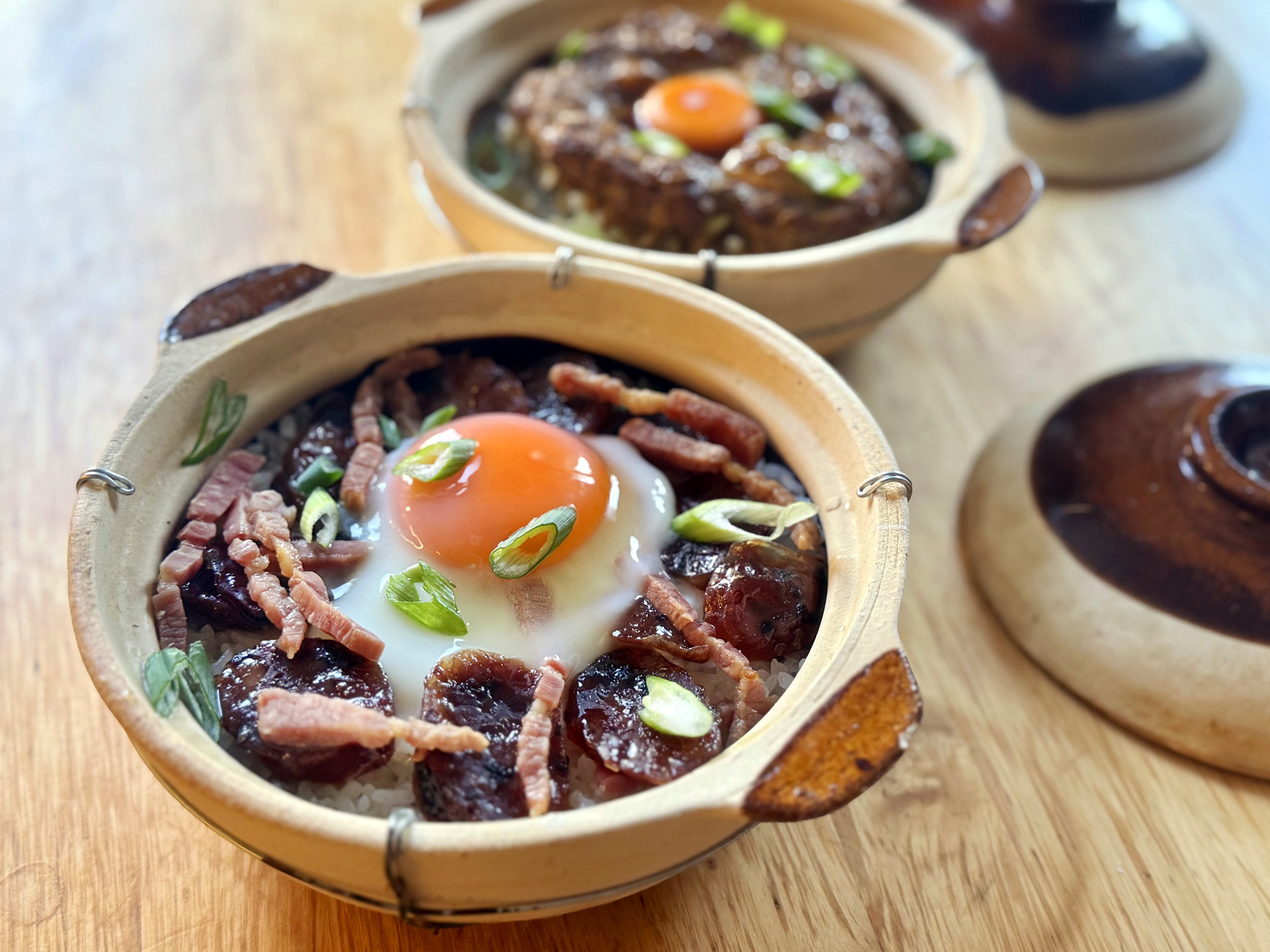
As with pizza or ramen, clay pot rice is actually a whole culinary category: you pick your toppings, and then they are cooked to order on top of rice in little clay pots (the eponymous bo zai). Also similar to pizza or ramen, bo zai fan is a working-class staple that evolved to play the role of commuter lunch or weeknight pick-me-up. True local classics are, in a word, unfussy. I think this context is often missing for the destination diner, who waits hours in line for a table at the original Ippudo Ramen or embarks on a five-borough pizza tour of NYC. Outsiders can make comfort foods A Whole Thing, and thereby…lose the comfort.
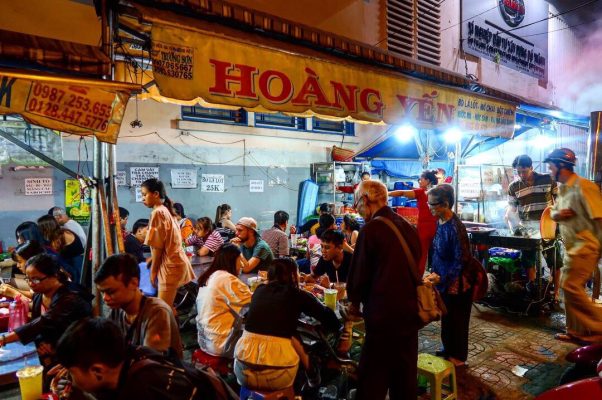
I was reminded of this on my last trip to Hong Kong, where I saw snaking lines at all the guidebook spots for roast goose over rice, for wonton soup noodles and, yes, for clay pot rice. Some lines for food are warranted, but I’d see these lines and immediately feel exhausted. And I’d know the locals were somewhere else.
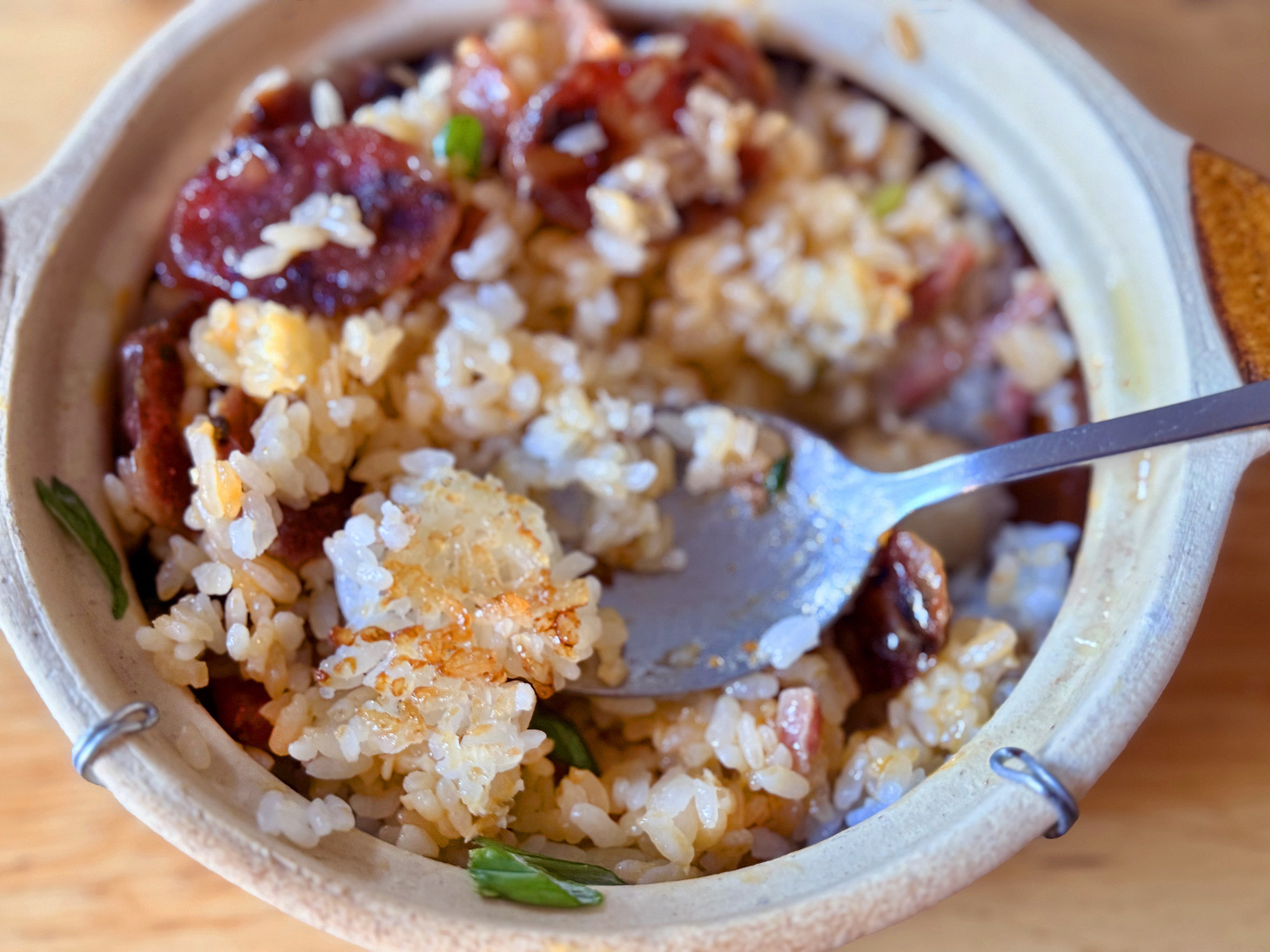
On this trip, when we decided we wanted a taste of this quintessential dish, we simply went to the clay pot rice restaurant closest to our hotel. It was perfect, in no small part because lunch took all of 45 minutes. Twenty of those minutes were the time it took the kitchen to cook the rice until a lovely crunchy crust formed at the bottom—the best part of bo zai fan.
With this experience in mind, I’m here to restore comfort to this southern Chinese comfort dish. Because bo zai fan is not just a dish you can make yourself, it is also an undertaking easy enough for a weeknight. This is a technical dish, but that’s not the same thing as a difficult one. Besides the rice, there are minimal ingredients involved, and you’ll most likely already have them in your pantry/fridge/freezer ecosystem. With practice, you can get this on the table in 30 minutes and get cozy.
I think this dish will also teach you how to be a better cook. Everyone has a different pot, a different stove, and different tap water. Today you might use jasmine rice, tomorrow you might use short grain. How to know when that magical crust is ready? You can only rely on your ears, your nose and your nerve (if you don’t smell burning, it’s not burnt!).
When It Comes to Clay Pot Rice Toppings, Look Beyond the Southern Chinese Canon
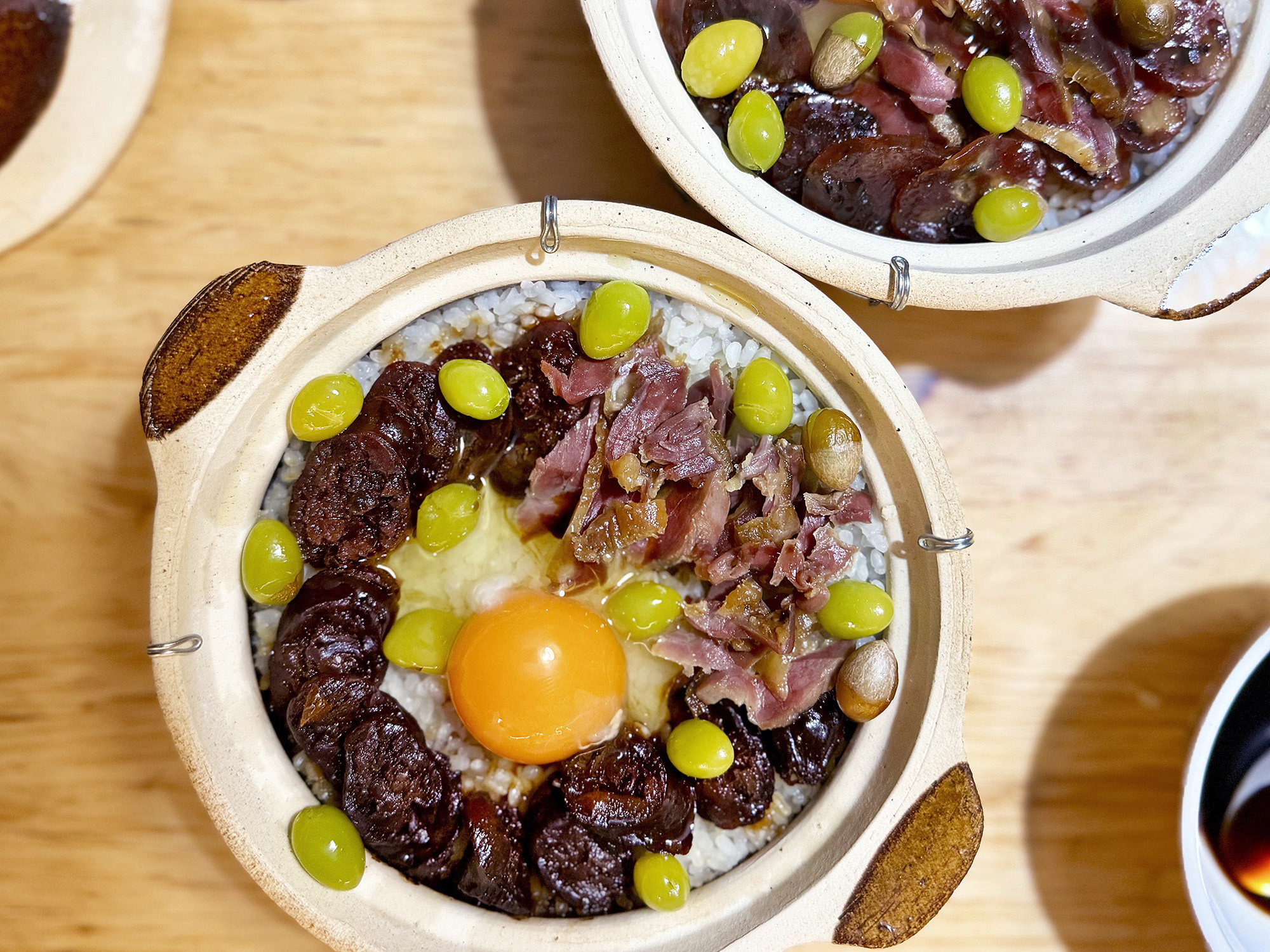
In Hong Kong, you can get everything from salted fish to frog legs on bo zai fan. You can try adding a variety of different ingredients to your homemade version and in time, you’ll discover your favorites and learn to tweak your methods accordingly: Pork and chicken will take a little longer to cook through than beef or fish; cured ham or pork belly will need to be sliced into batons so they’re not too tough or salty; and laziness allows for getting creative with jarred condiments, or even Spam! When gingko nuts are in season, I forage for them and add them, too.
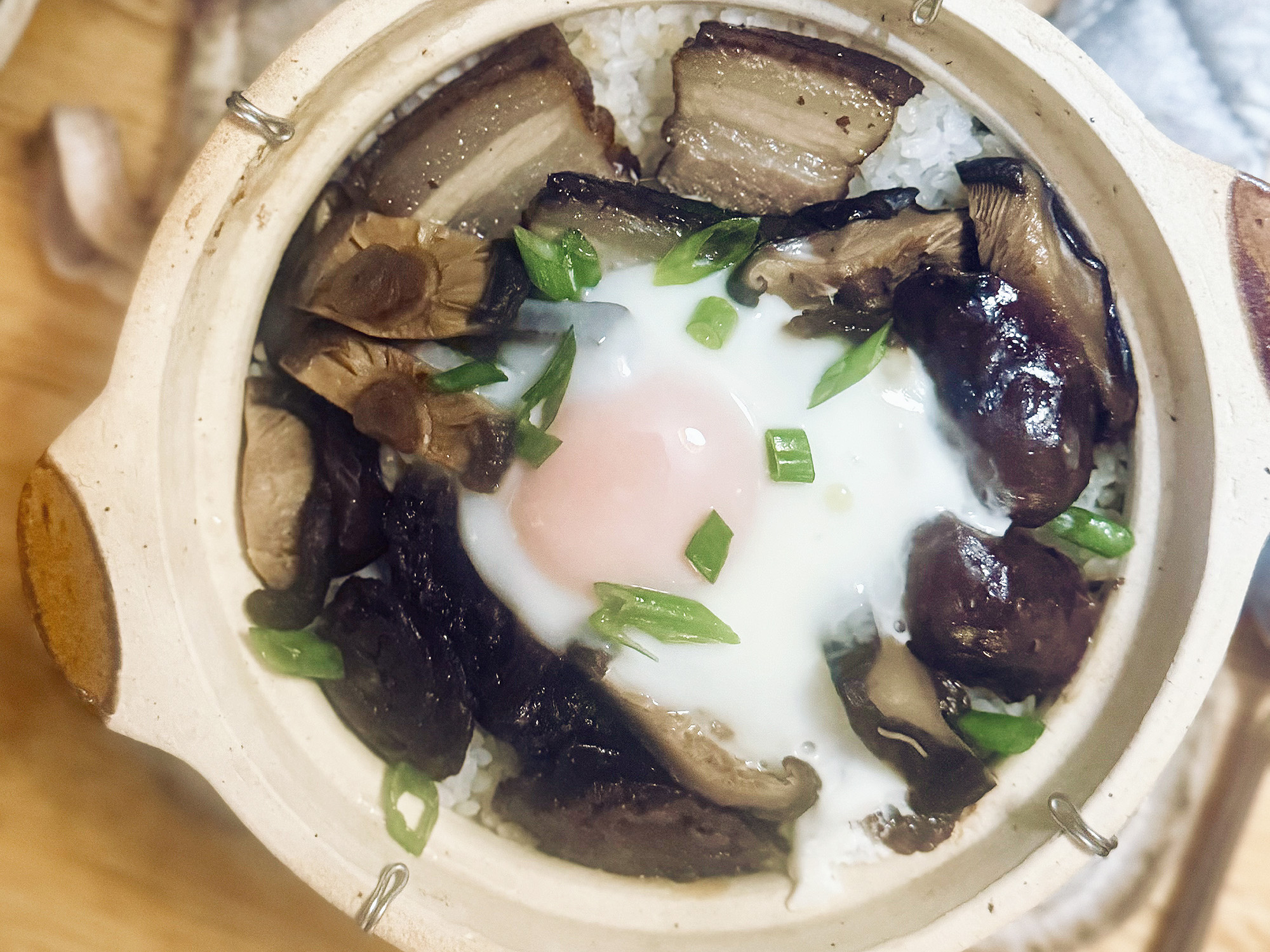
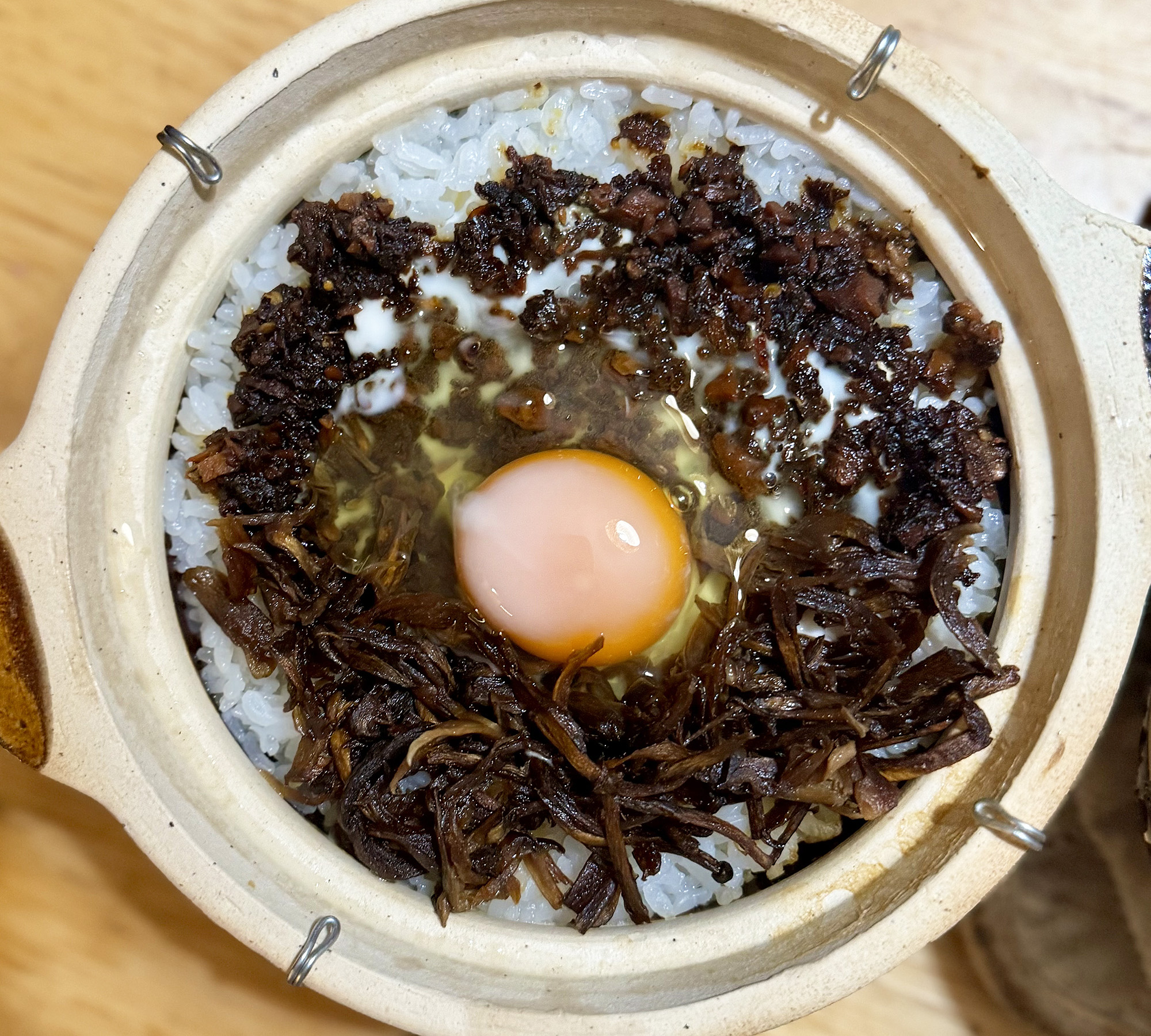
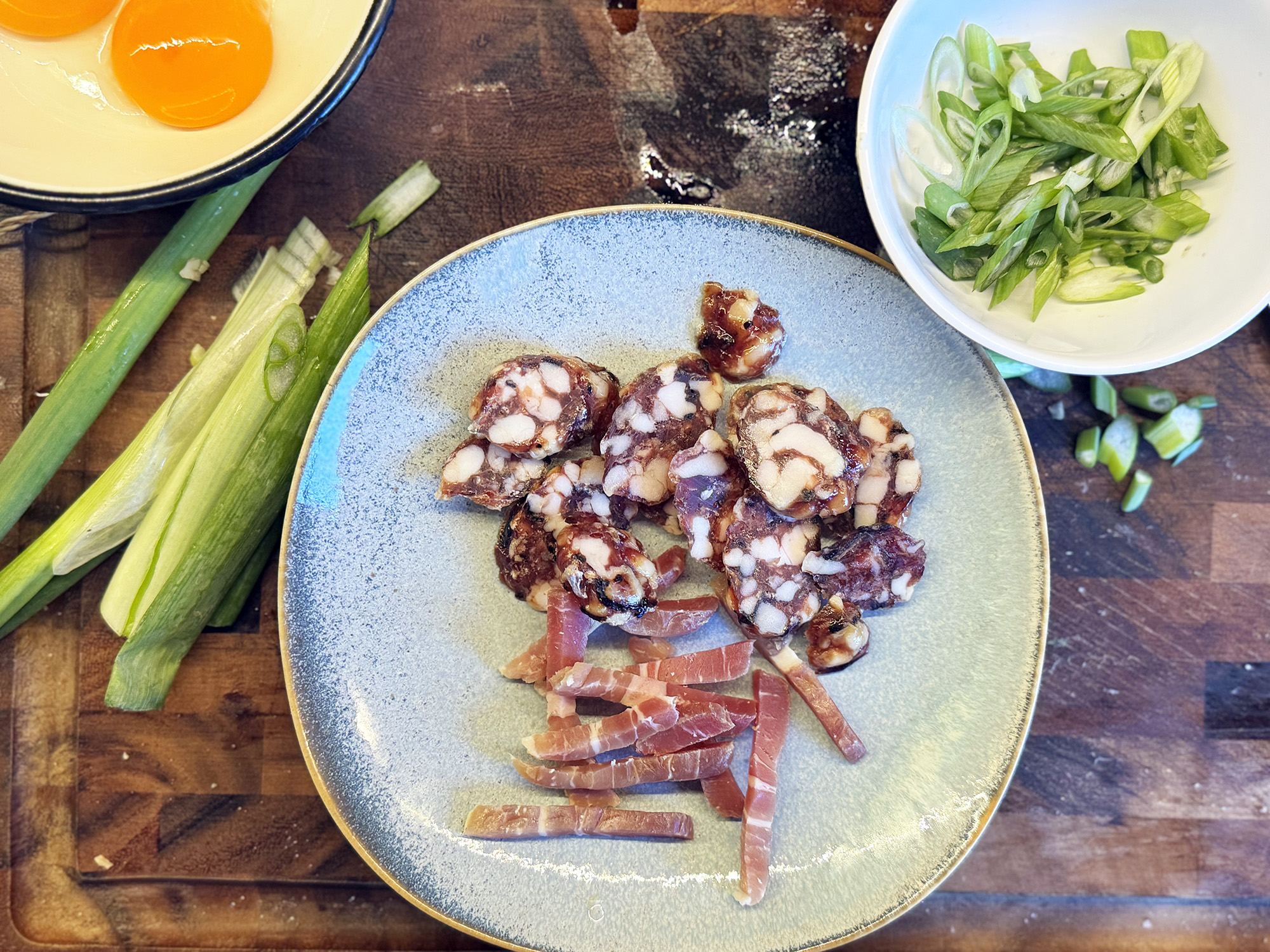
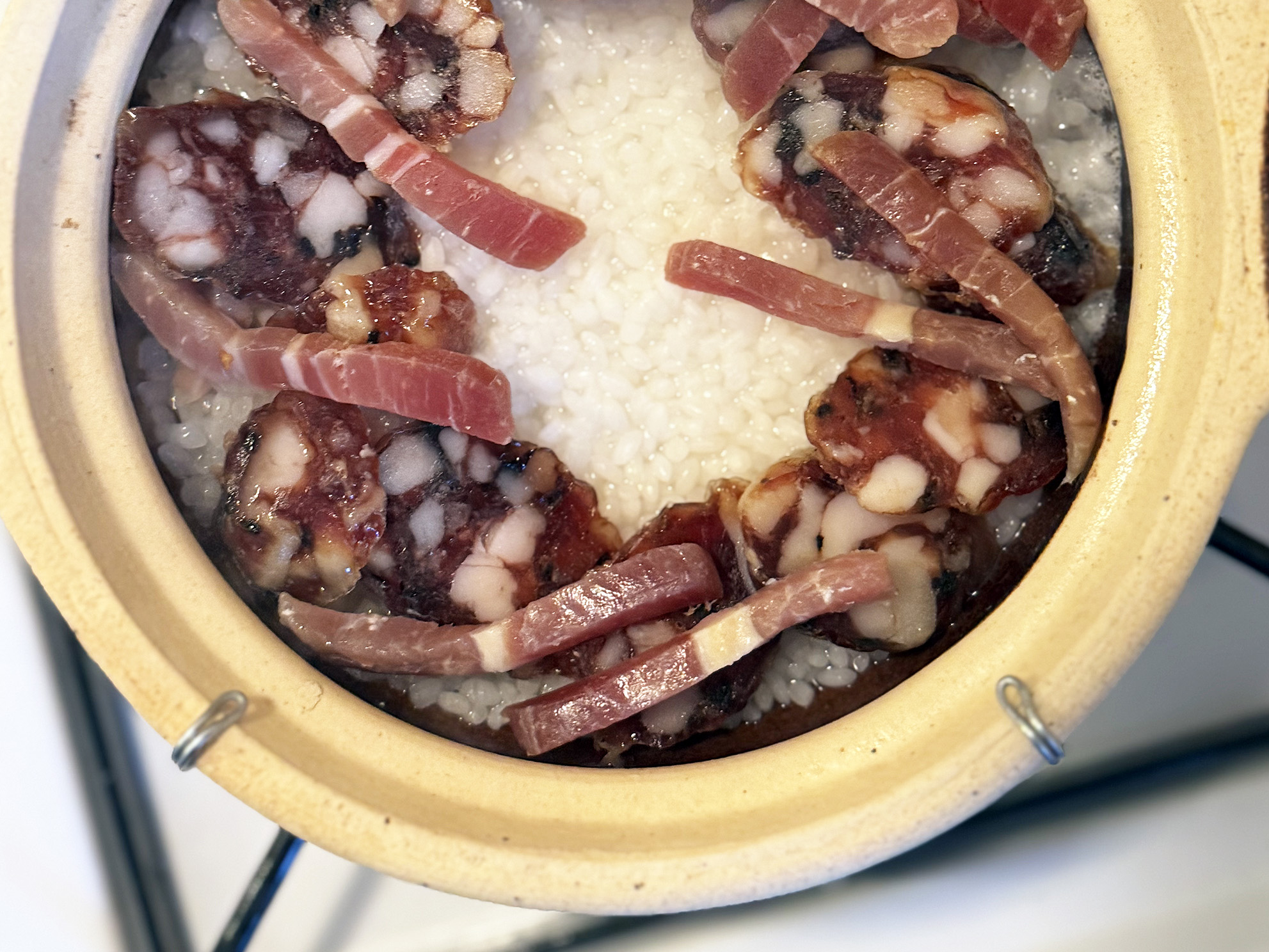
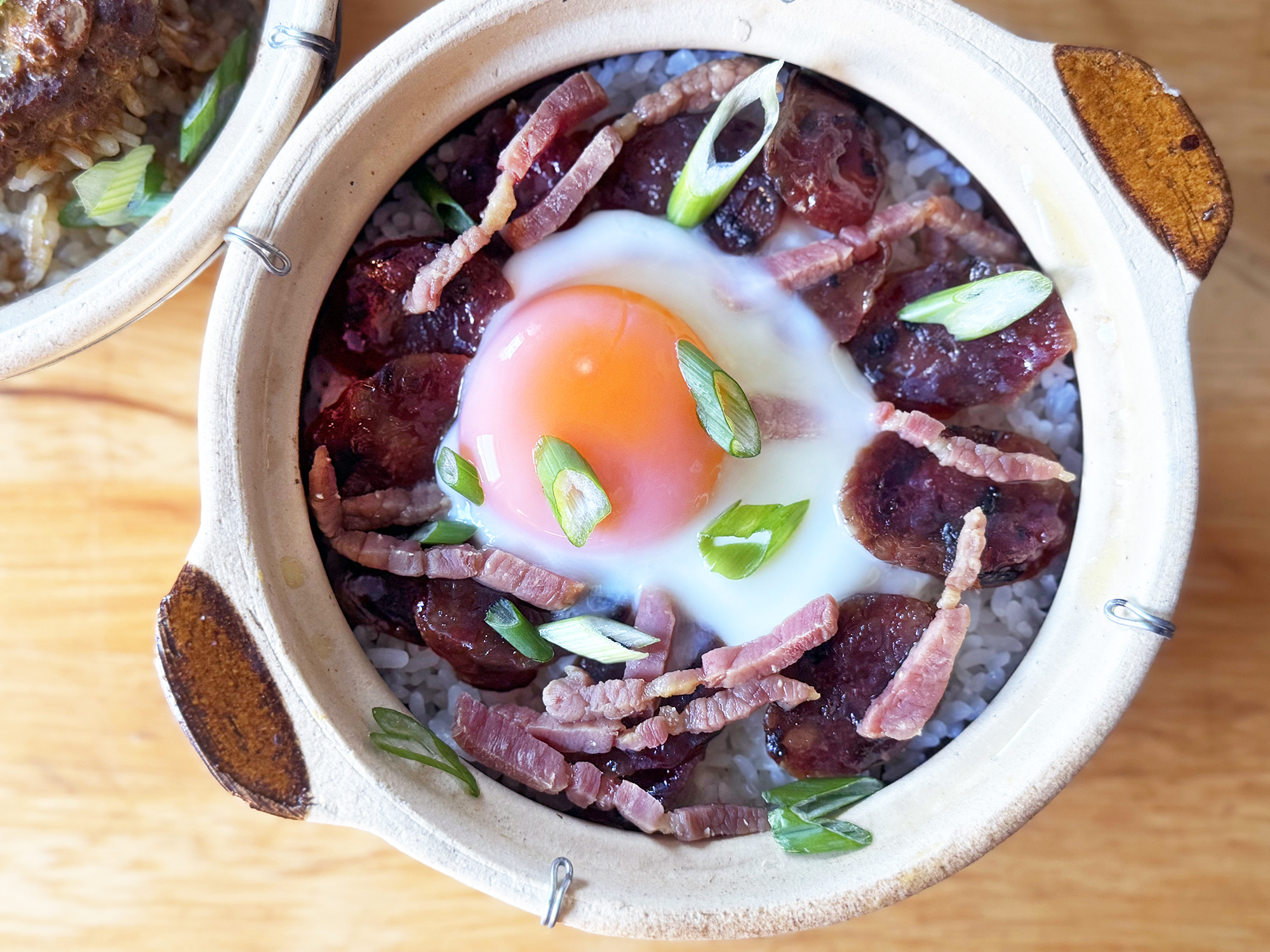
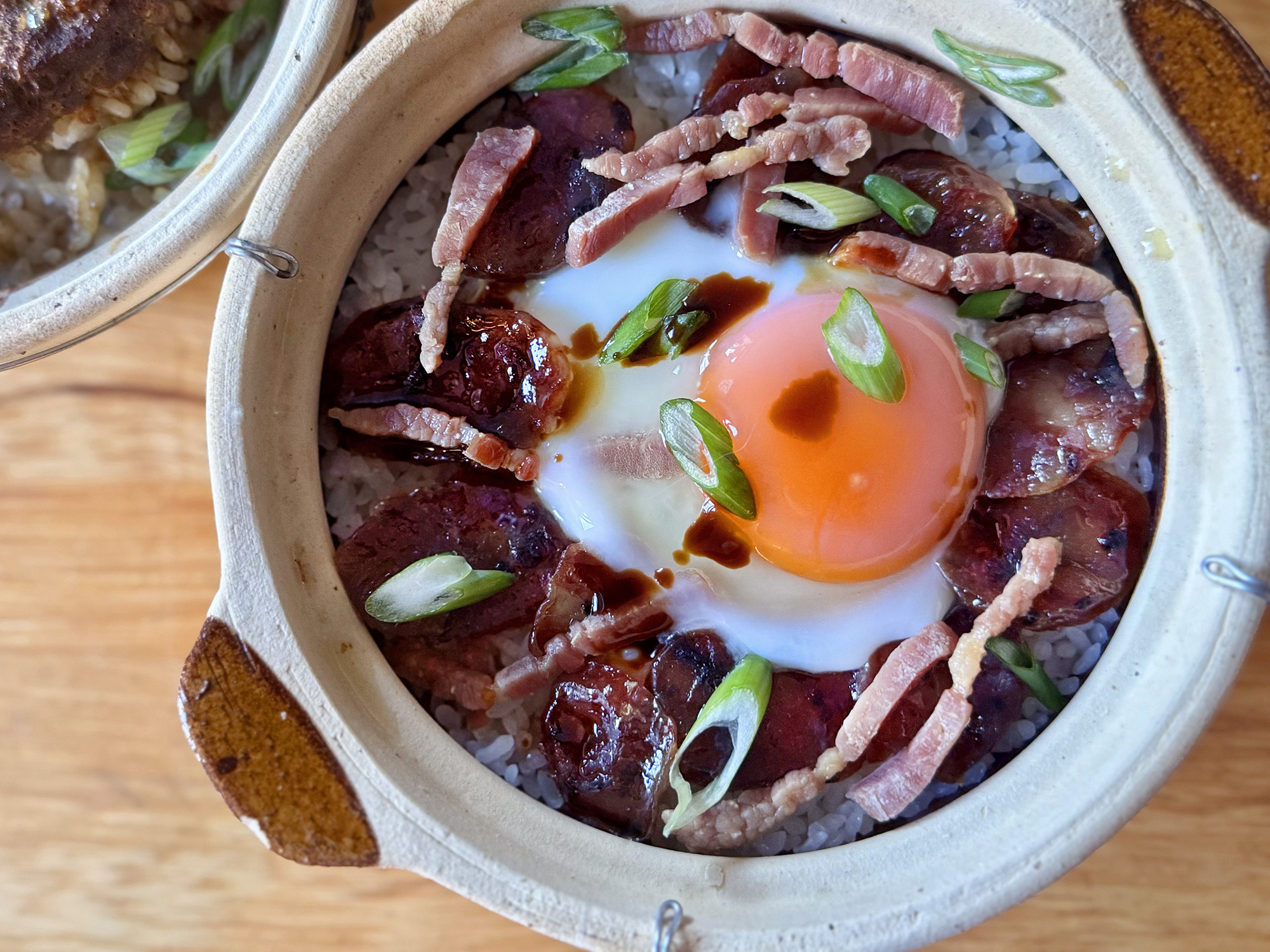
Here, I’ve provided instructions for one of the simplest and arguably most classic variations around: bo zai fan with lap cheong, or Chinese sausage, plus some larou (wind-cured pork belly) or shiitake mushroom. I always keep a package of sausage in the fridge since they never go bad. Interchangeable with lap cheong are any of the other Chinese regional cured meats: duck from Jiangnan, larou from Sichuan, or ham from Yunnan. In all cases, the salty fat melts as it steams on top of the rice and you get delicious aromatic oily rice. This version comes with the traditional accompanying sauce—made with both light and dark soy sauces, plus some oyster sauce and seasonings—that punches up the sausage’s umami and sweet notes.
Which Pot to Use for Bo Zai Fan?
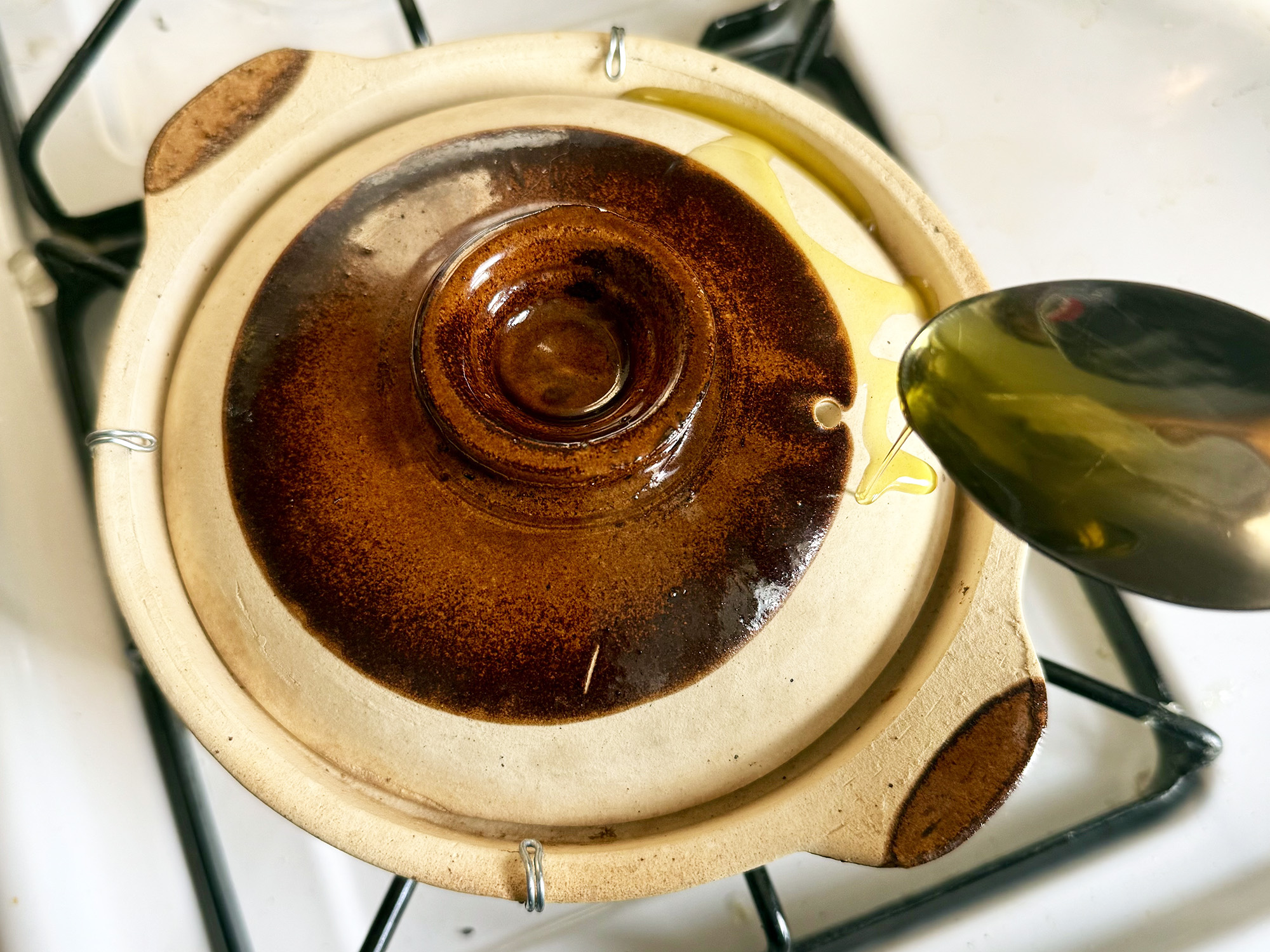
Purists will say that bo zai fan should be cooked in unglazed clay. I say any earthenware, glazed or unglazed, works, but size matters. After all, bo zai means “little pot.” A big part of the charm of this dish is digging into your own personal pot, mixing egg yolk and drizzling sauce and excavating for crunchy bits to your heart’s whims. In fact, my fiance has taken to calling clay pot rice “hobbit rice” because that is how he feels when he gets to uncover his own pot and stick his face into the steam.
The solo pots I use are 6 inches in internal diameter/16 ounces and hold no more than one cup of cooked rice. Any other clay pot at this size would work as well (you might opt for fully glazed ceramic if you have an electric stove). I have also seen individual-size dolsot pots and donabes at HMart for $5 and $6, respectively.
The utilitarian black pots I see at Asian supermarkets also work (they’ll be cheaper at those stores than on Amazon), and the smallest size is 7 inches in diameter—too big to use as a solo pot but will work perfectly for two. I also like the shape of this one for two people: more surface area for toppings and more floor area for crunch!
Getting the Crust Right in Your Clay Pot Rice
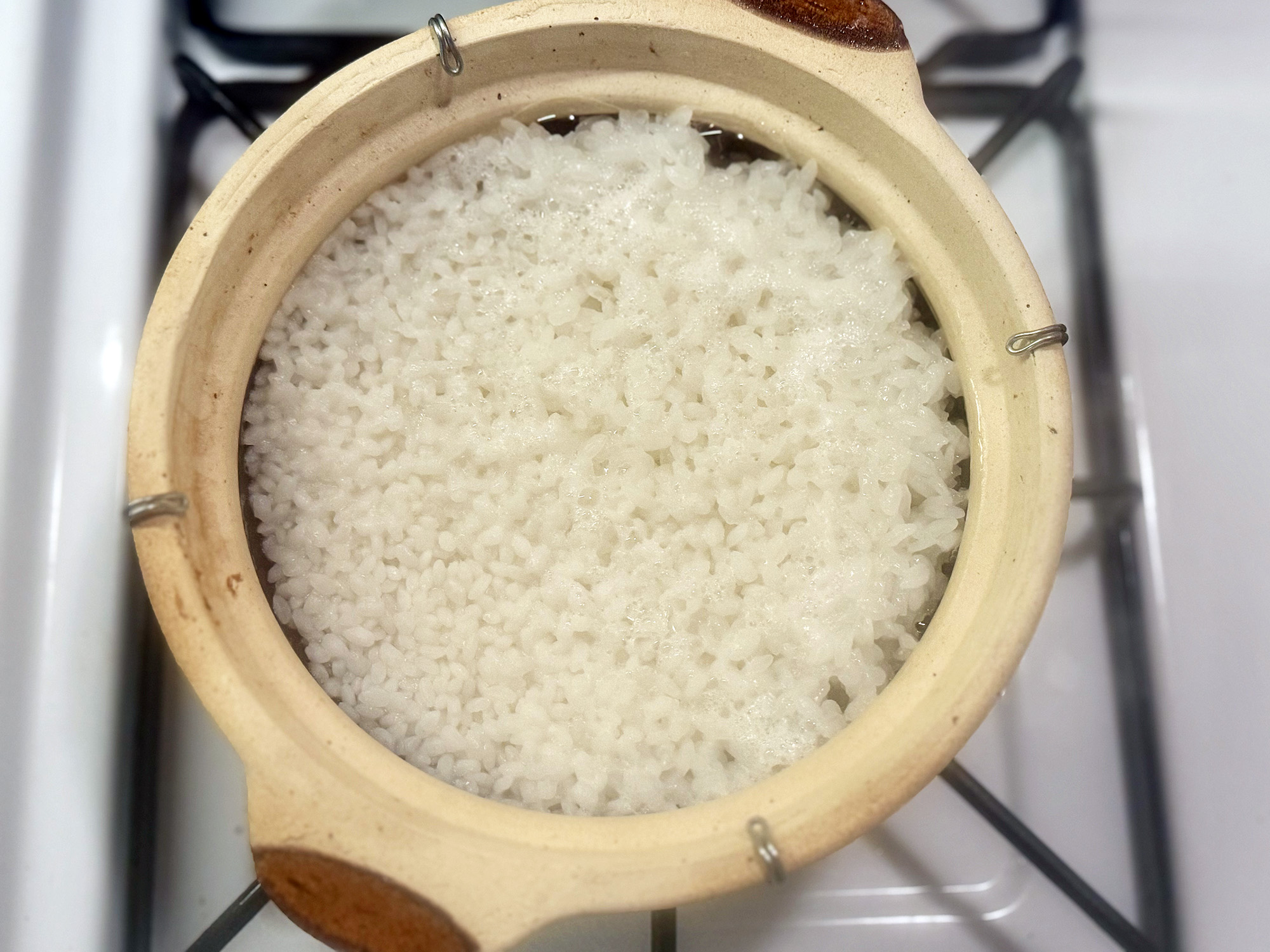
You might notice that this recipe calls for very little water. For the crust to develop and not stick to the bottom, the rice has to cook with the minimum necessary amount of water. You want separate, fluffy grains—no mush.
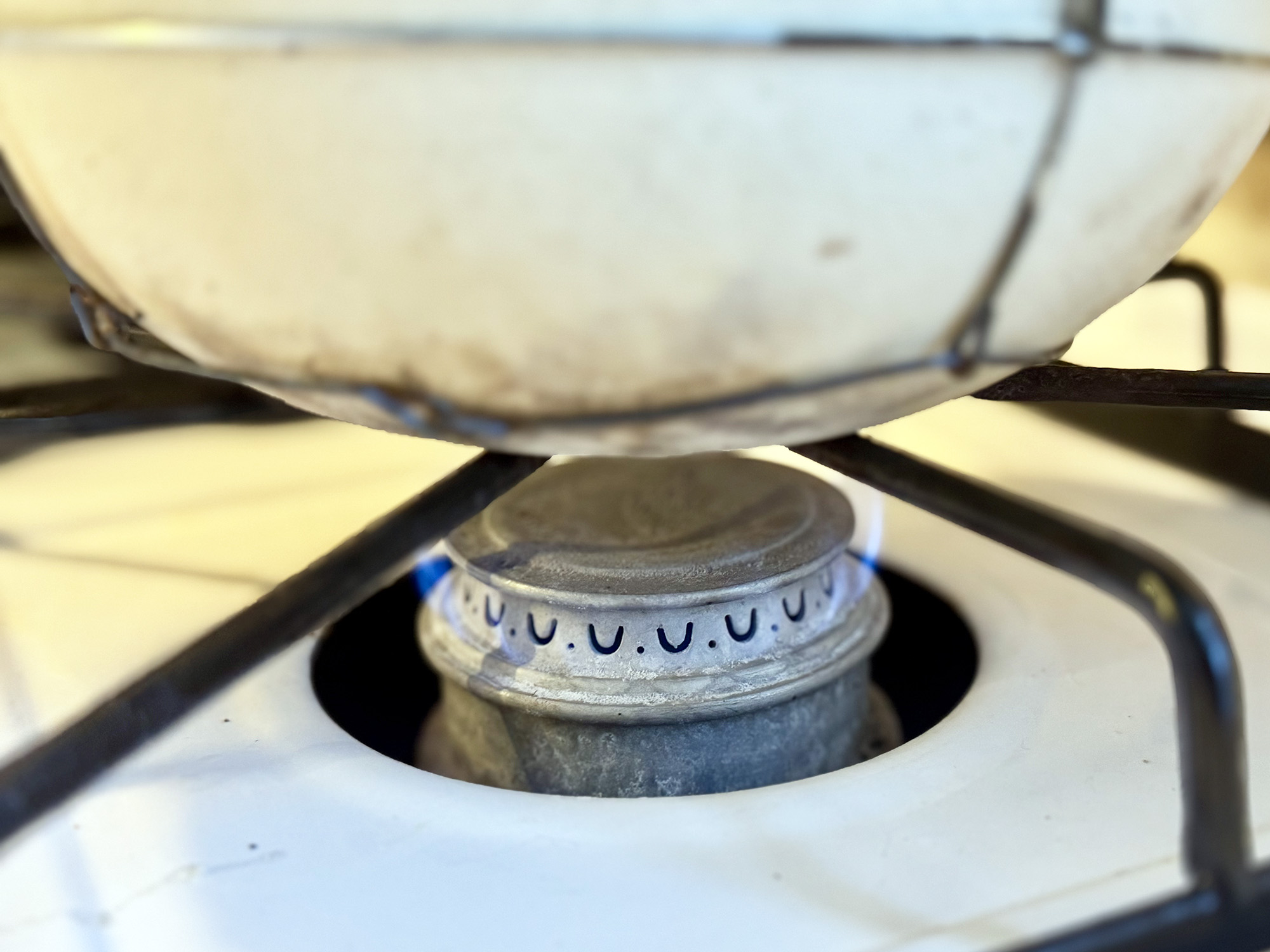
However, this optimal dryness also means that you won’t hear a lot of crackling as the crust forms, since lively crackling only happens when oil and water mix. Instead, you’ll hear the gentlest whisper of a sizzle, and you’ll need to put your nose close to the bottom of the pot to sniff for toastiness as well. This will take a solid 15-20 minutes on low heat. In my experience, most cooks are more likely to err on the side of pulling the pot too early than burning the rice, so be patient.
For more delicious rice-based dishes, try Taylor’s version of Chengdu Taste’s Chengdu Fried Rice (Chaofan, 炒饭), Kathy’s Healing Century Egg and Pork Congee (Pidan Shourou Zhou, 皮蛋瘦肉粥), and Zoe and Iris’s Changzhou’s Small Foot Zongzi (Xiaojiao Zongzi, 小脚粽子).