Hello!
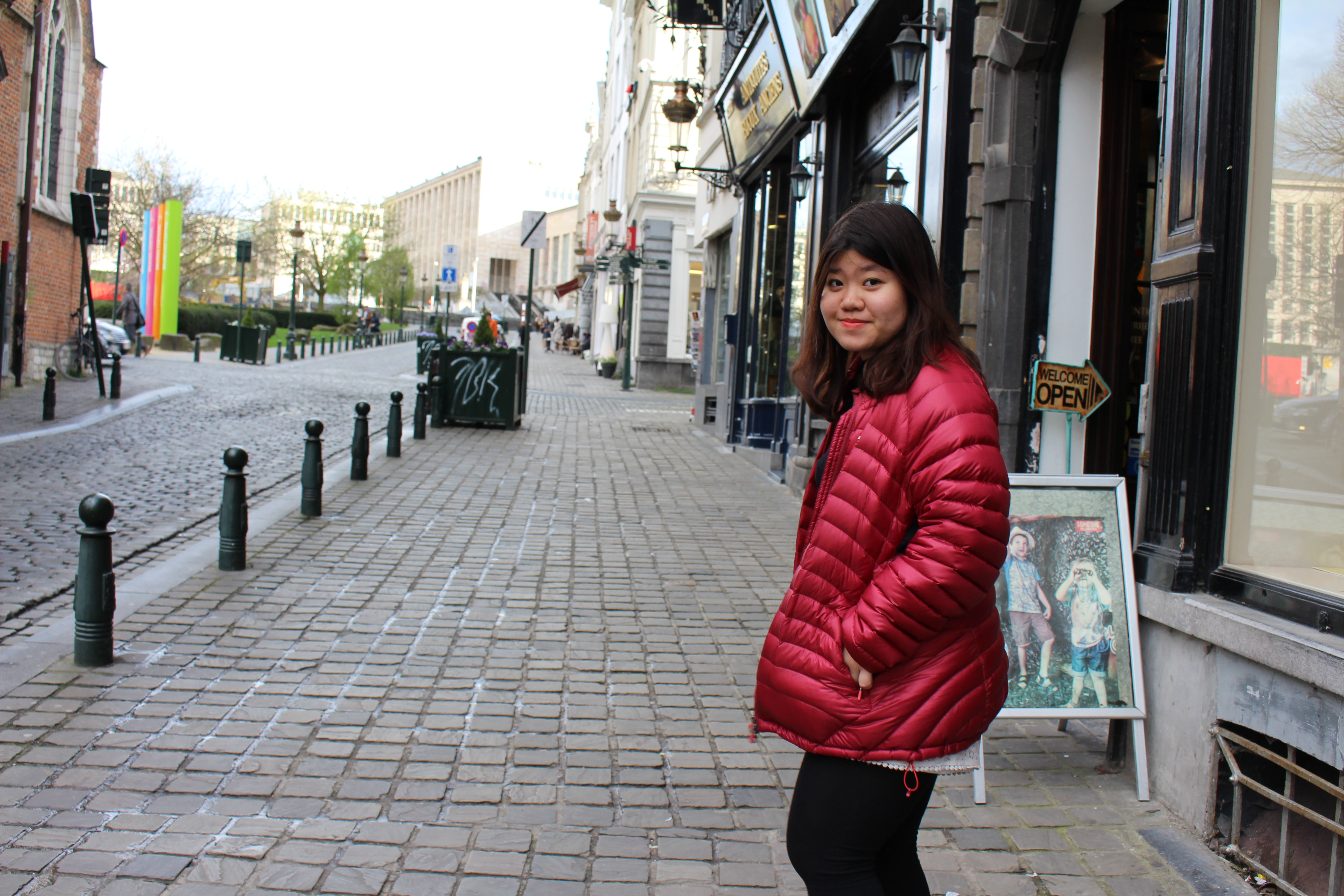
My name is Lê Kim Trinh and I also often go with the name Trinh or Katie, though I feel more grounded as Trinh. I am based in London, United Kingdom and currently on the last few months of my MA degree, majoring in Philosophy of Education at UCL Institute of Education. With that being said, I was actually born and spent a great deal of my childhood in Ho Chi Minh City, Vietnam.
I struggled with coming to term with ‘home’ for the most part of my life. Don’t get me wrong – I grew up in a very happy family, though my family is somewhat different from a typical Vietnamese household. I considered myself being lucky, for having grown up in a more special environment than my peers. My family loves valuing traditions, ancestors worship and treasuring familial relationships. When I was younger, I used to find it difficult to keep up with this lifestyle, you know, growing up in this millennial era and individualistic generation. However, as I’ve got to my 20s, I’ve learned to appreciate the deep meaning behind these family gatherings and annual ancestor worships – it is not traditions, but connections that we strive to protect.
Apart from me and my siblings, or our generation, all previous generations of my family went to war. We lost both of my grandfathers, their fathers, and all their brothers throughout the course of 117 years of Vietnam War since the French colonial. One of my father’s maternal uncles was a high-ranking official for the South Vietnam Army, whilst another, his older brother, was fighting for the NLF (National Liberal Front). My father also participated as an active soldier who guarded the border in the war with the Pol Pot regime in the late 1970s. My mother, who was once an army doctor in the war, later told us that there was a time they all thought my dad was dead in the war, but my bà cố refused to believe in it and went to the border station to look for him. She told everyone, “only until we find the body” as my dad is the eldest grandson and one of the two boys in the family still surviving until then. My great grandmother, whom the Vietnamese usually calls one’s own ‘bà cố’, is titled The Vietnamese Heroic Mother (Bà Mẹ Việt Nam Anh Hùng) for her tremendous loss and support for the soldiers during the war. Vietnam officially has more than 44,000 mothers who hold the titles, whilst the number is estimated to be much higher as there are mothers whose sons’ bodies were never found or identified to be accounted for the record. Out of these 44,000 mothers, only a few still survive today.
My great grandmother passed away when I was 6, and I always regretted that I couldn’t hear more about her stories of the war. For our family to have come as far as today, we have survived and overcome everything due to the huge support and sheltering of the countless family relatives, strangers-turned relatives and many of our fellow countrymen. My mom always reminded us to never forget that, and hence my family’s values of protecting the connections.
My family was originally from Củ Chi, a town province at the border of Gia Định which has now become a suburban district of Ho Chi Minh City. When Củ Chi was under attack and turned into a base camp for the US Army, we moved to Long An – my bà cố’s home town near Vàm Cỏ Đông River, a part of the Mekong Delta region in the Westside (miền Tây) of Vietnam. It was where my dad met and married my mom, and is now my hometown. We then moved again to Saigon for a better life, where my siblings and I were later born and bred. At the age of 14, I decided to leave home to pursue my dreams and here I am now, trying to fit in London.
You see, I’ve moved around a lot in my life, even when I was not even aware of it, or before I was born into life, but I believe it’s all inside me – even when I was not physically there. I know it might not make sense here to a lot of people out there. I struggled a lot with identity crisis growing up, not knowing or being satisfied with ‘who I am’ and with being far away from home at such a young age, I was lost at defining home for myself. I fortunately get to come to an understanding of myself two years ago, and finally found where home’s always been for me. That is a long story, and perhaps deserves another post entry. But this project, this journey that Liem and I have been on together – makes me realise that we could never find home inside ourselves without going back to understand our roots.
I first joined this whole idea discussion with Liem – who’s like a brother, a friend and a confidant to me, because not only for my interest in our history, but my deep desire to learn more about who I am. Our Thầy, Thích Nhất Hạnh once said,
“We are all the leaves of one tree
We are all the waves one sea.”
– Thich Nhat Hanh
As I reflected my life and the stories which have shaped me growing up, I recognised that the ‘I’ and the ‘me’ is the reflection of the transition from a poor family migrating to several places due to war, then being born and growing up in a city; of the traumas from loss of family members in war which have never been healed, but just forgotten; and of growing up in the family structure with traditional values. I realised that I am, like many of our fellow young Vietnamese, a representative of the conflicts between the old and the new, dwelling in between the unresolved conflicts of Vietnam’s history.
There are millions of people, from soldiers to innocent people who have fallen down on our motherland. There are thousands more of our brothers and sisters who have fallen down deep in the vast sea. There are also thousands who have drowned in anger and hatred because of those who wronged and of the course of history. War has never been about who wins or loses, it’s about the people left behind.
And despite who wins or loses in the course of history, I believe that if you look into yourself deeply, you will see every one of them inside you too.